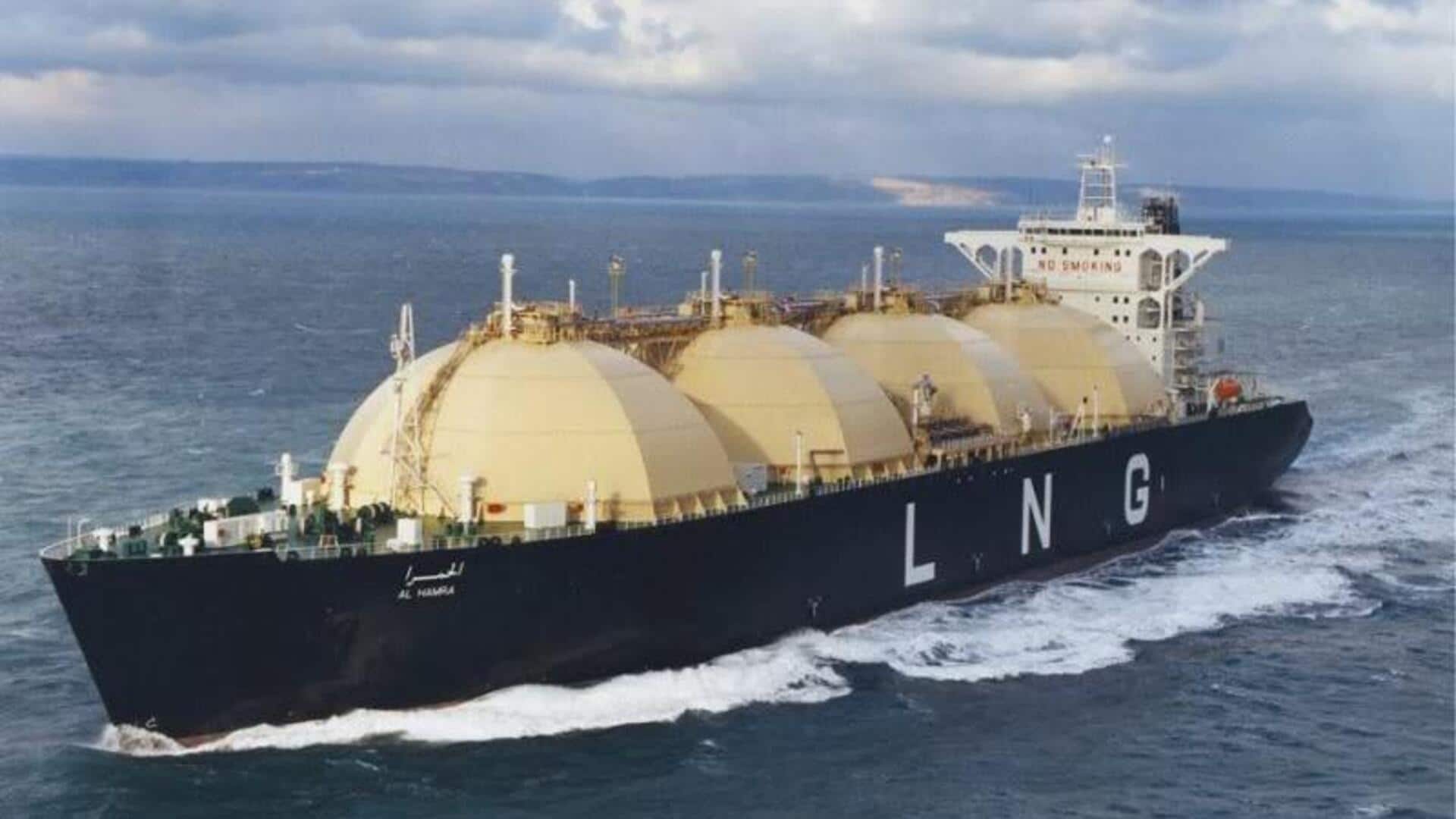
First-in-months: LNG tanker leaves Strait of Hormuz for India
What's the story
In a major development, an LNG (liquefied natural gas) tanker has left the Strait of Hormuz for India. This is the first such shipment from the Persian Gulf since the Iran conflict erupted months ago. The Al Hamra tanker, owned by Adnoc Logistics & Services, was recently spotted with a cargo heading toward western India.
Voyage
Al Hamra stopped sending signals around April 19
The Al Hamra tanker had stopped sending signals around April 19, when it was empty and idling near the eastern entrance of Hormuz. It is believed that during this period, the vessel loaded its cargo at Abu Dhabi National Oil Co.'s Das Island export plant in the Persian Gulf. Satellite images have confirmed that LNG tankers have been docking at Das Island, despite no tankers broadcasting their positions near the plant.
Export strategy
Other tankers also made discreet journeys through Strait
The Al Hamra is not the only tanker to have made a discreet journey through the Strait of Hormuz. Adnoc has also exported two other shipments from the Persian Gulf on tankers that went dark while crossing this critical waterway, one to Japan and another to China. This shows how Persian Gulf LNG exporters are managing to supply fuel to their customers despite the ongoing conflict.
Strategic importance
Transits through Hormuz now done with transponders turned off
The Strait of Hormuz is a strategic waterway that carries nearly a fifth of the world's LNG supply. However, it has been virtually shut as US and Iran struggle to reach a peace agreement. Both sides have imposed a de facto blockade on this vital route, with vessels continuing to face security threats. Most transits through Hormuz are now being done with transponders turned off to avoid detection.
Supply challenges
India has been hit hard by disruption in LNG supplies
Last year, India received over half of its LNG from Qatar and the UAE. However, these flows have nearly come to a halt in recent months, ship data shows. The disruption in supplies has forced India to source more shipments from the costly spot market and cut back supplies to some industries.