
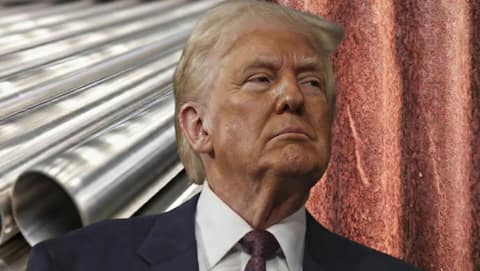
Trump imposes 50% tariffs on steel, aluminium and copper
US President Donald Trump has revised the national security tariffs on steel, aluminium, and copper imports.
The changes were announced on Thursday and are aimed at simplifying compliance and avoiding under-reporting of import values. The new policy will keep a 50% import tariff on these commodity metals but apply it to the prices paid by US customers.
Addressing under-reporting issues
The tariff adjustments are also aimed at combating under-reporting of import values by some importers. These companies had been allegedly claiming artificially reduced import values to lower their tariff costs. The new policy hopes to simplify the process.
Exemptions for low-metal-content derivative products
Under the new policy, derivative products with less than 15% metal content by weight will be exempt from the 50% duty. This includes items like a perfume bottle with an aluminium cap or a dental floss container with a small steel cutting blade. The move is aimed at reducing the burden of tariffs on low-metal-content products.
Reduced tariffs on industrial and electrical grid equipment
The new policy also reduces tariffs on certain metal-intensive industrial and electrical grid equipment from 50% to 15% through 2027. This move is aimed at accelerating an industrial build-out in the US. The change comes after steelmakers had been pushing for a lower rate for steelmaking machinery imported from Germany and Italy.
Simplifying the tariff regime
Derivative products with more than 15% steel, aluminium or copper content by weight will be charged a reduced 25% tariff on the entire value of the import. This means items like washing machines or gas ranges made largely from steel would attract a flat 25% tariff under the new policy. The changes are aimed at simplifying an overly complicated tariff regime that often confused importers trying to determine metal content values of thousands of derivative products.
Lower tariffs for American-made products
Products made abroad but entirely with American steel, aluminium, and copper will be charged lower tariffs of 10%. The changes are aimed at simplifying a complex tariff regime that often confused importers trying to determine metal content values of thousands of derivative products.