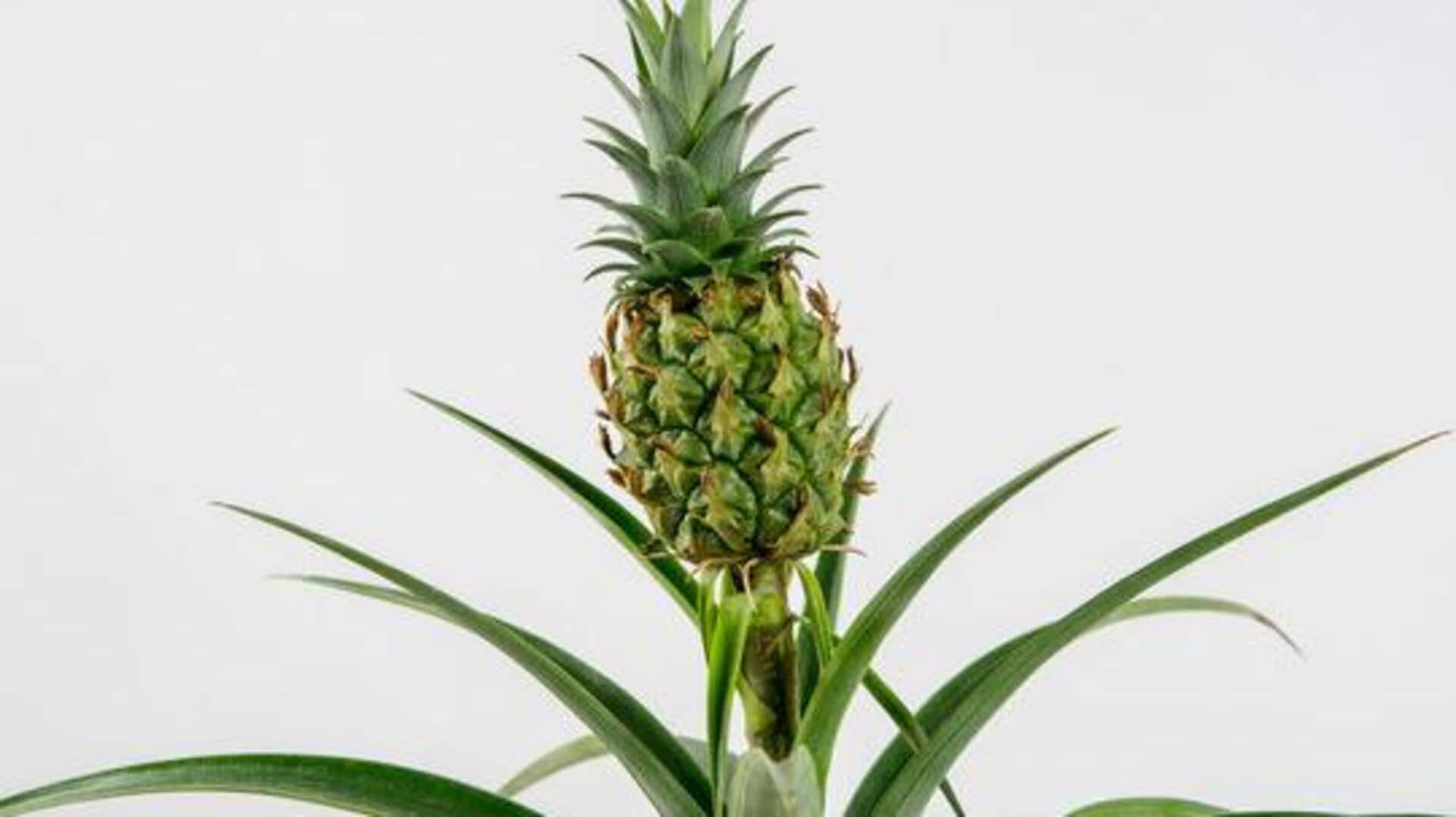
How to grow ornamental pineapples at home
What's the story
Growing ornamental pineapples indoors can be a rewarding experience. These vibrant plants not only add a tropical touch to your home, but they are also relatively easy to care for. With the right conditions and care, you can enjoy their unique beauty all year round. Here are some practical tips to help you successfully grow ornamental pineapples indoors, ensuring they thrive in your living space.
Potting essentials
Choosing the right pot and soil
Selecting the right pot is crucial for your pineapple plant's growth. Choose a pot with drainage holes to prevent waterlogging, which can damage the roots. A six- to eight-inch diameter pot is usually ideal for young plants. Use well-draining soil, like a mix of potting soil, sand, or perlite, to provide adequate aeration and drainage.
Light requirements
Providing adequate light
Ornamental pineapples need plenty of bright, indirect sunlight to flourish indoors. Place them near a south or west-facing window where they can get at least six hours of light every day. If natural light is insufficient, you can use fluorescent or LED grow lights to provide the necessary illumination.
Watering tips
Watering techniques
Proper watering is key to keeping your pineapple plant healthy. Water when the top inch of soil feels dry to touch, but avoid overwatering, as it can lead to root rot. Make sure excess water drains out of the pot after each watering session. During winter months, reduce watering frequency, as the plant's growth slows down.
Climate control
Maintaining optimal temperature and humidity
Ornamental pineapples do best in temperatures between 65 degrees Fahrenheit and 85 degrees Fahrenheit (18 degrees Celsius and 29 degrees Celsius). Keep them away from cold drafts or sudden temperature changes that can stress the plant. To maintain humidity levels around 50%, consider using a humidifier or placing a tray filled with water near the plant.
Nutrient needs
Fertilizing for growth
To keep your ornamental pineapple plant healthy and vibrant, fertilize it every four weeks during the growing season with a balanced liquid fertilizer diluted to half strength. This ensures the plant receives the essential nutrients without the risk of fertilizer burn. However, during the fall and winter months, when the plant's growth slows, stop fertilizing. This prevents any potential nutrient imbalances during the dormant period.