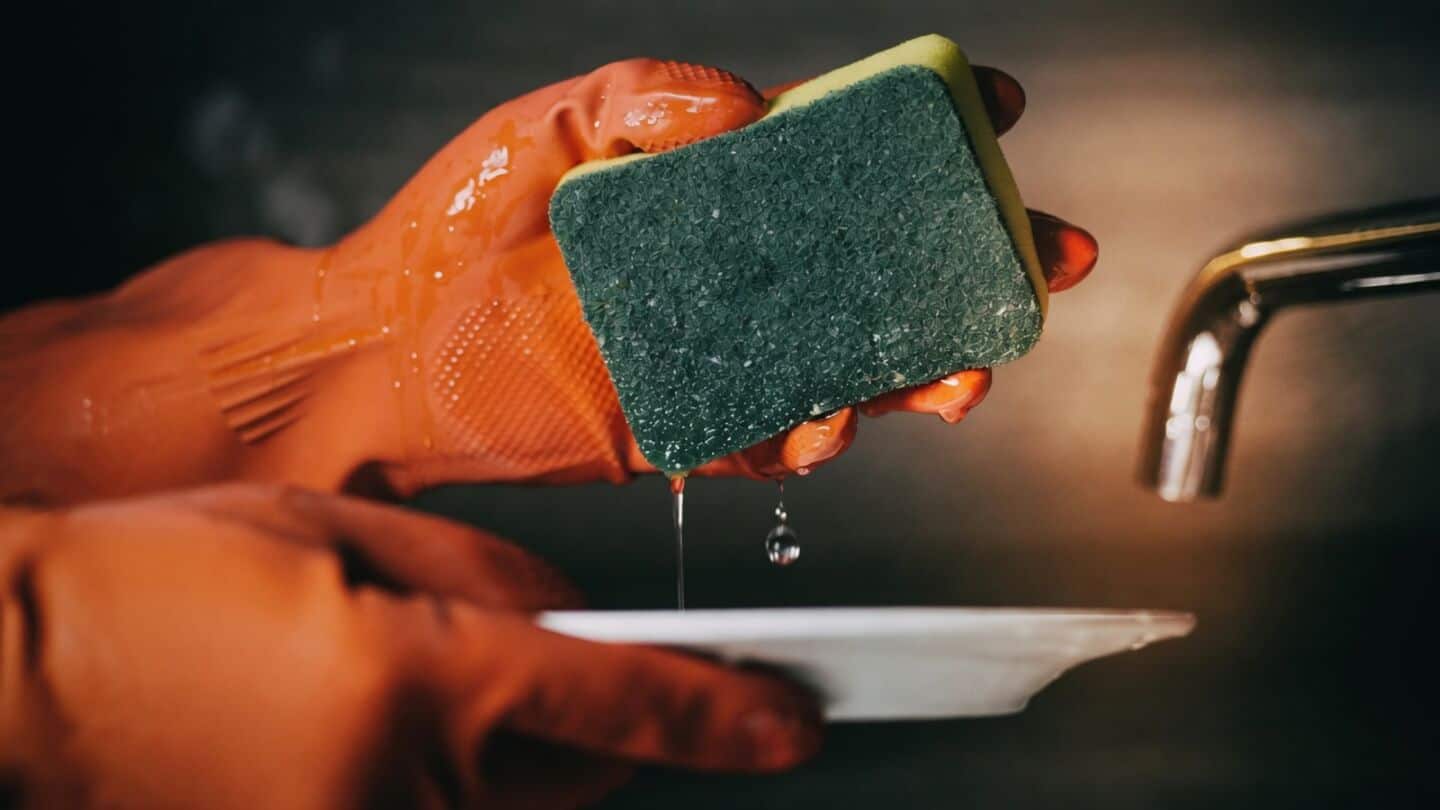
University of Bonn finds kitchen sponges release microplastics during dishwashing
Turns out, your kitchen sponge is doing more than just cleaning dishes: it's also releasing microplastics into the environment.
Researchers at the University of Bonn found that synthetic sponges, like those made from polyurethane, shed tiny plastic particles during everyday dishwashing.
These microplastics can end up in water and soil, making plastic pollution even worse.
Scientists measured 0.68-4.21g/year microplastics with SpongeBot
Using a SpongeBot (yes, really), scientists discovered that kitchen sponges used by a person could release between 0.68 and 4.21gm of microplastics every year, depending on what it's made from.
Sponges with less plastic content shed fewer particles.
The study highlights why we need smarter product designs and more awareness about how everyday stuff impacts the planet, even something as ordinary as a sponge.