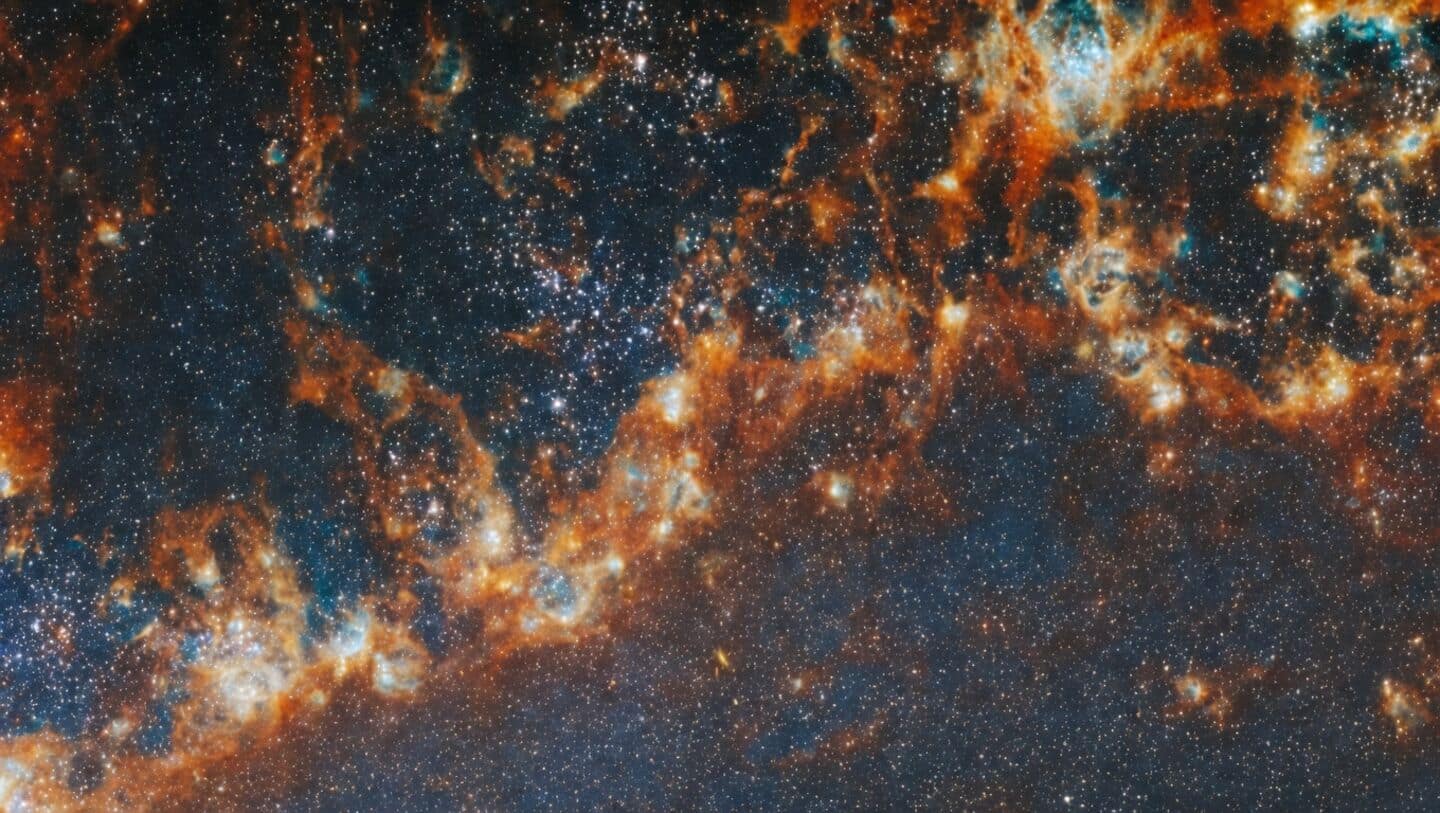
Webb and Hubble find larger star clusters clear gas faster
NASA's James Webb Space Telescope teamed up with Hubble to study how star clusters form and evolve in nearby galaxies.
By checking out about 9,000 clusters, scientists found that bigger clusters clear out their gas clouds much faster than smaller ones, a discovery that's helping us piece together how galaxies grow and change.
Clearing affects star and planet formation
Turns out, massive clusters can blow away their gas in just five million years, while smaller ones take almost eight million years.
This quick gas cleanup (called stellar feedback) not only stops new stars from forming nearby but also affects planet-building around young stars.
As lead author Angela Adamo puts it, these insights provide important constraints for understanding how star clusters form and emerge from their birth clouds, and even improve predictions about how stars and planets develop inside galaxies over time.