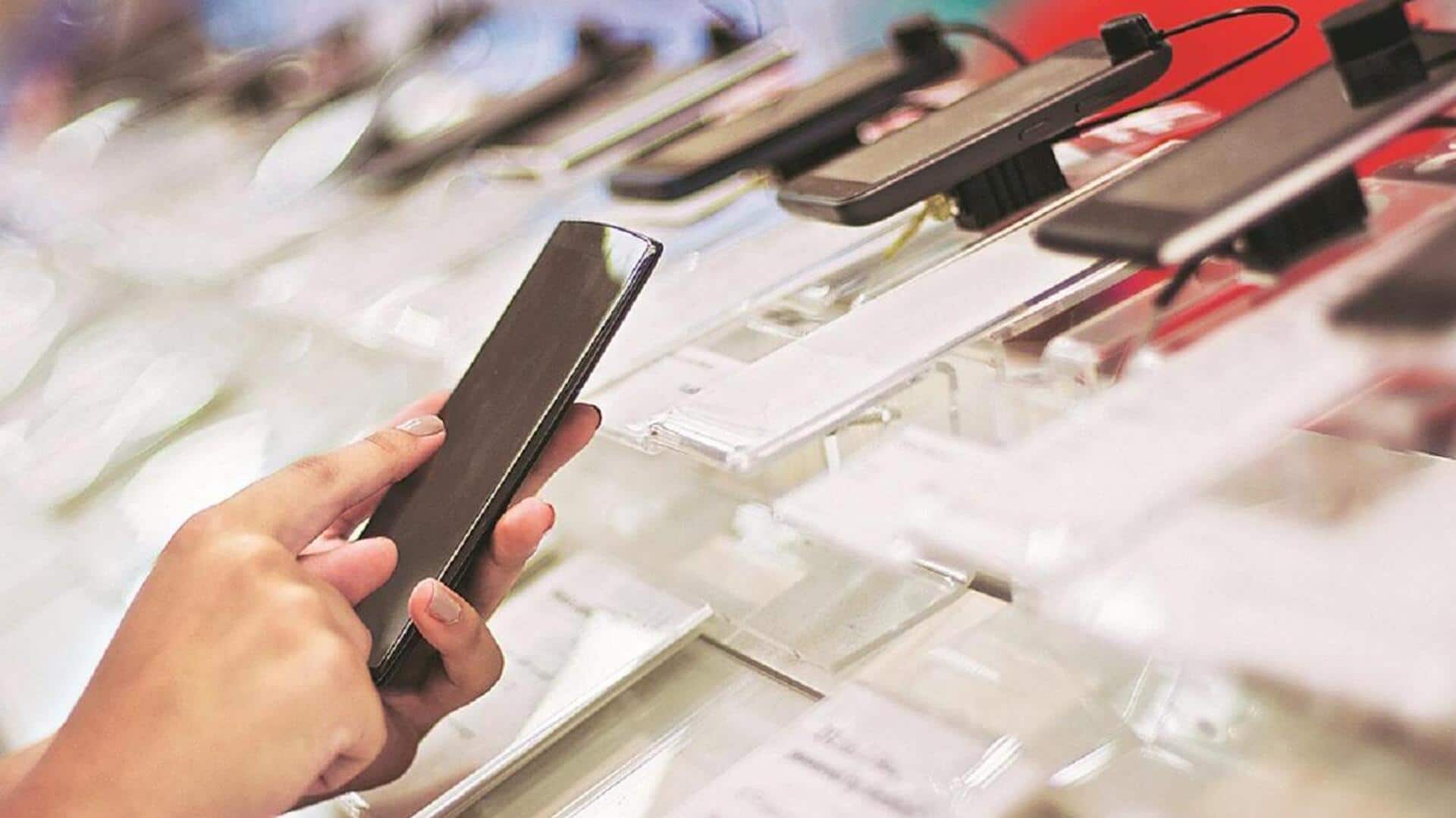
India's smartphone market to decline in 2026 amid stagnating demand
What's the story
India's smartphone market is expected to witness a decline in 2026, as per estimates from IDC and Counterpoint Research. The anticipated downturn is largely due to rising prices and stagnant demand. Tarun Pathak, Research Director at Counterpoint, explained that consumers are holding onto their smartphones for longer periods of time. This trend, along with a lack of feature phone upgrades and the growth of the secondary/refurbished market, has negatively impacted new smartphone sales.
Export growth
Exports surge despite domestic market stagnation
Despite the stagnation in the domestic smartphone market, exports have witnessed a significant surge.
Official data shows that exports are expected to hit a record $30 billion in calendar year 2025, a whopping 47% increase from over $20.45 billion in 2024.
The growth is largely attributed to Apple's iPhone shipments, which accounted for nearly three-quarters of the total value at over $22 billion during this period.
Market downturn
Q4 2025 sees significant shipment decline
The Indian smartphone market witnessed a major downturn in the December quarter of 2025.
Shipments fell by 8-10% year-on-year (YoY), with volumes declining to 32-34 million units from some 36 million units in the same period last year.
While part of this decline is attributed to a typical post-festive correction, analysts believe it indicates an increasingly structural rather than seasonal slowdown.
Future challenges
2026 to be more challenging for smartphone market
The year 2026 is expected to be even more challenging for India's smartphone market.
Counterpoint Research predicts a decline of about 2% in the sector, while IDC estimates shipments will be even lower at 145-147 million units.
This downturn is primarily attributed to a sharp and sustained rise in memory chip prices, which both research firms have identified as the biggest challenge facing the industry.
Cost management
Brands resort to shrinkflation, selective price hikes
In response to rising component costs, brands are increasingly resorting to shrinkflation, selective price hikes, reduced cashback offers or absorbing higher component costs in new launches.
The pace of recovery will largely depend on how long these component constraints persist.
IDC's Joshi warned that an unprecedented supply chain shock in the memory sector is likely to drive a market decline in 2026.
Market impact
Demand moderation expected in lower-tier price segments
Xiaomi India's Chief Operating Officer Sudhin Mathur, said that demand is likely to moderate in lower-tier price segments due to rising component costs.
However, he added that this impact may not be as pronounced in mid-to-premium segments.
Despite stagnant volumes, premiumization continues to support market value with average selling prices (ASPs) rising 9-10% in 2025 and expected to rise another 5% in 2026.