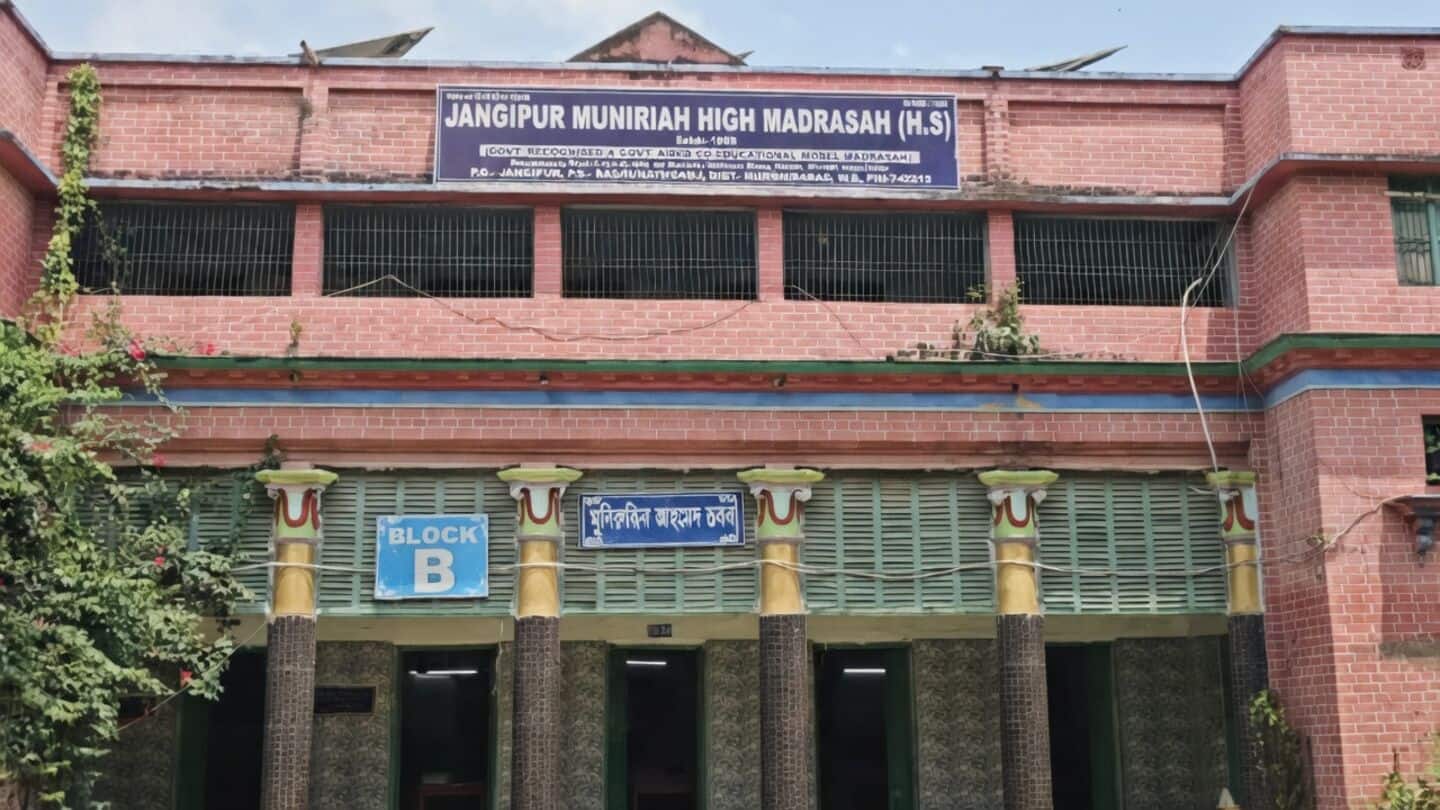
Bengal government orders closure of 252 madrasas after survey
What's the story
The West Bengal government has issued closure notices to 252 madrasas as part of a review of Islamic educational institutions. The closure comes after Chief Minister Suvendu Adhikari ordered a statewide survey in June to identify recognized and unrecognized madrasas. The Minority Affairs and Madrasah Education Department surveyed Kolkata and 22 other districts, looking into madrasa management systems, student organization enrollment, funding sources, and registration status.
Closure details
Most of the 252 madrasas belong to Khariji sect
Reports suggest that most of the 252 madrasas ordered to be closed are from the Khariji sect.
Malda has at least 44 such institutions, while Uttar Dinajpur, South 24 Parganas, Nadia and Murshidabad have 37, 32, 25 and 25 respectively.
Additionally, show-cause notices have been issued to another hundred madrasas with serious irregularities.
Minority Affairs Minister Khudiram Tudu warned that these institutions must provide valid authorization or face closure.
Survey findings
2,132 approved madrasas in Bengal
The survey found that there are currently 2,132 madrasas with valid approval in West Bengal. However, there are also 2,396 unapproved madrasas operating in the state.
Tudu said further action will be taken after examining the responses of those served show-cause notices.
State Panchayati Raj Minister Dilip Ghosh highlighted past controversies surrounding madrassas and alleged links to extremist activities.
Political response
Political reactions to the decision
The decision has sparked a political debate in Bengal.
Bharatiya Janata Party (BJP) state chief Samik Bhattacharya supported the government's action, citing increased "radicalisation" activities in border areas.
Bengal minister and senior BJP leader Agnimitra Paul also backed the move, alleging that non-affiliated madrasas promoted anti-national education and sheltered Bangladesh-based terrorists.
However, Trinamool Congress MLA Kunal Ghosh defended madrasas as educational institutions and criticized what he called "terrorist jibes" against them.