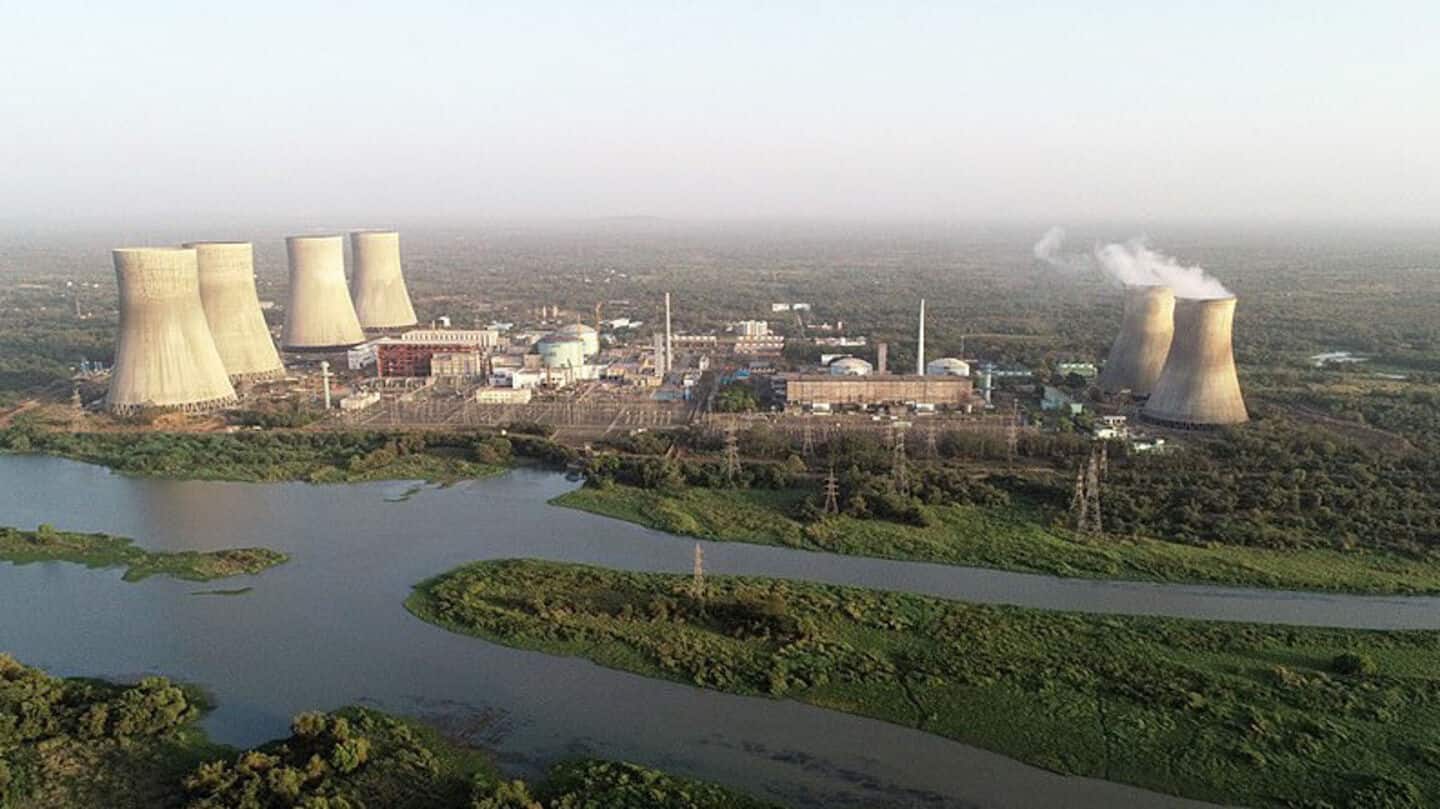
Russia to build India's largest nuclear power plant in Kudankulam
What's the story
Russian President Vladimir Putin has announced the construction of India's largest nuclear power plant in Kudankulam, Tamil Nadu. The announcement was made during a joint press conference with Indian Prime Minister Narendra Modi in New Delhi on Friday. "We are conducting a flagship project to build India's largest nuclear power plant at Kudankulam. Two of the six reactor units are already connected to the grid, while four more are under construction," he said.
Project details
Kudankulam plant to house 6 reactor units
The project, according to Putin, is expected to meet a significant portion of India's energy requirements by providing affordable and clean electricity for both industries and households.
The Kudankulam nuclear power plant will have six VVER-1000 reactor units with a total capacity of 6,000 MW.
The first two reactors were connected to India's power grid in 2013 and 2016. The four other reactors are still under construction.
Bilateral cooperation
Russia-India collaboration on nuclear technology
Putin also spoke about possible collaborations in small modular reactors, floating nuclear plants, and non-energy applications of nuclear technology such as medicine and agriculture.
He said, "We can also discuss small modular reactors, floating nuclear plants, and non-energy uses of nuclear technology."
"We are working with our Indian partners to build new international transport and logistics routes, including the International North-South Transport Corridor from Russia and Belarus to the Indian Ocean."
Trade growth
Rosatom delivers nuclear fuel to Kudankulam
Russia's state-run nuclear enterprise announced on Friday that it has delivered the first shipment of nuclear fuel for the third reactor at the Kudankulam nuclear power plant.
Seven flights from Russia are planned to supply the full reactor core and some reserve fuel. These cargoes are part of a deal signed in 2024 that includes fuel supply for the Kudankulam plant's third and fourth VVER-1000 reactors for the duration of their service life, beginning with initial loading.