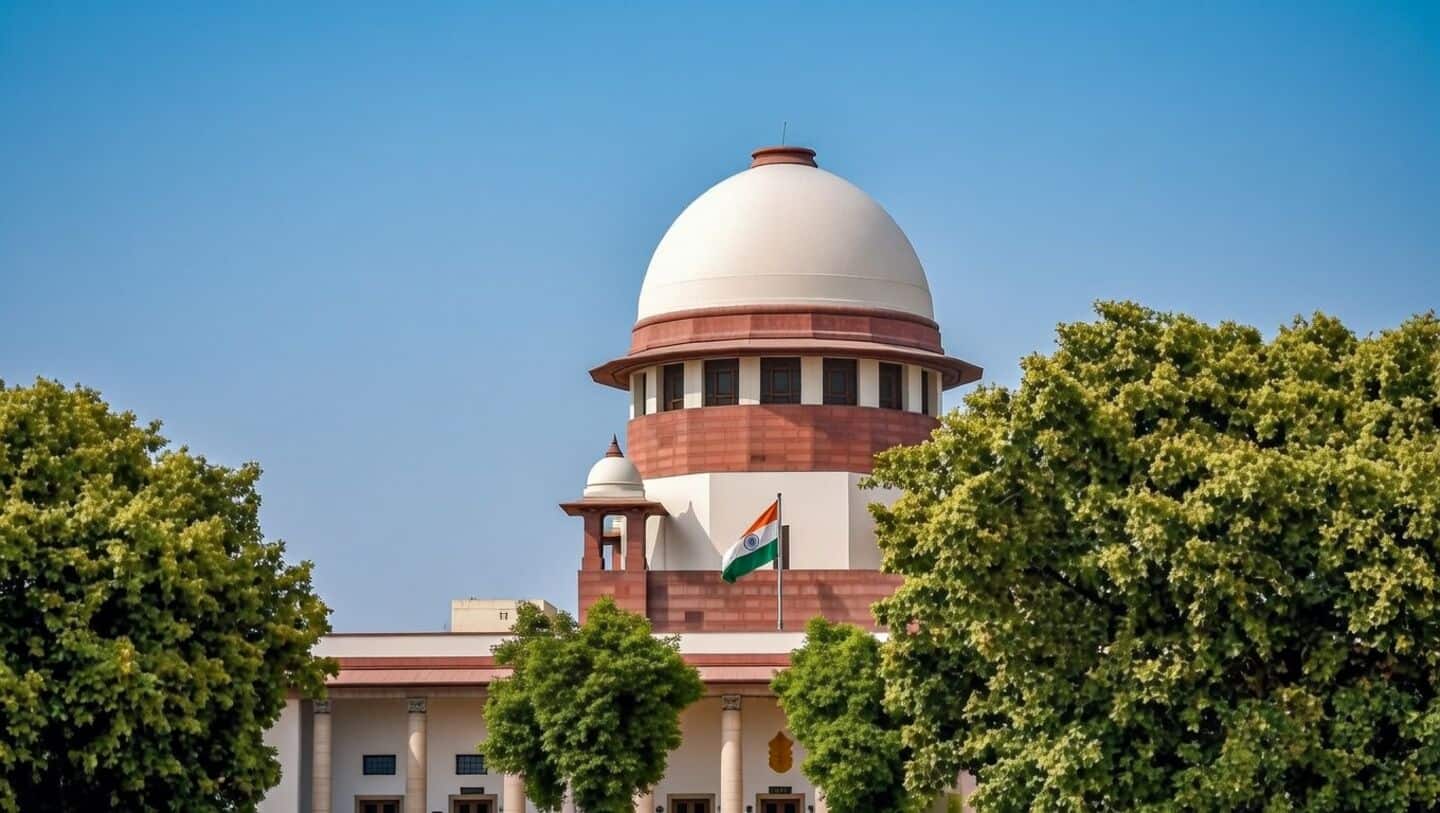
Supreme Court allows passive euthanasia for man in vegetative state
In a historic first, the Supreme Court has allowed doctors to withdraw life support from Harish Rana, a 32-year-old who has been in a vegetative state since a 2013 accident left him fully paralyzed.
This is India's first court-ordered passive euthanasia under the 2018 Common Cause guidelines.
Medical boards agreed on no chance of recovery
After years of legal struggle and an earlier rejection by the Delhi High Court, Rana's case went to the Supreme Court.
Two medical boards reviewed his condition and agreed there was almost no chance he would recover: he is dependent on clinically assisted nutrition and hydration through feeding tubes and requires continuous medical care, including respiratory support via a tracheostomy.
Judges praised parents for standing by son through everything
The judges praised Rana's parents for standing by him through everything, saying "To love someone is to care for them, not just in times of joy, but in their saddest and darkest hours. It is to care for them even when the horizon is devoid of hope."
The court discussed procedural measures such as hospitals maintaining lists of doctors for nomination to medical boards and noted that some states had already constituted medical boards for such cases.
This ruling sets an important precedent and opens up new conversations about dignity and choice at life's end in India.