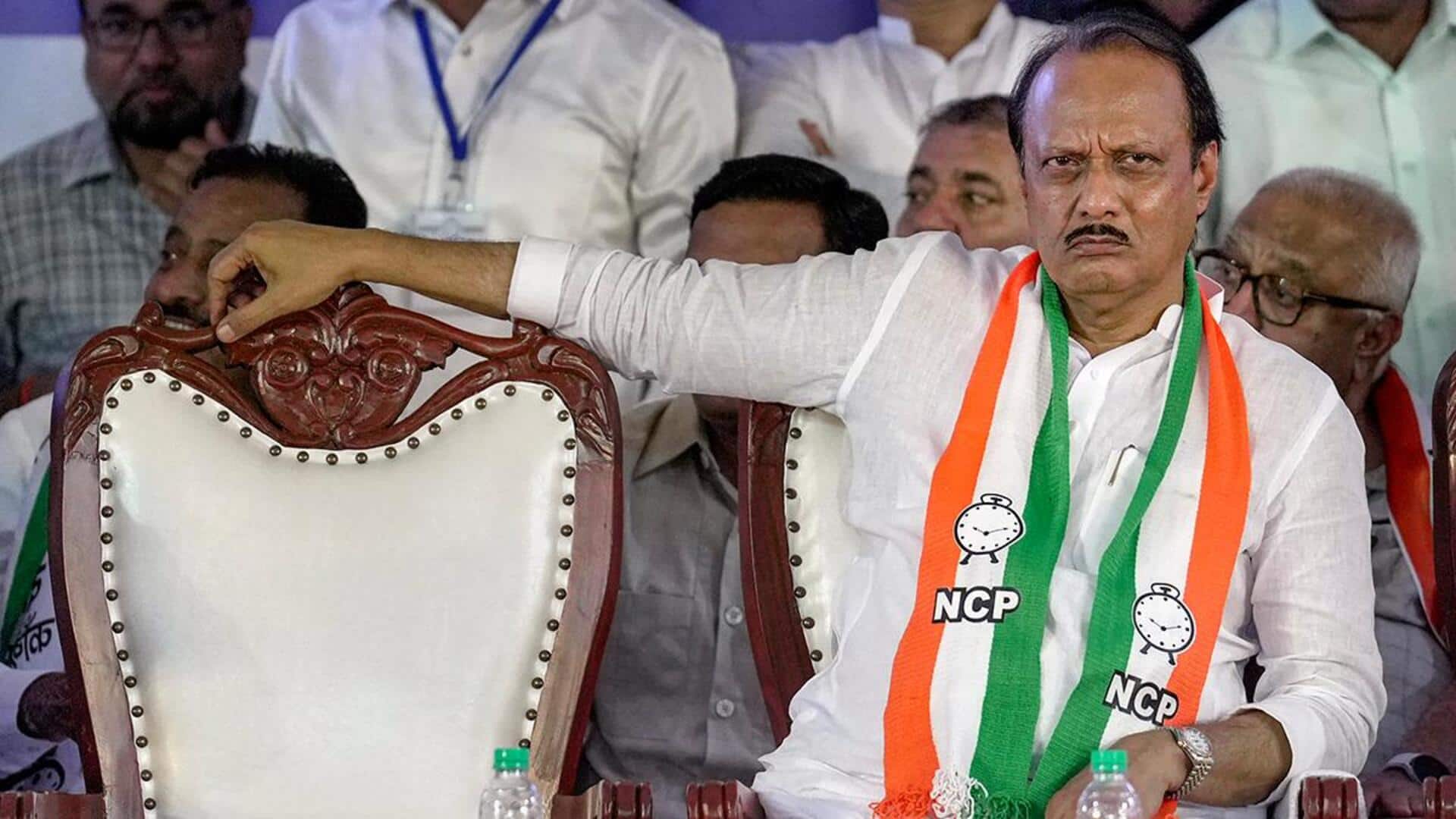
Who was Ajit Pawar, Baramati 'Dada' who dominated Maharashtra politics
What's the story
Ajit Pawar, a prominent figure in Maharashtra politics and the deputy chief minister of the state, died in a plane crash on Wednesday morning. The incident took place near Baramati in Pune district when his aircraft attempted an emergency landing. The Directorate General of Civil Aviation (DGCA) confirmed that five people aboard the chartered plane from Mumbai to Baramati died after it crash-landed at 8:45am.
Family roots
The Pawar family's political legacy
Born on July 22, 1959, in Deolali Pravara, Ahmednagar district, Ajit came from a family with deep political roots.
His grandparents Govindrao and Sharda Pawar, were involved in farming and cooperative trading in Baramati.
Govindrao's work with cooperative institutions laid the foundation for the family's political influence while Sharda managed agricultural responsibilities.
This combination of cooperative economics and rural leadership became the backbone of their political strength long before electoral victories followed.
Political ascent
Ajit Pawar's family and political journey
Ajit's father, Anantrao, worked with filmmaker V Shantaram at Rajkamal Studios in Bombay.
Anantrao was the elder brother of NCP (SP) chief Sharad Pawar, linking Ajit to one of India's most influential political figures.
Ajit had two siblings: his elder brother, Shriniwas, pursued business interests, while his sister, Vijaya Patil, worked in media before her death in 2017.
Despite differing paths, the family remained close-knit, with Ajit emerging as their most politically involved member.
Political mentor
Sharad Pawar's influence on Ajit's political career
His uncle, Sharad, was a four-time chief minister of Maharashtra and former Union minister.
Growing up, Ajit watched his uncle navigate politics, building coalitions and consolidating power.
His entry into public life was heavily influenced by Sharad's stature and political acumen.
He started his career in local institutions such as milk unions and sugar factories before entering politics.
Power dynamics
Ajit Pawar's rise to power and family tensions
His first major electoral success came in 1991 when he was elected to the Lok Sabha from Baramati.
However, he vacated the seat after Sharad joined Narasimha Rao's government as defense minister. This event highlighted the Pawar family's political strategy.
He was later elected to the Maharashtra Legislative Assembly from Baramati in 1995, 1999, 2004, 2009, and 2014.
Under Sharad's wings, Ajit was inducted as Minister of State and gradually entrusted with greater responsibilities.
Political evolution
Formation of NCP and Ajit's independent political base
The creation of the NCP in 1999 was a watershed moment for both Sharad and Ajit.
After Sharad split from Congress, Ajit joined him in the new party, quickly becoming a key figure in its organizational structure.
At the age of 40, he was the youngest Cabinet Minister in Vilasrao Deshmukh's administration, overseeing the irrigation portfolio.
For almost ten years, he built an independent political base, leveraging his grip over cooperatives and irrigation schemes.
Family politics
Ajit Pawar's family dynamics and political aspirations
As Supriya Sule, Sharad's daughter, gained prominence, family dynamics became more complicated.
The most significant breakup in the Pawar family, however, came in 2023 when Ajit led a coup in the NCP before joining the BJP-Shiv Sena alliance.
Ajit later became deputy chief minister.
Lately though, the two factions had reunited, forging an alliance for the elections to the Pune municipal corporation and Pimpri-Chinchwad civic body.