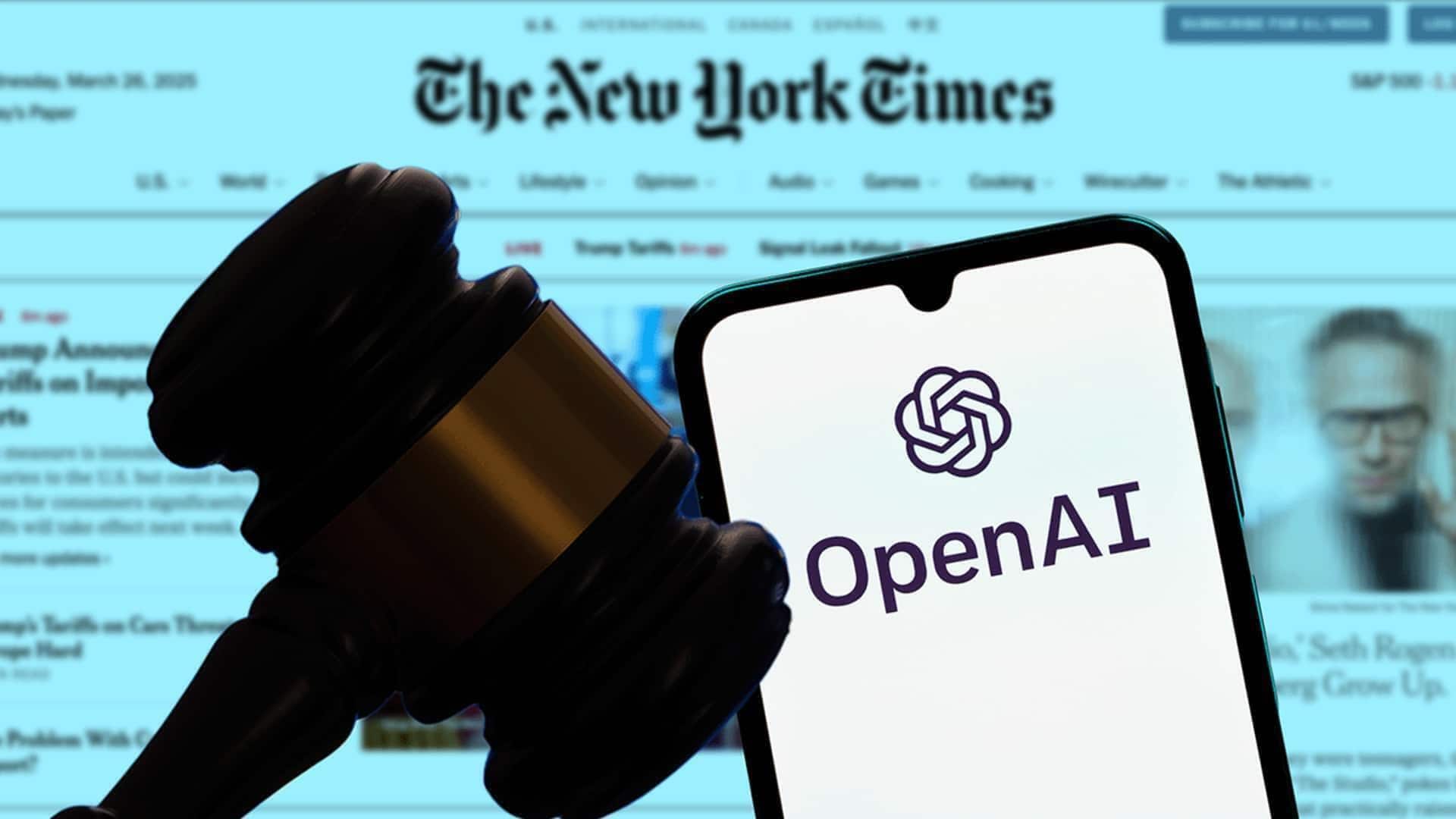
OpenAI ordered to share ChatGPT logs in NYT copyright case
What's the story
OpenAI has been ordered by a federal judge in Manhattan to hand over millions of anonymized chat logs from ChatGPT users. The ruling comes as part of a high-stakes copyright dispute with The New York Times and other news outlets. US Magistrate Judge Ona Wang said the 20 million logs were relevant to the outlets' claims and handing them over wouldn't violate user privacy.
Privacy concerns
OpenAI's objections to log disclosure rejected
Judge Wang dismissed OpenAI's privacy-related objections to an earlier order that required the AI start-up to submit the records as evidence.
She said, "There are multiple layers of protection in this case precisely because of the highly sensitive and private nature of much of the discovery."
An OpenAI spokesperson had previously cited a blog post by Chief Information Security Officer Dane Stuckey, which claimed The Times's demand for chat logs "disregards long-standing privacy protections" and "breaks with common-sense security practices."
Legal proceedings
OpenAI appeals against judge's order
OpenAI has separately appealed Judge Wang's order to the presiding judge of the case, US District Judge Sidney Stein.
A group of newspapers owned by Alden Global Capital's MediaNews Group is also involved in the lawsuit.
MediaNews Group executive editor Frank Pine said OpenAI's leadership was "hallucinating when they thought they could get away with withholding evidence about how their business model relies on stealing from hardworking journalists."
Information security
OpenAI's stance on log disclosure
OpenAI contended that handing over the logs would reveal confidential user information and "99.99%" of the transcripts have nothing to do with the infringement allegations.
However, Judge Wang had said in her initial order to produce the chats that OpenAI users' privacy would be protected by the company's "exhaustive de-identification" and other safeguards.
She reiterated on Wednesday that these measures would "reasonably mitigate associated privacy concerns."