India slams Pakistan at UNSC for 'legitimizing terrorism', spreading falsehoods
What's the story
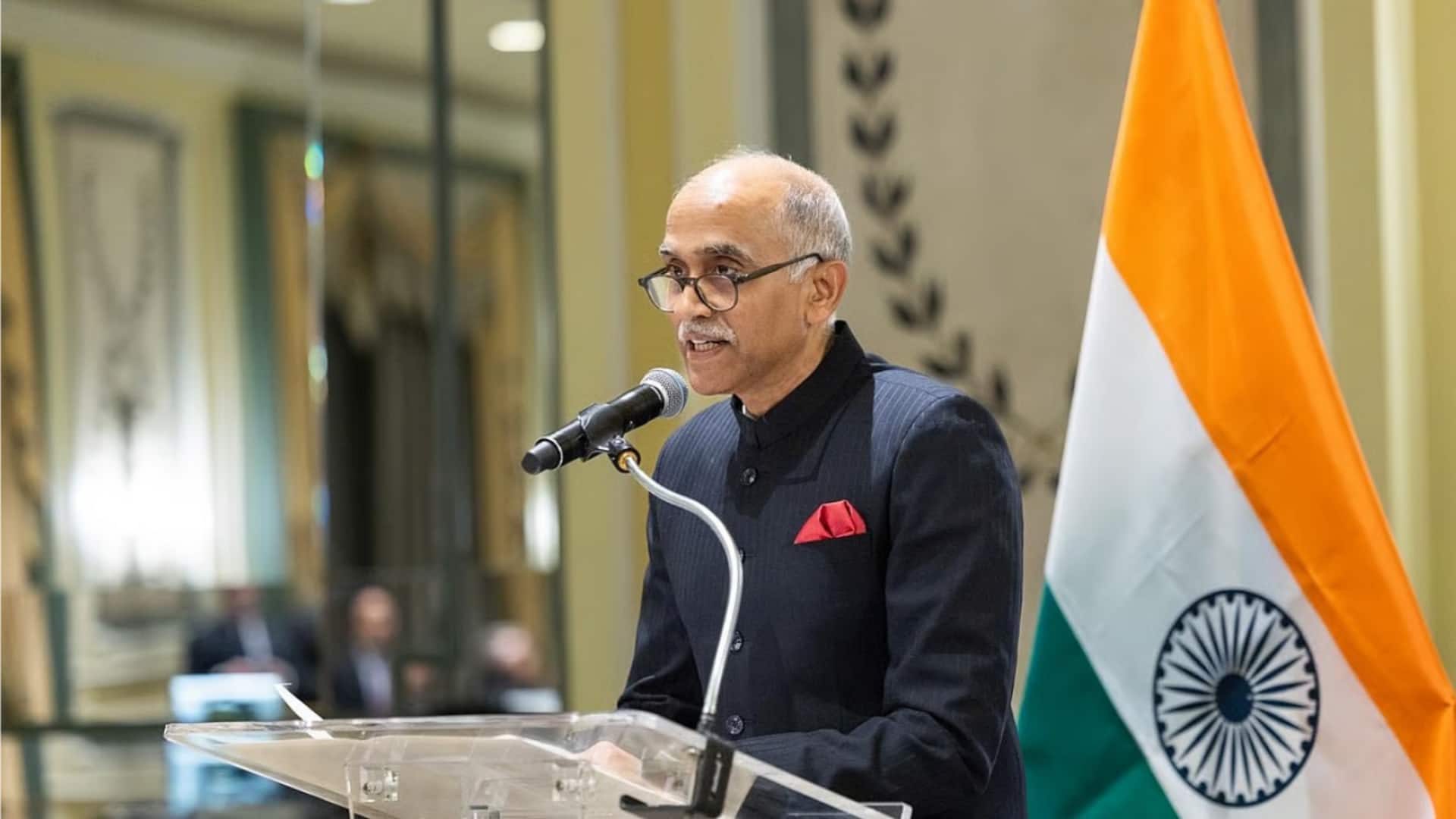
India's Permanent Representative to the United Nations, Parvathaneni Harish, has accused Pakistan of spreading falsehoods and sponsoring terrorism. Speaking at the United Nations Security Council (UNSC), Harish said he was responding to "the comments of the representative of Pakistan, an elected member of the Security Council, which has a single-point agenda to harm my country and my people." He rejected Pakistan's version of India's military actions last year as a "false and self-serving account."
Terrorism accusation
India responds to Pahalgam attack
Harish referred to the April 2025 attack in Pahalgam, Jammu and Kashmir, where he said "Pakistan-sponsored terrorists killed 26 innocent civilians in a brutal attack."
He stressed, "This August body itself called for holding the perpetrators, organisers, financiers, and sponsors of this reprehensible act of terrorism accountable and brought to justice. That is exactly what we did."
The Indian representative also defended India's military response as "measured, non-escalatory and responsible," aimed at dismantling terrorist infrastructure.
Treaty violation
India accuses Pakistan of violating Indus Waters Treaty
Harish also accused Pakistan of violating the Indus Waters Treaty, which India signed 65 years ago in good faith.
He said Pakistan has undermined the treaty through conflict and terrorism, leading India to place it in abeyance until Pakistan stops supporting cross-border terrorism.
The Indian envoy also dismissed Pakistan's comments on Kashmir as having no basis since it is an internal matter for India.
Governance critique
Harish criticizes Pakistan's governance and calls for reforms
Harish also criticized Pakistan's governance, asking it to "introspect about the rule of law."
He questioned how "it has let its armed forces engineer a constitutional coup through the 27th Amendment," and give "lifetime immunity to its chief of defence forces."
The Indian representative called for stronger international legal mechanisms and reforms in multilateral institutions as a "strategic necessity" for global peace and security.