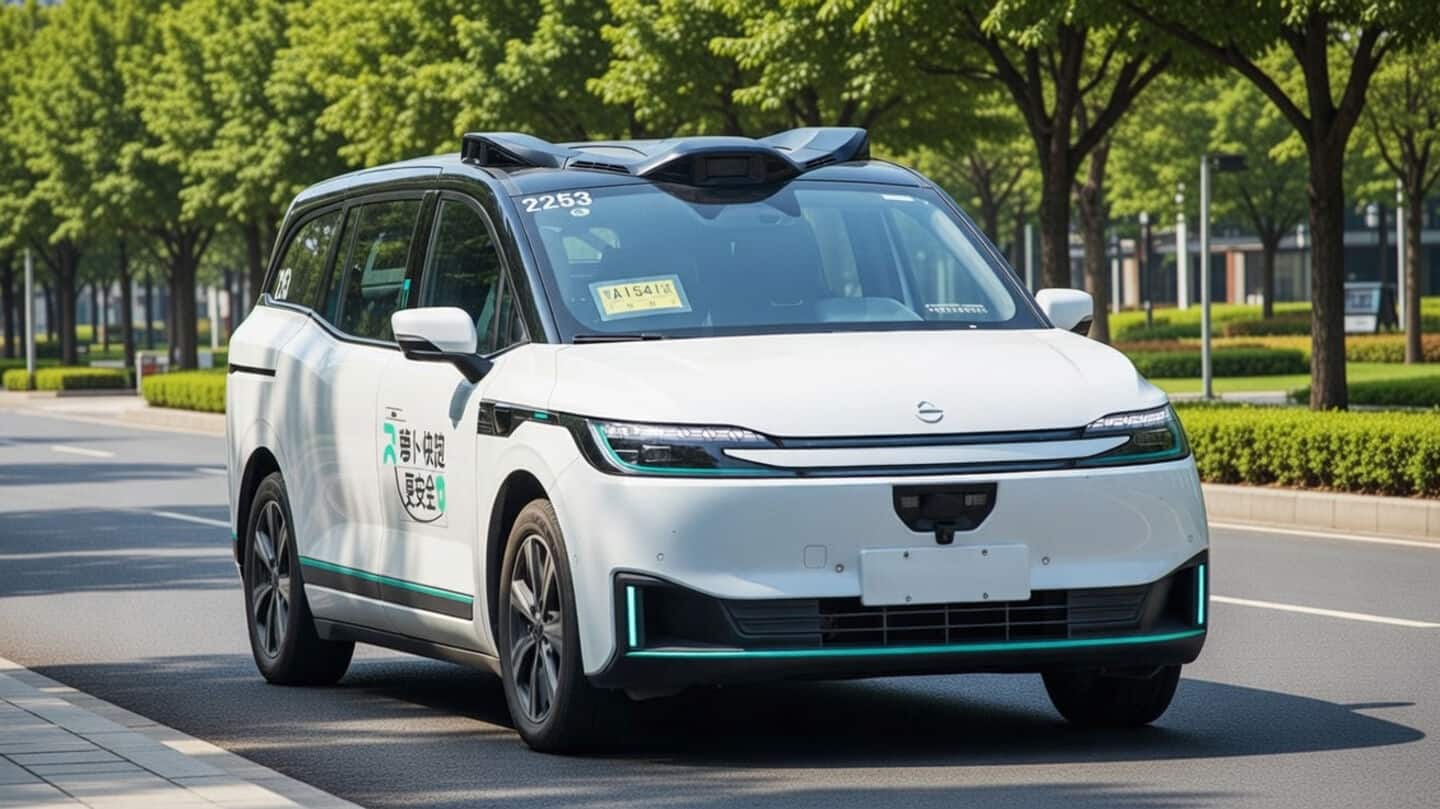
Robotaxi outage in China sparks reliability questions for AI cars
What's the story
A technical glitch has brought Baidu's autonomous taxis to a standstill in Wuhan, China. The incident left several passengers stranded for over an hour and caused traffic disruptions and crashes. The issue was first reported by Chinese social media users who witnessed the sudden malfunction of these self-driving vehicles.
Passenger accounts
Passengers were advised to stay inside with seatbelts fastened
One Wuhan college student, who wished to remain anonymous, shared her experience of being stuck in a Baidu robotaxi with two friends for about 90 minutes.
The vehicle malfunctioned and stopped four or five times during the trip before finally parking at an intersection.
Although it wasn't a busy road, the passengers were advised by the car's screen display to stay inside with seatbelts on until help arrived.
Support issues
Passengers struggled to get through to Baidu's customer support
The stranded passengers struggled to get through to Baidu's customer support, with one woman claiming the SOS button on the app was also disabled.
She had to force open the door and exit as traffic came to a standstill behind her.
Meanwhile, local police in Wuhan have said that the situation was likely caused by a system malfunction, but an investigation is still underway.
Incident impact
No injuries reported
Despite the glitch, no injuries were reported in the incident. However, there were some traffic disruptions and crashes as a result of the halted robotaxis.
One driver even crashed into one of the malfunctioning Baidu vehicles after another car changed lanes to avoid it.
The front-right fender of his orange SUV was completely ripped off while other parts appeared severely damaged.
Service expansion
Baidu robotaxi service operational in over 12 Chinese cities
Baidu, one of China's top self-driving companies, has launched its robotaxi service in more than a dozen Chinese cities.
The company recently expanded its operations to international locations such as Seoul, Abu Dhabi, and Dubai.
In February, Baidu announced that it had completed 20 million rides covering over 300 million kilometers.