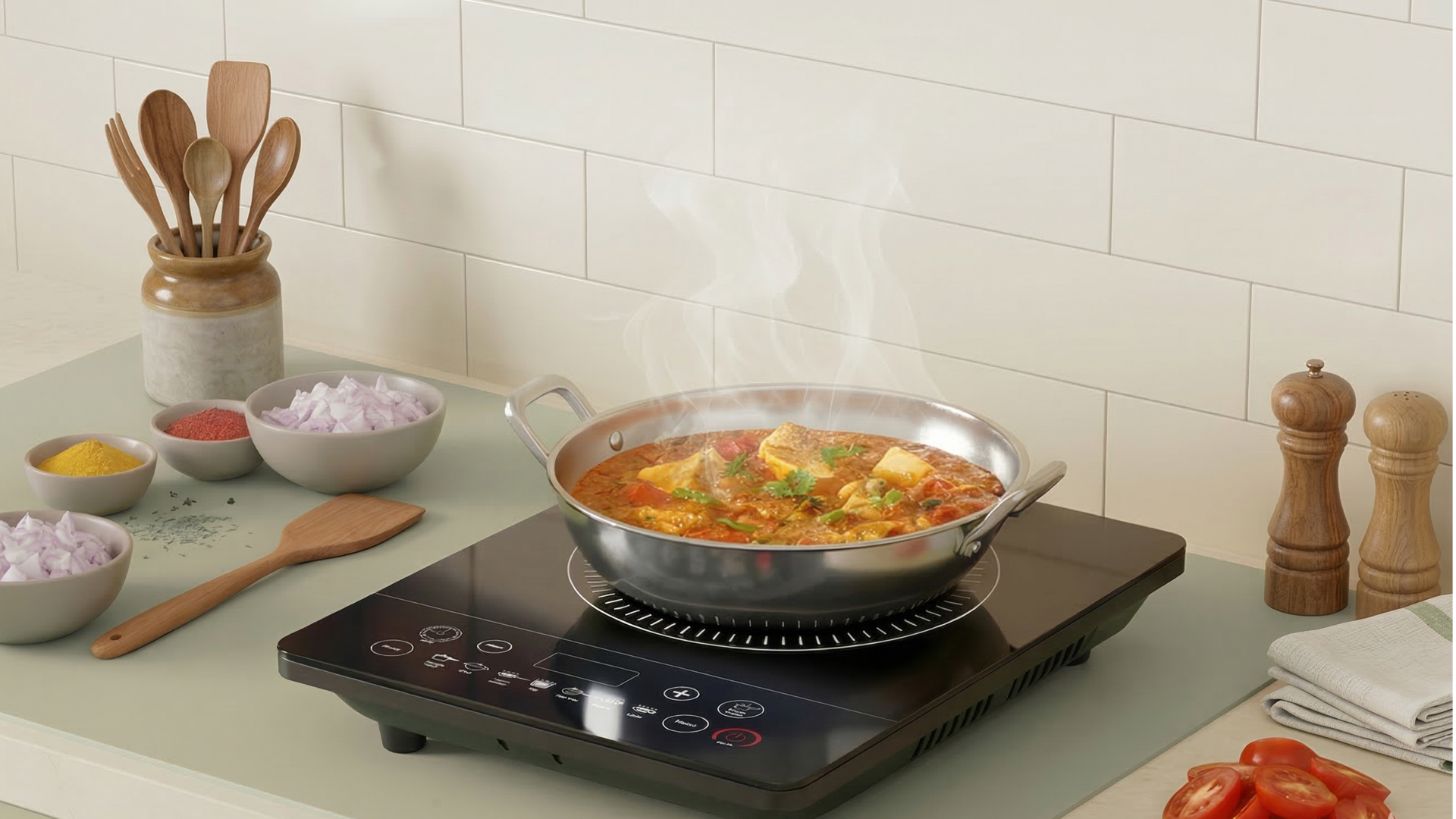
Induction cooktops sell out in India as LPG crisis deepens
What's the story
India is facing an LPG supply crisis, with induction cooktops flying off the shelves on quick-commerce platforms like Blinkit, Zepto and Swiggy Instamart. The crisis has been triggered by the ongoing US-Iran conflict which has disrupted global LPG supplies. Major cities such as Bengaluru, Chennai, Kolkata and Mumbai are witnessing a surge in demand for induction cooktops as people look for alternatives to gas cooking.
Consumer shift
Spike in search interest for induction cooktops
Google Trends data shows a spike in search interest for "induction cooktop" over the last two days, indicating consumers' growing interest in electric cooking alternatives.
This trend is consistent with the unavailability of induction cooktops on quick-commerce as well as e-commerce platforms in major cities across India.
Market shift
Induction cooktops as backup solution
Ravi Saxena, CEO and founder of Wonderechef, said that induction cooktops have become a secondary cooking appliance in many urban Indian homes over the past decade.
He estimated that 12-15% of urban households own an induction cooktop as a backup during gas shortages or cylinder delays.
Saxena also noted that when LPG supply is uncertain, households increasingly rely on induction for daily tasks like boiling milk or making tea.
Cookware demand
Shift in cookware preferences
The LPG crisis has also led to a shift in cookware preferences among consumers.
Traditional Indian utensils, especially aluminum vessels, are not efficient on induction cooktops.
As a result, consumers are opting for magnetic stainless steel, triply cookware and ceramic non-stick cookware compatible with induction technology.
Saxena warned that this sudden demand could push prices of induction-compatible cookware upward in the short term due to specific material requirements and production limitations.
Crisis overview
Impact of US-Iran conflict on India's LPG supply
India imports 62-67% of its LPG, with nearly 85-90% coming through the Strait of Hormuz. The ongoing US-Iran conflict has effectively blocked this route, severely affecting supplies.
Major Gulf exporters like Iraq and Kuwait have also cut output.
The commercial sector is bearing the brunt of this disruption, with around 20% of eateries in Mumbai shutting down due to cooking gas shortages.
Crisis response
Government takes steps to ensure fair gas distribution
In response to the crisis, the government has invoked the Essential Commodities Act, 1955, to regulate gas cylinder distribution and prevent hoarding or unfair pricing.
Officials have assured that India has enough fuel reserves for 25-30 days.
A three-member committee of Oil Marketing Company executives has been formed to address supply complaints from the commercial sector.