Top whirlpool plunge spots in Africa: A list
What's the story
Africa is home to some of the most stunning natural whirlpool plunge spots, which are ideal for adventure-seekers. These places provide an exhilarating experience of nature's power and beauty. From the majestic Victoria Falls to the lesser-known, but equally thrilling, Blue Nile Falls, each of these spots has something unique to offer. Here are some of the best whirlpool plunge spots in Africa for the adventurous souls.
#1
Victoria Falls: A majestic wonder
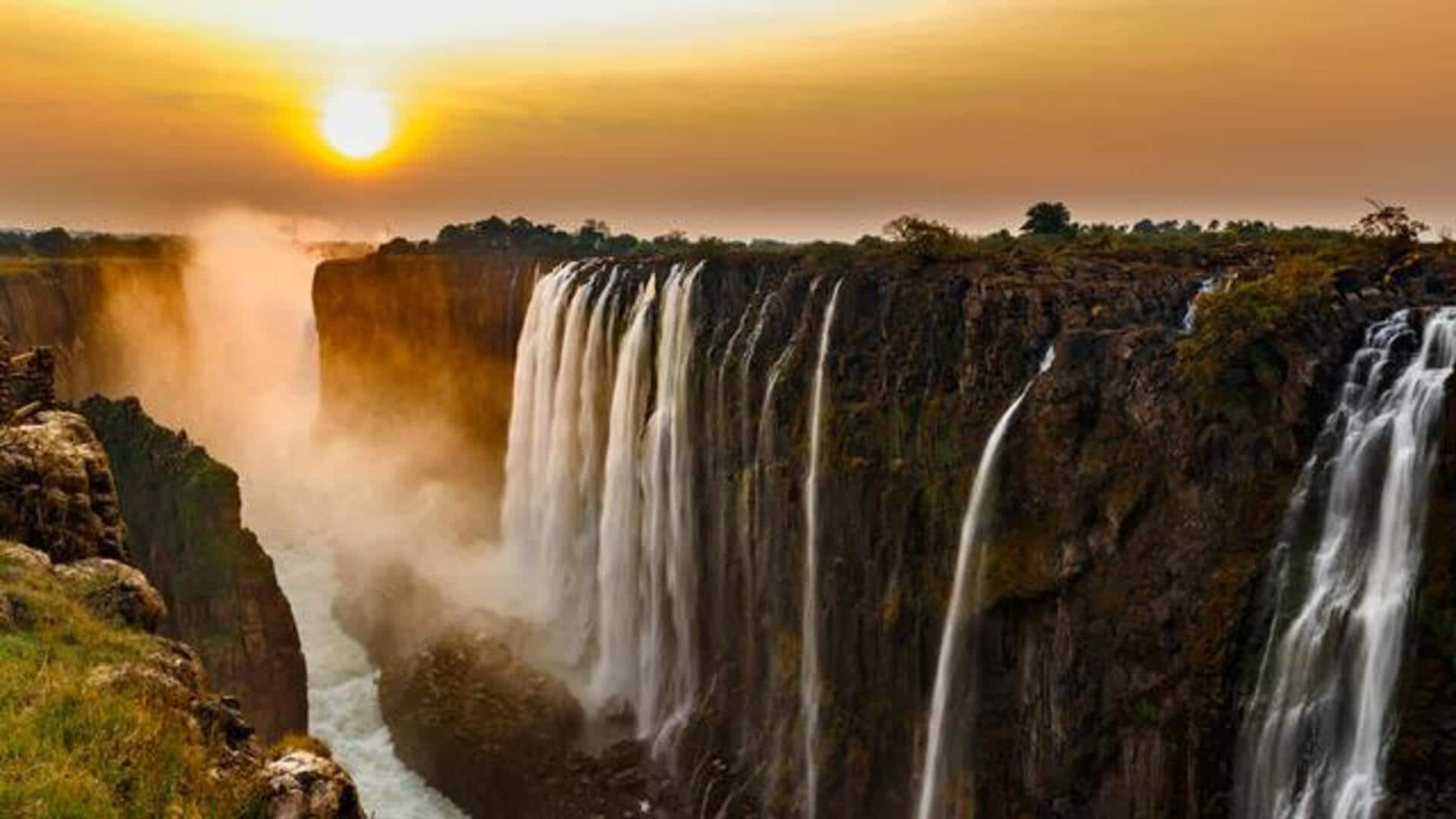
Victoria Falls, located on the border of Zambia and Zimbabwe, is one of the largest and most famous waterfalls in the world.
The Zambezi River plummets over a height of 108 meters, creating a thunderous roar and misty spray.
Adventurers can try white-water rafting in the nearby rapids or take a dip in Devil's Pool at certain times of the year when water levels are low.
#2
Blue Nile Falls: Ethiopia's jewel
Known as Tis Issat or "water that smokes" in Amharic, Blue Nile Falls in Ethiopia is a breathtaking sight.
The falls drop around 45 meters into a deep gorge below.
The area is perfect for hiking and exploring local villages nearby.
The best time to visit is during the rainy season when the falls are at their most powerful.
#3
Tugela Falls: South Africa's hidden gem
Tugela Falls in Royal Natal National Park is one of the highest waterfalls in the world at 948 meters.
The Tugela River cascades down in multiple tiers, creating a stunning view surrounded by Drakensberg Mountains.
Hikers can enjoy trails leading to different viewpoints of this hidden gem, which is less crowded than other popular African falls.
#4
Kalambo Falls: A remote beauty
Kalambo Falls on the border of Tanzania and Zambia is one of Africa's tallest uninterrupted waterfalls at 221 meters high.
Situated in remote terrain, this natural wonder is accessible only by footpaths through dense forests or savannahs dotted with wildlife such as baboons or antelopes grazing nearby during dry seasons when water flow decreases significantly compared to wet months from November through April each year.