Kid's math skills poor? The answer lies in your kitchen
What's the story
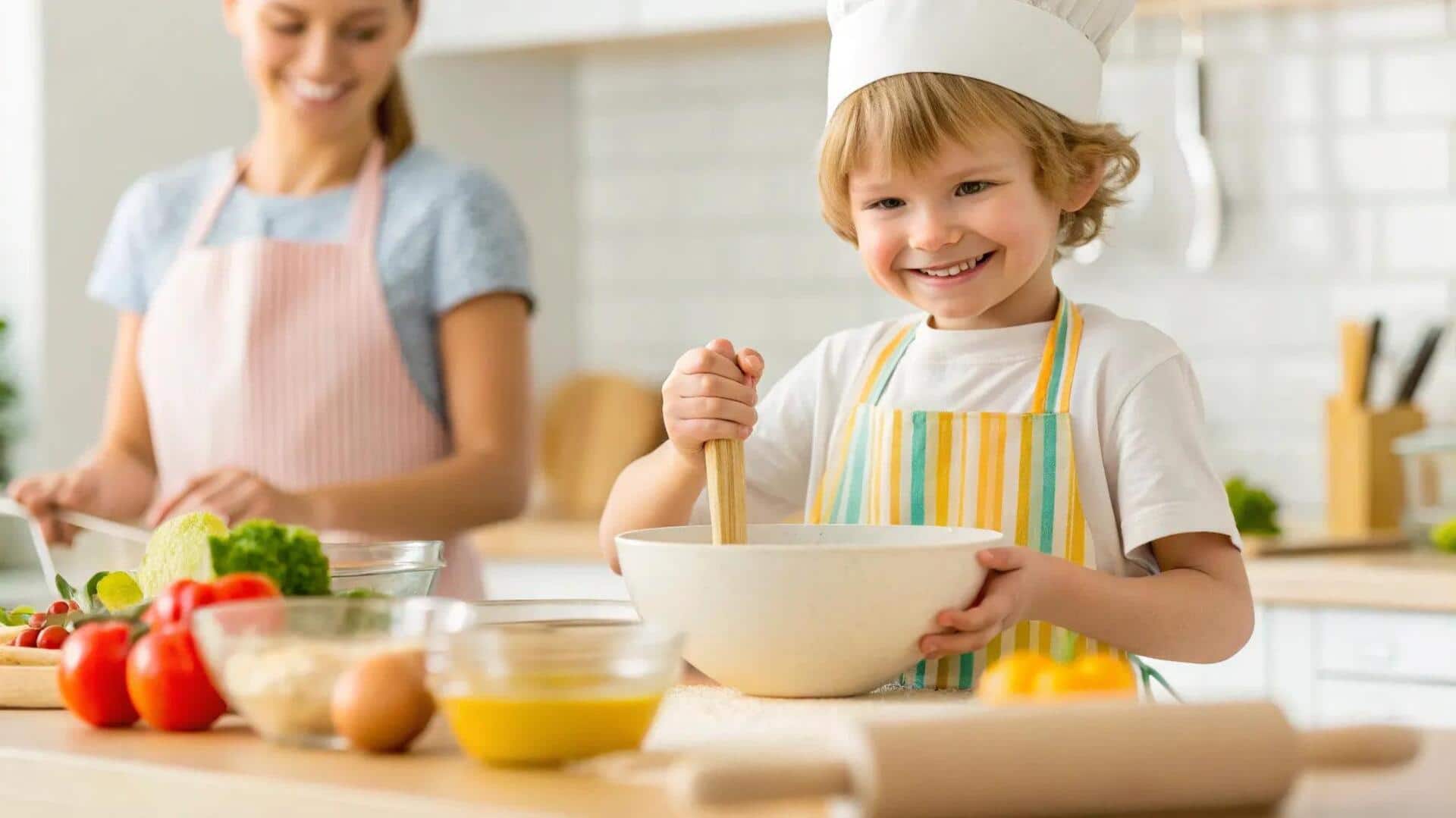
Cooking is a great way to teach kids math skills, and it can be fun and engaging. When kids help out in the kitchen, they learn to measure, count, and understand fractions. These activities not only make them better cooks but also boost their confidence in math. Here are five simple cooking tasks that can help kids develop their math skills while having fun.
Tip 1
Measuring ingredients
Measuring ingredients is an excellent way to teach kids about volume and weight. Ask them to use cups or spoons to measure out flour, sugar, or water. This activity helps kids understand concepts like half, quarter, and full. It also reinforces the idea of precision in cooking and math.
Tip 2
Counting items
Counting items is a basic yet important skill that can be practiced while cooking. Ask your child to count how many apples or carrots you need for a recipe. This simple task helps reinforce basic counting skills and number recognition. It also gives them a sense of responsibility as they contribute to meal preparation.
Tip 3
Dividing portions
Dividing portions is a great way to introduce kids to division and fractions. When preparing meals for the family, ask your child how many slices each person would get if you cut a pizza into eight slices. This activity helps them understand how division works in real-life situations.
Tip 4
Timing cooking processes
Timing is everything in cooking, and it also makes for a great way to teach kids about measuring time. Have them set timers for baking cookies or boiling pasta. This task helps them learn how to manage time effectively while also reinforcing their understanding of minutes and seconds.
Tip 5
Adjusting recipes
Adjusting recipes according to the number of servings is an advanced task that involves multiplication and division skills. Ask your child how many ingredients you need if you double or halve a recipe for pancakes or muffins. This activity not only enhances their problem-solving abilities but also gives them practical experience with scaling quantities accurately.