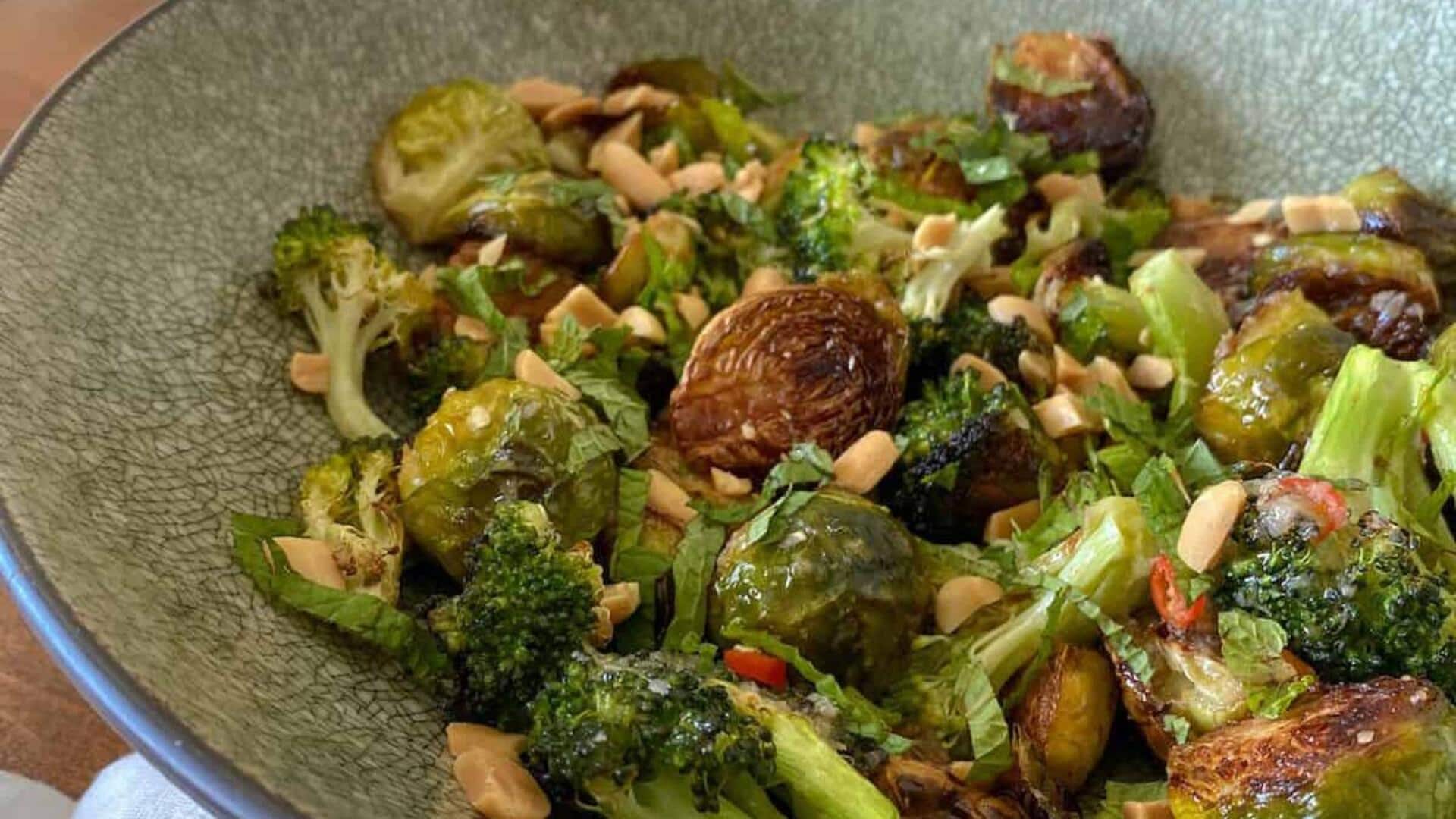
Broccoli v/s brussels sprouts: Which has a higher fiber content?
What's the story
Broccoli and brussels sprouts are two of the most popular cruciferous vegetables, loved for their health benefits. Both are packed with vitamins, minerals, and antioxidants, making them an essential part of a healthy diet. While they have a lot in common, they also differ when it comes to their nutritional profiles. Here is a look at the nutritional differences between broccoli and brussels sprouts.
#1
Vitamin content comparison
Broccoli is an excellent source of vitamin C, providing more than 100% of the daily recommended intake in a single serving. It also contains vitamin K and folate. Brussels sprouts also provide a good dose of vitamin C, but have more vitamin K than broccoli. They also provide some folate, but in lesser amounts than broccoli. Both vegetables contribute significantly to daily vitamin needs.
#2
Fiber and protein levels
Both broccoli and brussels sprouts are high in fiber, which is important for digestion and gut health. A cup of either vegetable can provide about four grams of fiber. However, brussels sprouts have a slight edge, with a higher fiber content per serving. When it comes to protein content, both are similar, providing about three grams per cup, making them great plant-based protein sources.
#3
Mineral content differences
Broccoli is rich in calcium and iron, which are essential for bone health and oxygen transport in the body, respectively. Brussels sprouts also provide iron, but have more potassium than broccoli. Potassium is important for heart health and maintaining blood pressure levels. Including either vegetable can help meet mineral requirements in your diet.
Tip 1
Antioxidant properties
Antioxidants are important for fighting oxidative stress in the body. Broccoli has sulforaphane, an antioxidant that may have cancer-fighting properties. Brussels sprouts are also rich in glucosinolates, which convert into active compounds with antioxidant properties when consumed or cooked lightly. Adding these vegetables to your diet can boost your antioxidant intake naturally, without supplements.