Why Slovenia's caves are its best-kept secret
What's the story
Slovenia, a small European nation, is home to some of the most stunning underground caves. These natural wonders are a must-visit for anyone looking for an adventure away from the usual tourist spots. From intricate limestone formations to vast underground chambers, these caves offer an experience unlike any other. Here's a look at some of Slovenia's hidden gems that promise an unforgettable journey into the depths of the Earth.
#1
Postojna Cave: A subterranean marvel
Postojna Cave is one of Slovenia's most famous attractions. Spanning over 24 kilometers, this cave system is known for its stunning stalactites and stalagmites.
Visitors can take guided tours on electric trains, which make it easier to navigate through the cave's expansive network.
The highlight of the tour is the Great Hall, which is large enough to hold concerts.
The cave also houses the world's only cave-dwelling amphibian, the olm.
#2
Skocjan Caves: A UNESCO World Heritage site
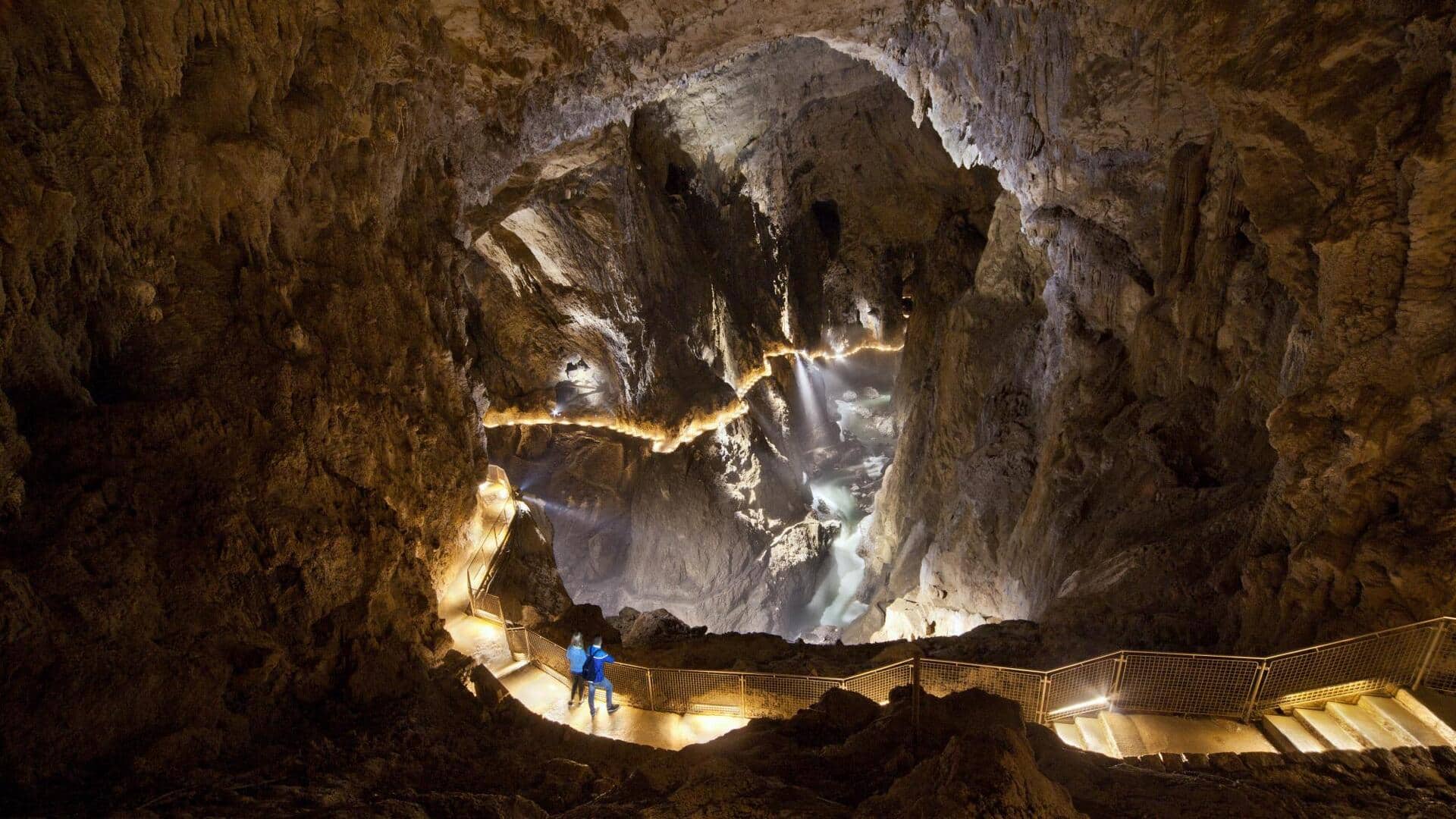
The Skocjan Caves are a UNESCO World Heritage site and are famous for their enormous underground canyons and waterfalls. The Reka River has carved out these caves over millions of years, creating a mesmerizing landscape.
Visitors can walk through several trails that lead to different parts of the cave system, including one of the largest underground chambers in Europe.
The acoustics in this chamber make it a popular spot for musical performances.
#3
Vilenica Cave: Europe's oldest show cave
Vilenica Cave is Europe's oldest show cave, dating back to 1633 when it was first opened to visitors.
It features stunning limestone formations and hosts an annual international literary festival inside its chambers.
The cave is smaller than some of its counterparts but offers guided tours that give you an insight into its geological history and cultural significance over the centuries.
#4
Idrija Mercury Mine: A journey into history
The Idrija Mercury Mine offers visitors a chance to explore a historic mining site rather than just natural caves.
The mine was one of Europe's largest mercury producers until it closed in 1996.
Guided tours take you through tunnels where miners once worked under harsh conditions, providing insight into industrial heritage along with stunning geological features formed by mining activities over centuries.