
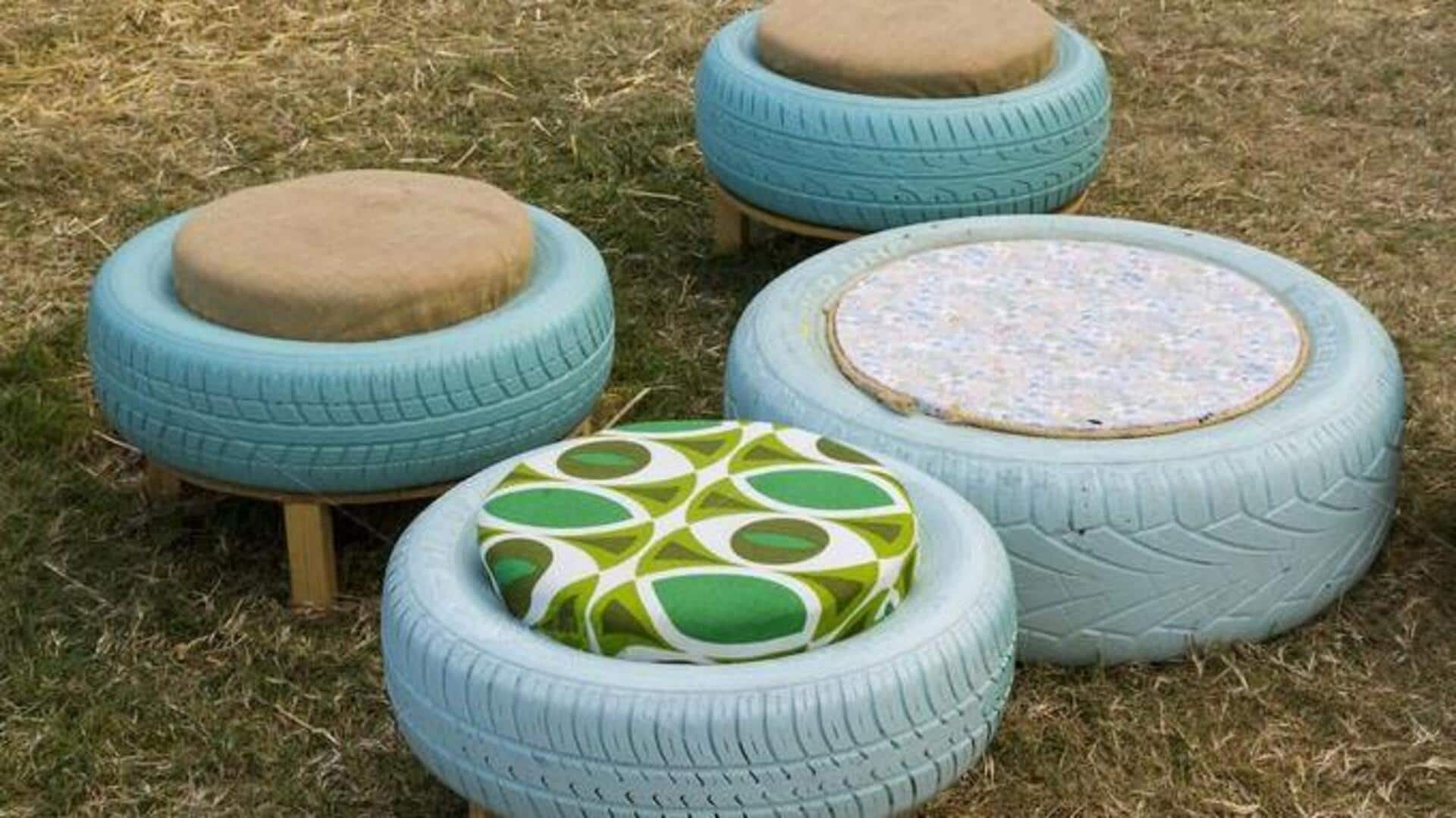
Create stylish stools using old tires, we tell you how
What's the story
Creating African mud cloth-inspired stools from recycled tires is a sustainable and creative project. It combines traditional African art with modern upcycling techniques, resulting in unique and functional pieces. Not only does this project promote environmental sustainability by repurposing old tires, but it also celebrates cultural heritage through the vibrant patterns of mud cloth. Here are some insights into making these stylish stools.
Materials needed
Gather necessary materials
To begin, collect old tires, sturdy fabric for the mud cloth design, paint or fabric dye in traditional colors, and strong adhesive or sewing materials. Ensure the tire is clean and free from debris. Choose fabrics that can withstand wear and tear while showcasing the mud cloth patterns effectively.
Pattern design
Design your mud cloth pattern
Mud cloth patterns are characterized by geometric shapes and symbols. Research traditional designs to incorporate into your stool's fabric covering. Use white paint or dye on a dark fabric background to replicate authentic mud cloth aesthetics. Sketch your pattern before applying it to ensure accuracy and consistency.
Base assembly
Assemble your stool base
Start by cutting the tire to the desired height for your stool. Use a strong adhesive to attach a flat wooden or metal base on top of the tire for stability. This will serve as the seat area of your stool. Ensure all parts are securely attached before proceeding with the next steps.
Fabric application
Apply mud cloth covering
Once the base is ready, wrap it with the chosen fabric, ensuring that it covers the entire surface area adequately. Secure it in place using adhesive or by sewing if needed. Pay attention to detail while applying the fabric to maintain the integrity of the mud cloth design.
Final touches
Finish with protective coatings
To ensure durability, apply a protective coating over the fabric-covered stool. This will help resist wear and tear, while also preserving the vibrant colors of the mud cloth design. Make sure the coating is suitable for both fabric and painted surfaces, to avoid any damage or discoloration over time.