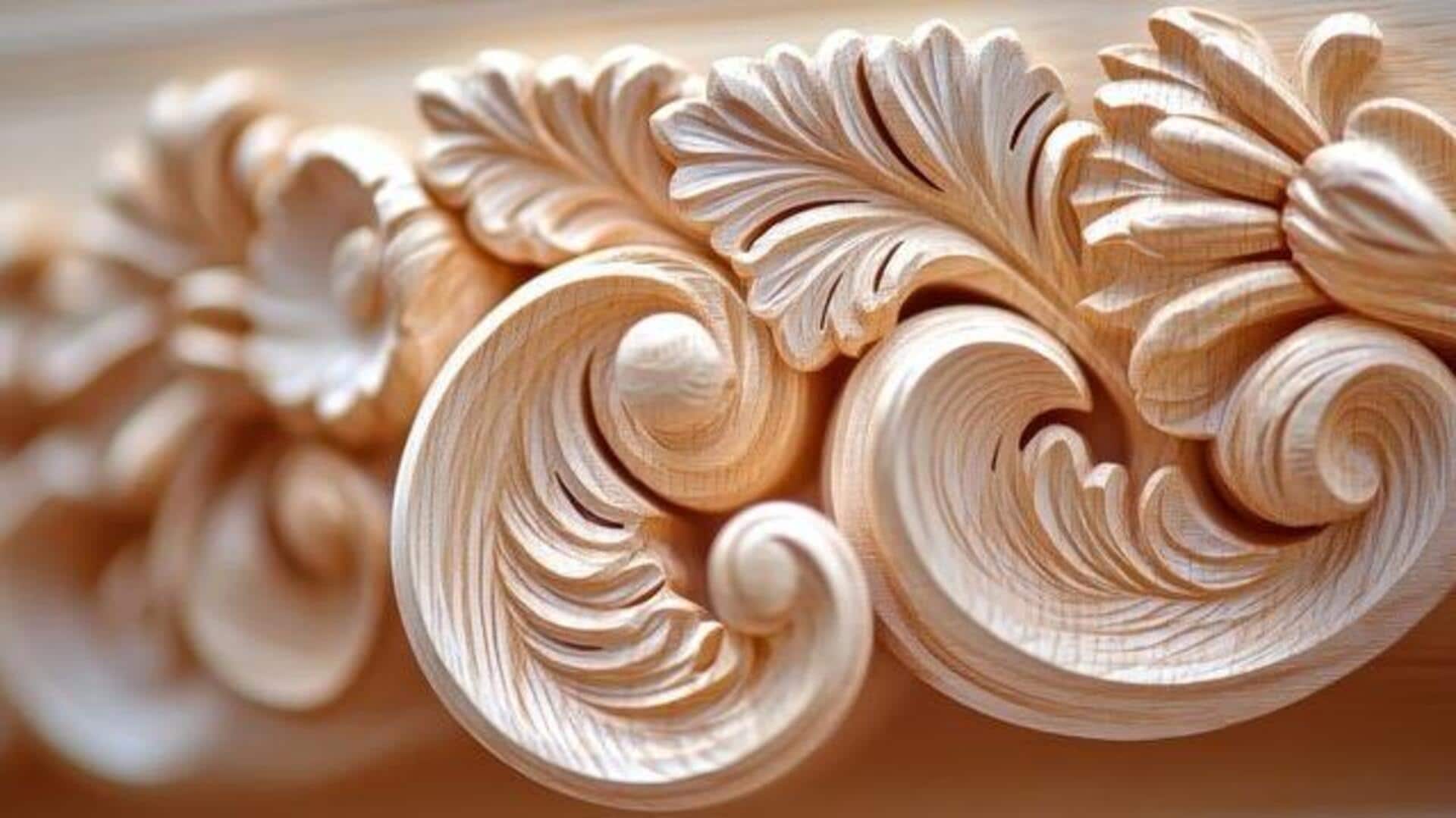
All about Lamu woodcarving
What's the story
Lamu woodcarving, a centuries-old craft from the Kenyan coast, is now getting a modern makeover. While the traditional art is known for its intricate designs and cultural significance, contemporary artisans are adding a minimalist twist to it. The fusion of Swahili heritage with modern aesthetics is not only preserving the craft but also making it relevant for today's market. Here's how Lamu woodcarving is evolving.
#1
Minimalist designs in Lamu woodcarving
Contemporary Lamu woodcarving is moving towards minimalist designs that focus on clean lines and simple forms.
These pieces often highlight the natural grain of the wood, rather than intricate patterns.
This shift appeals to modern consumers who prefer understated elegance over ornate detail.
By simplifying forms, artisans can create functional art pieces that fit seamlessly into modern interiors.
#2
Incorporating sustainable materials
Sustainability has become a key focus in contemporary Lamu woodcarving.
Artisans are increasingly using reclaimed or sustainably sourced timber to minimize environmental impact.
Not only does this practice support ecological conservation, but it also adds unique character to each piece as no two pieces of reclaimed wood are alike.
The use of sustainable materials also aligns with global trends toward eco-friendly products.
#3
Blending traditional techniques with modern aesthetics
While modern Lamu woodcarving embraces minimalist design, it still pays homage to traditional techniques.
Artisans combine age-old methods with modern aesthetics to create pieces that honor their cultural roots while appealing to current tastes.
This blend ensures that the craftsmanship remains authentic even as it evolves.
#4
Expanding market reach through online platforms
The rise of online platforms has opened new avenues for contemporary Lamu woodcarvers to reach global markets.
By showcasing their work on digital platforms, artisans can connect with buyers beyond local boundaries.
This expanded reach not only boosts sales but also raises awareness about this unique art form on an international scale.