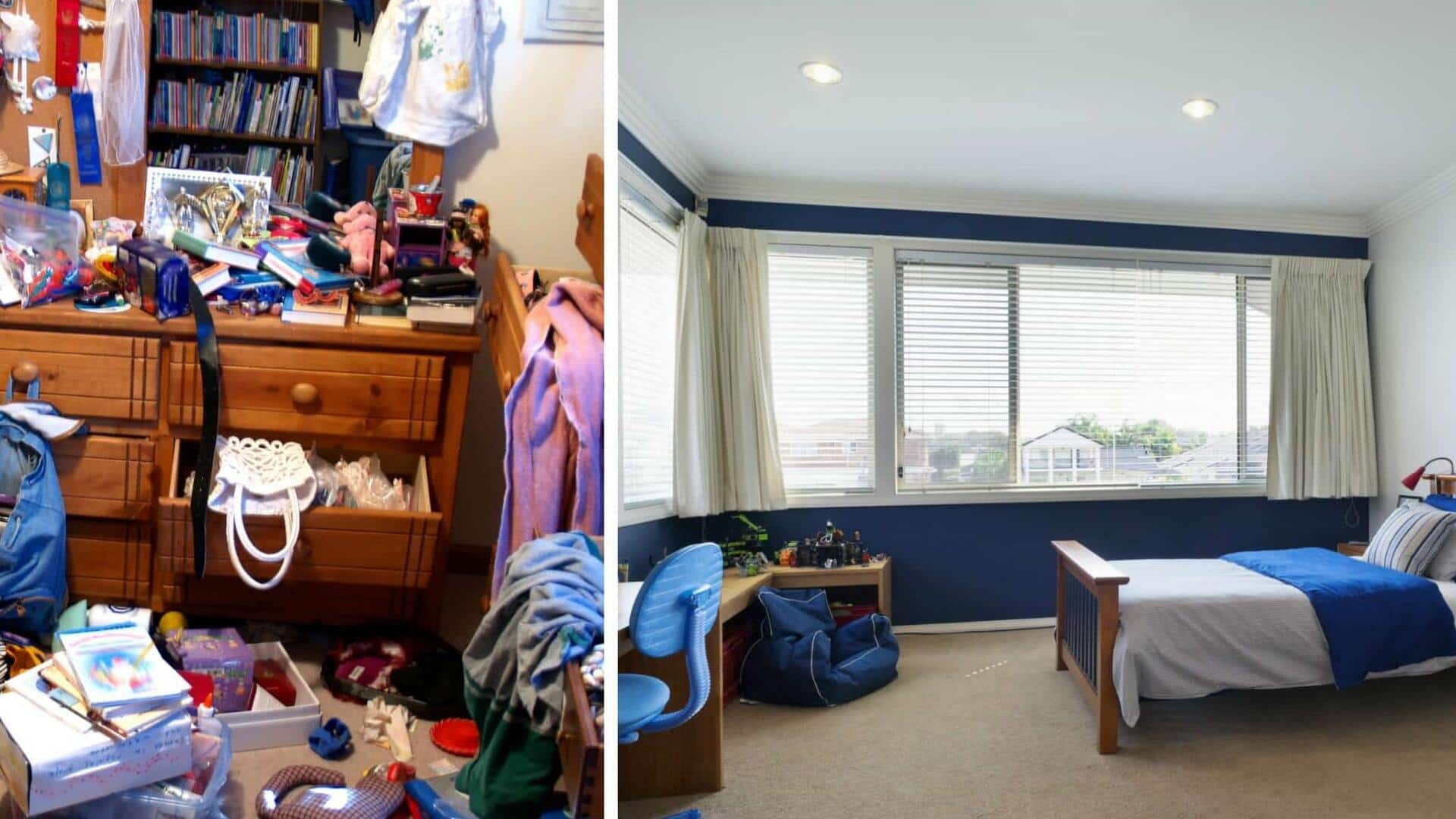
Did you know: Decluttering your home actually can reduce stress
What's the story
Decluttering your home can be an effective way to boost your mental health. A clutter-free environment often leads to a clearer mind and reduced stress levels. By systematically organizing your space, you can create a more peaceful and productive atmosphere. This guide provides practical steps to help you declutter efficiently, focusing on methods that promote mental well-being.
Tip 1
Start small with one room
Begin the decluttering process by focusing on one room at a time. This way, you will not feel overwhelmed by the magnitude of the task. Pick a room that you use frequently, as this will give you immediate results and motivation. Start with small areas like a drawer or shelf, and gradually move on to larger spaces. The key is consistency and patience.
Tip 2
Sort items into categories
Organize items into categories: keep, donate, recycle, and discard. This method helps in making clear decisions about what is really needed and what can be let go of. Use boxes or bags for each category to keep the process organized. Once sorted, deal with each category promptly to avoid second-guessing your decisions later on.
Tip 3
Set a time limit for decluttering sessions
Allocate specific time slots for decluttering sessions instead of trying to do everything in one go. Setting a timer for 30 minutes or 1 hour makes the task manageable and less daunting. Regular, short sessions are more effective than infrequent, long ones because they keep the momentum going without causing burnout.
Tip 4
Implement storage solutions
Invest in storage solutions like bins, shelves, and organizers that suit your space and needs. Proper storage helps maintain order by giving everything a designated place. Label containers so everyone knows where things belong, which makes it easier to keep spaces organized over time.
Tip 5
Practice mindful maintenance
Once you've decluttered, make mindful maintenance a part of your routine. Regularly assess whether new items are necessary before bringing them home. Encourage habits like returning things to their designated places immediately after use, instead of letting them pile up again over time.