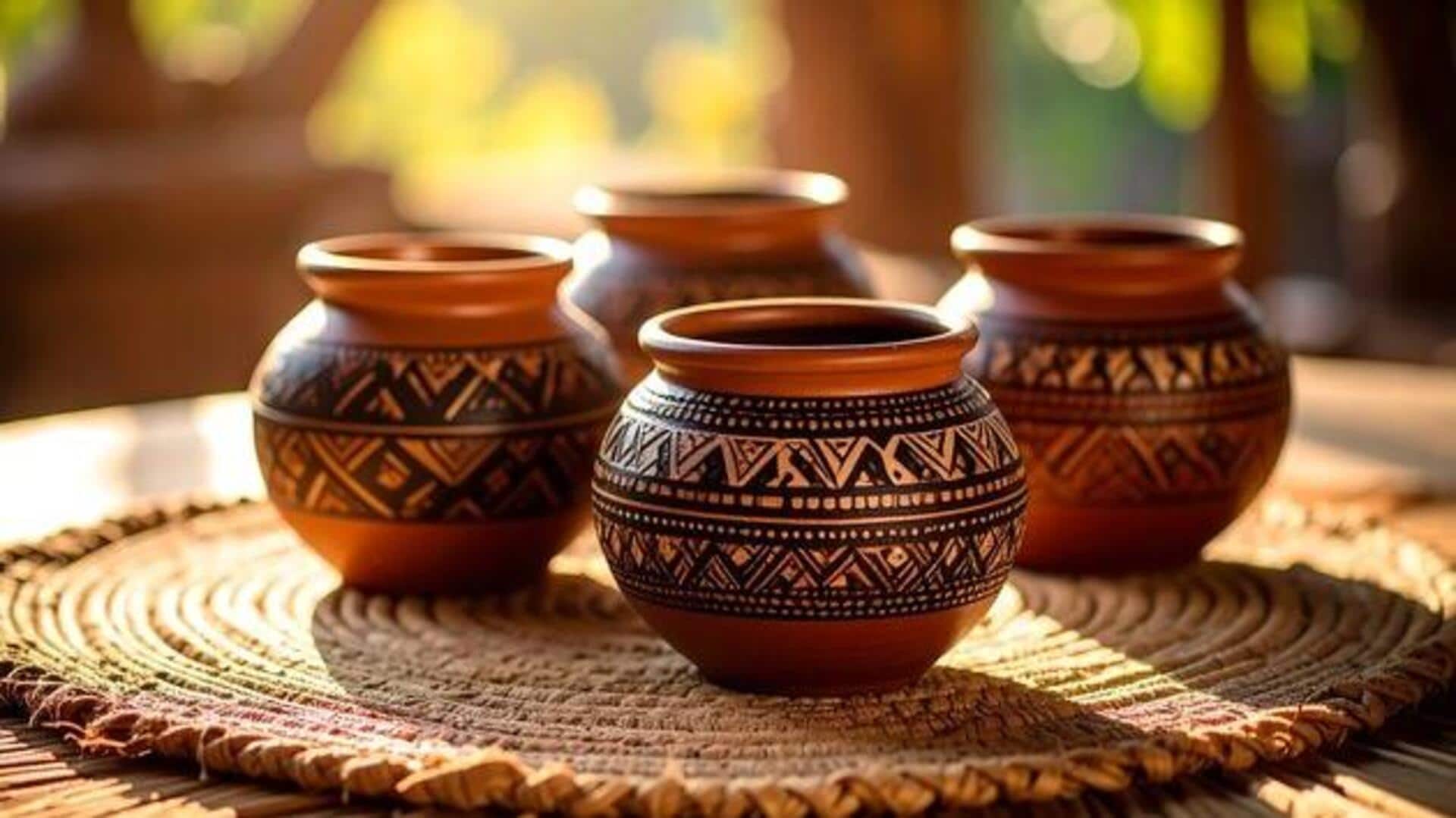
How to decorate clay pots with African patterns
What's the story
African patterns are rich in history and symbolism, making them a unique choice for decorating clay pots. These designs are inspired by various cultures across the continent, each with its own story to tell. Using these patterns can transform ordinary clay pots into stunning pieces of art that reflect African heritage. Here's how you can effectively use these patterns in your pottery projects.
Pattern insight
Understanding African patterns
African patterns are characterized by geometric shapes, lines, and symbols that carry cultural significance.
Each pattern can represent different aspects of life, such as community, nature, or spirituality.
Knowing the meaning behind each design can help you choose the right pattern for your clay pot project.
This knowledge adds depth and context to your work, making it more than just a decorative piece.
Material selection
Choosing the right materials
Selecting the right materials is key to achieving the desired effect when decorating clay pots with African patterns.
Natural pigments are often used to replicate traditional designs accurately. These pigments offer vibrant colors that stand the test of time.
Also, using high-quality clay ensures that your pot retains its shape and durability after being decorated.
Application methods
Techniques for applying patterns
There are various techniques to apply African patterns on clay pots.
Carving is one popular method where designs are etched directly onto the surface before firing.
Painting with natural pigments is another common technique that allows for more intricate details and vibrant colors.
Each method has its own advantages depending on the complexity of the design you want to achieve.
Symbolic integration
Incorporating symbolism effectively
Incorporating symbolism into your work adds layers of meaning to your pottery projects.
When selecting a pattern, consider what it represents within its cultural context and how it relates to modern interpretations or personal significance.
This thoughtful integration ensures that each piece resonates on multiple levels with viewers who appreciate both artistry and cultural storytelling.