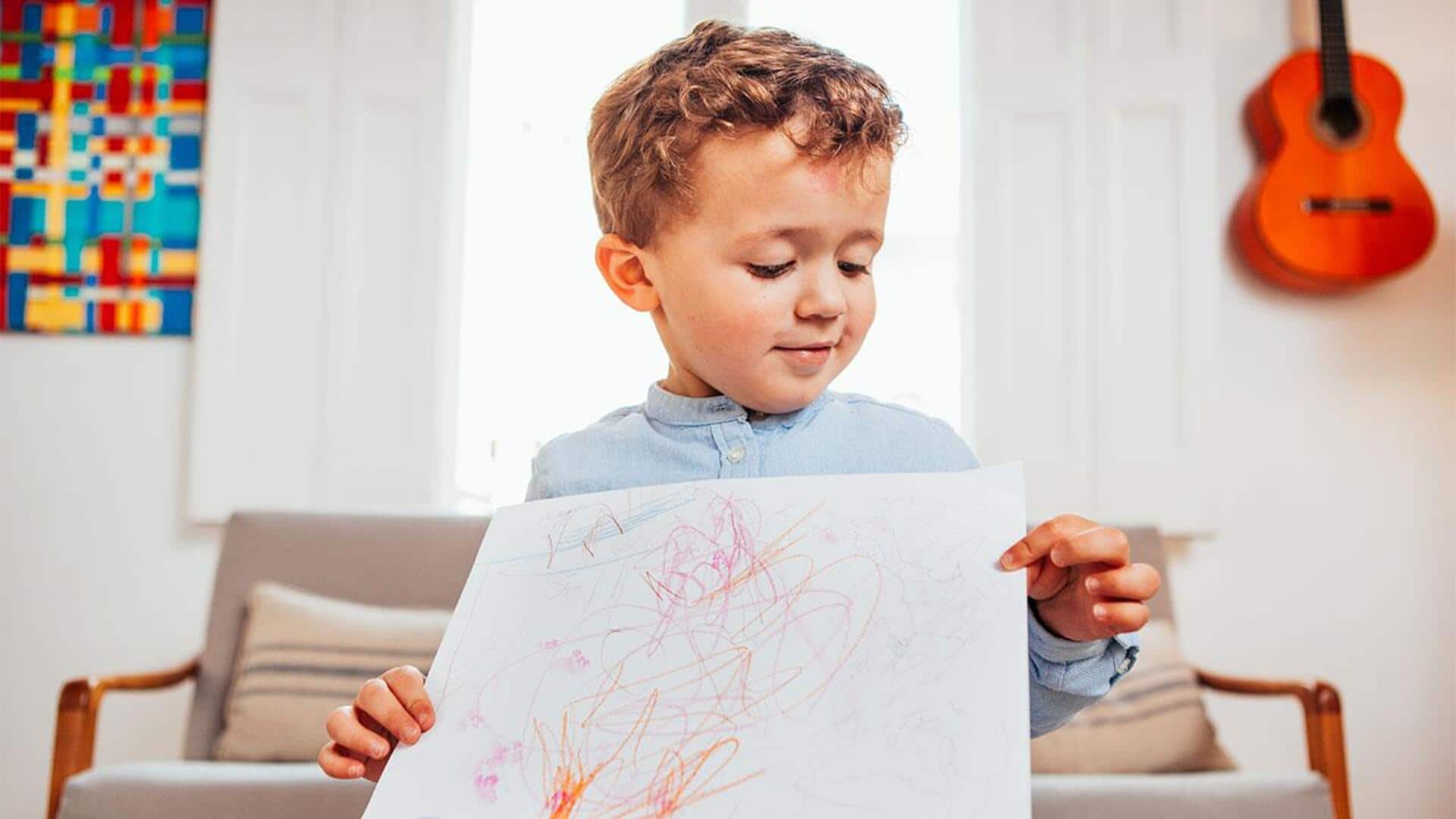
Music and drawing can boost your kids' creativity: Here's how
What's the story
Combining music and drawing can be a fun way to boost creativity in kids. Both activities stimulate different parts of the brain, resulting in improved cognitive skills and creative expression. While music helps with auditory processing and emotional expression, drawing encourages visual-spatial skills and imagination. Here are five ways to combine these activities and help kids explore their creative potential.
Tip 1
Create musical drawings
Encourage children to listen to a piece of music and draw what it makes them feel or imagine.
This activity combines auditory stimulation with visual expression, allowing children to translate sounds into images.
It helps develop their ability to connect different sensory experiences, while also encouraging them to interpret music creatively.
Tip 2
Use rhythm for drawing patterns
Introduce rhythm by playing a simple beat on a drum or using clapping hands.
Ask children to draw patterns that match the rhythm they hear.
This exercise helps them understand the concept of timing and rhythm in both music and art. It also promotes coordination between listening skills and artistic creation.
Tip 3
Storytelling through song and art
Ask children to create a story using both a song and a drawing.
They can pick a song that resonates with the theme of their story, and draw scenes or characters related to it.
This activity promotes narrative thinking, as well as encourages kids to express ideas through multiple forms of art.
Tip 4
Collaborative art projects with music background
Organize group projects where kids work together on a large drawing while listening to background music.
The music should be instrumental, so that it doesn't distract from the creative process.
This fosters teamwork, while also allowing kids to experience how different musical genres can influence their artistic choices.
Tip 5
Explore emotions through music-inspired art
Play different genres of music and ask children to create drawings that reflect the emotions each genre evokes in them.
This activity helps develop emotional intelligence by encouraging children to identify feelings associated with different types of music, while also expressing those emotions visually through art.