
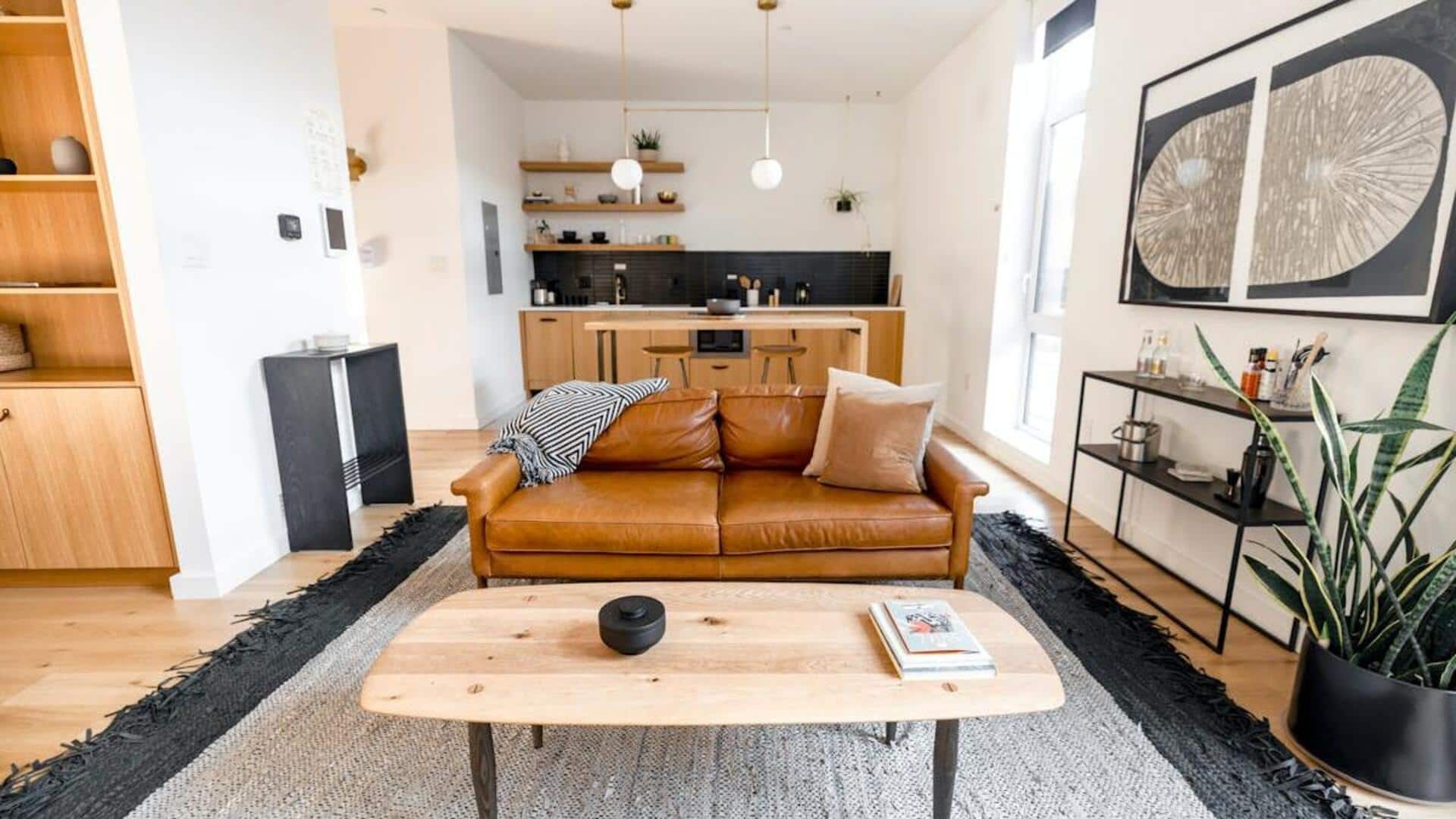
How to layer textures in your living room
What's the story
Layering textures is the best way to add depth and interest to your living room. By mixing different materials and finishes, you can create a warm and inviting space. This technique allows you to personalize your room, making it feel more like home. Whether you prefer a cozy atmosphere or a modern look, layering textures gives you the flexibility to achieve your desired aesthetic without major renovations.
Fabric fusion
Mix fabrics for comfort
Combining various fabrics can make your living room more comfortable and visually appealing. Try mixing cotton, linen, wool, and velvet to create a tactile experience. For instance, pair a soft cotton sofa with velvet cushions for contrast. Not only does this add visual interest, but it also makes the space more inviting. Make sure the colors complement each other to maintain harmony in the room.
Nature's touch
Incorporate natural elements
Bringing natural elements into your living room can add warmth and texture. Use wooden furniture or bamboo blinds to introduce organic materials. Plants are also an excellent way to add life and texture; consider adding potted plants or hanging greenery from the ceiling. These elements not only enhance the aesthetic but also improve air quality, making your living space healthier.
Grounding layers
Use rugs for layering
Rugs are an essential part of layering textures as they define areas within a room. Choose rugs in different patterns or materials to add depth underfoot. A jute rug under a coffee table can add an earthy feel, while contrasting with a plush area rug underneath seating arrangements. This combination adds visual interest and comfort underfoot.
Shine & Sparkle
Add metallic accents
Metallic accents like brass or copper can add a touch of elegance and shine when layered with other textures in your living room. Use these materials in light fixtures, picture frames, or decorative objects like vases or mirrors on walls for added dimension without overwhelming the space visually.
Neutral Harmony
Balance with neutral tones
Balancing bold textures with neutral tones ensures that no single element dominates the room's design scheme. Neutral colors like beige, gray, or white act as a calming backdrop against more vibrant textures, like patterned fabrics or natural wood finishes. This balance maintains cohesiveness throughout the design process while allowing individual pieces to shine through effortlessly.