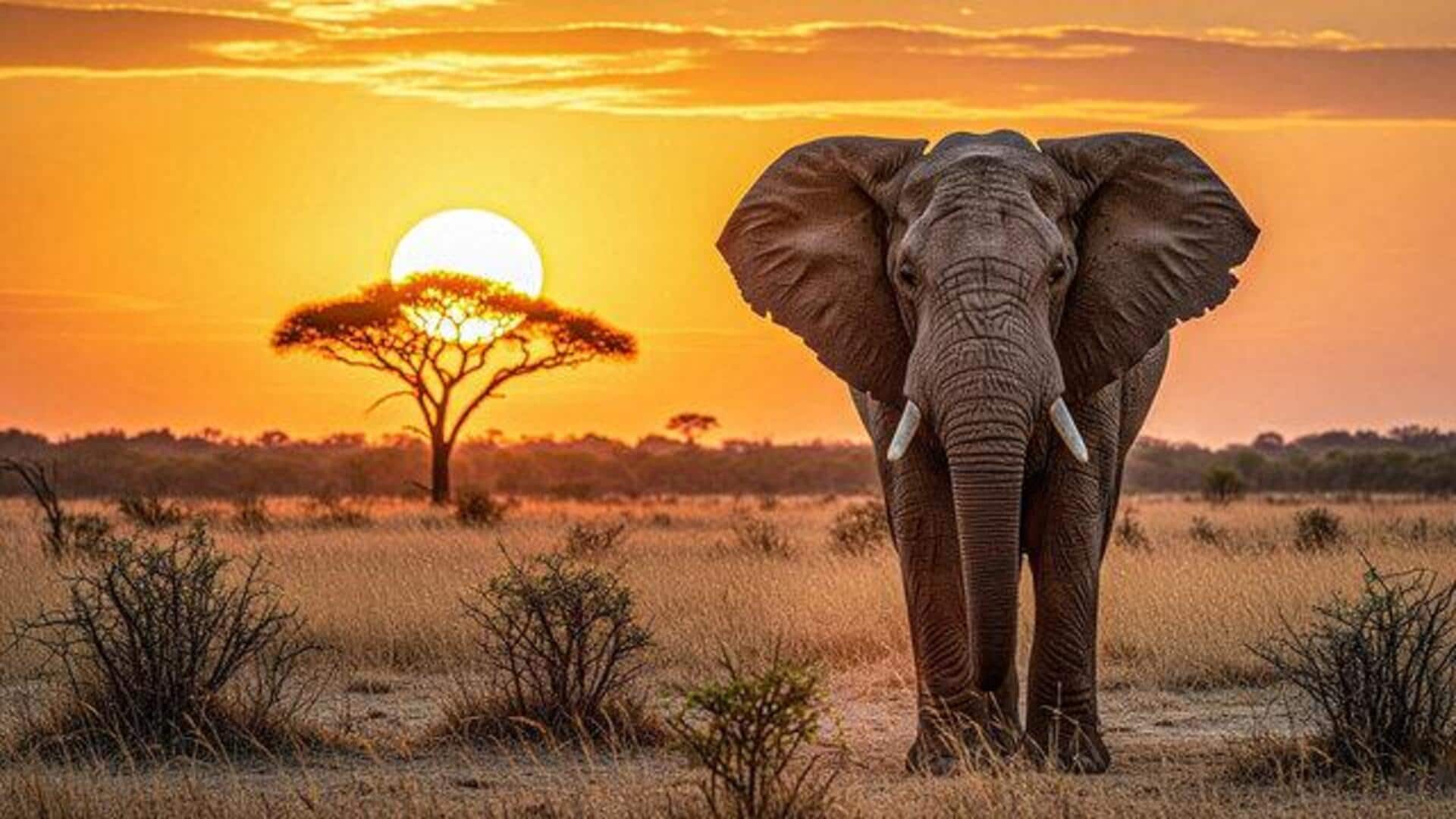
How to master wildlife photography
What's the story
Africa's vast landscapes and diverse wildlife offer photographers unique opportunities to capture the continent's iconic big game animals. From elephants roaming the savannah to lions resting under acacia trees, these scenes are a photographer's dream. However, capturing these moments requires skill, patience, and an understanding of both animal behavior and environmental conditions. Here are some practical tips to help you photograph Africa's big game animals effectively.
Tip 1
Understanding animal behavior
Understanding animal behavior is key to getting the perfect shot.
Spend time observing animals from a distance before you start shooting.
Knowing their habits, like feeding patterns or social interactions, can help you anticipate the best moments to capture.
For instance, elephants often gather near waterholes at dawn or dusk, giving photographers a chance to shoot them in soft natural light.
Tip 2
Choosing the right equipment
Choosing the right equipment is essential for wildlife photography.
A DSLR or mirrorless camera with a fast autofocus system is recommended for capturing fast-moving subjects.
A telephoto lens (200mm or longer) allows you to shoot from a distance without disturbing the animals.
Also, carrying extra batteries and memory cards is advisable as you may spend long hours outdoors.
Tip 3
Timing your shots perfectly
Timing is everything when photographing wildlife.
Early morning and late afternoon are ideal times because of the favorable lighting conditions and increased animal activity.
Midday sun can be harsh and create unflattering shadows on your subjects.
Be patient and ready; some of the best shots come when you least expect them.
Tip 4
Respecting wildlife and environment
Respecting wildlife and its habitat should always be a priority for photographers.
Maintain a safe distance from animals to avoid causing them stress or changing their natural behavior.
Stay on designated paths or roads in national parks/reserves to minimize your impact on the environment.
Not only does this practice ensure safety, but it also preserves the ecosystem for future generations of wildlife and visitors.