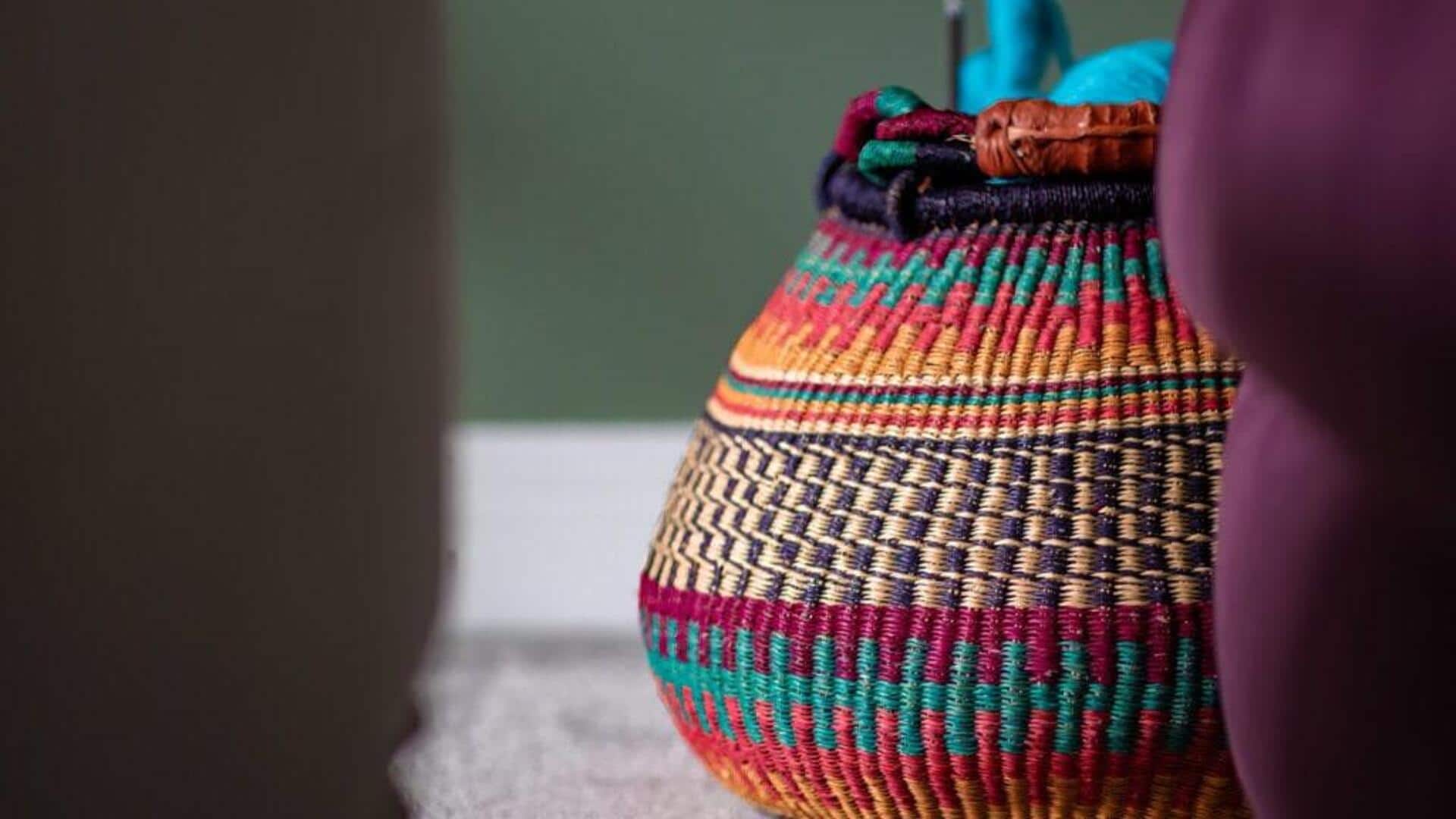
All about Bolga baskets
What's the story
African Bolga baskets are famous for their vibrant colors and sturdy construction. These handwoven baskets from Ghana's Bolgatanga region are made from elephant grass, a local plant. The weaving technique has been passed down generations, making it an integral part of the area's culture and economy. Learning how to weave these baskets can be a rewarding experience, connecting you with traditional crafts while creating unique home decor items.
Materials needed
Gathering materials for basket weaving
To start weaving an African Bolga basket, you need elephant grass, which is usually available at craft supply stores or directly from artisans in Ghana. You also need some dye for coloring the grass strands, and a bowl of water to keep the grass moist while you work. A sturdy base, like a wooden frame, can help shape your basket as you weave.
Weaving techniques
Understanding the basic weaving techniques
The basic technique involves coiling and twining the strands of elephant grass. Start by creating a small base with tightly coiled grass. As you expand the base, switch to twining techniques that interlace two or more strands together. Keep the tension consistent to maintain shape and durability. Practice makes perfect, so do not hesitate to try different patterns as you gain confidence.
Dyeing process
Coloring your basket with natural dyes
Natural dyes from plants like hibiscus or indigo can be used to add vibrant colors to your basket. Soak the dyed strands in water before using them in your weave. This not only helps in achieving uniform color but also keeps the grass pliable during the process. Experiment with different dye combinations for unique effects on your finished product.
Market strategies
Selling and promoting your woven baskets
Once you have mastered the art of weaving African Bolga baskets, consider selling them at local markets or online platforms dedicated to handmade crafts. Highlighting the cultural significance and sustainable aspects of your products can attract buyers interested in supporting traditional artisanship. Engaging with potential customers through social media can also help showcase your unique creations and build a loyal following over time.