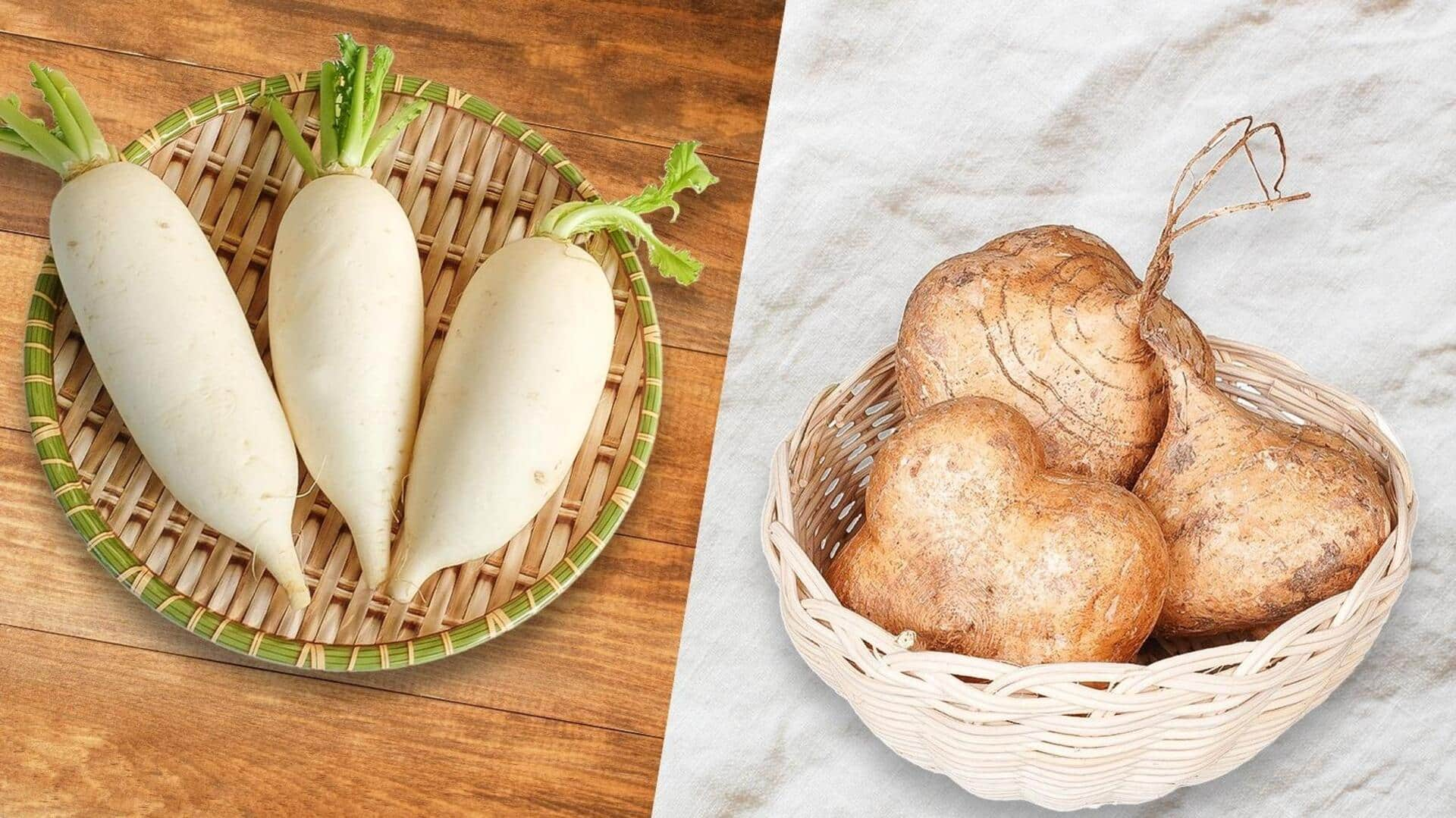
Jicama v/s daikon: Which is more nutritious?
What's the story
Jicama and daikon are two root vegetables that are gaining popularity for their unique nutritional profiles and health benefits. While both are low in calories, they offer different vitamins and minerals that can contribute to a balanced diet. Knowing the nutritional differences between the two can help you make informed dietary choices. Here's a look at the nutritional profiles of jicama and daikon, and their health benefits.
#1
Vitamin content in jicama and daikon
Jicama is rich in vitamin C, providing about 20% of the daily recommended intake per 100 grams. This vitamin is important for immune function and skin health. Daikon also has vitamin C but in slightly lesser amounts. However, daikon provides more folate than jicama, which is important for cell division and DNA synthesis. Both vegetables can be great additions to a vitamin-rich diet.
#2
Fiber content comparison
Both jicama and daikon are high in fiber, which promotes digestive health by preventing constipation and promoting regular bowel movements. Jicama has about 1.8 grams of fiber per 100 grams, while daikon offers around one gram per the same serving size. The fiber content of these vegetables helps in keeping you full, which can help you lose weight.
#3
Caloric value analysis
When it comes to caloric value, both jicama and daikon are low-calorie options that can be added to meals without adding too many calories. Jicama has about 38 calories per 100 grams, while daikon has approximately 18 calories for the same serving size. Their low caloric content makes them ideal for those looking to cut down on calories while enjoying flavorful dishes.
#4
Mineral richness: Calcium & potassium
Jicama is a good source of potassium, which is important for heart health and blood pressure regulation. It has about 417 milligrams of potassium per 100 grams. Daikon also has potassium but in lesser amounts than jicama. However, daikon is a better source of calcium than jicama, which is important for bone health.