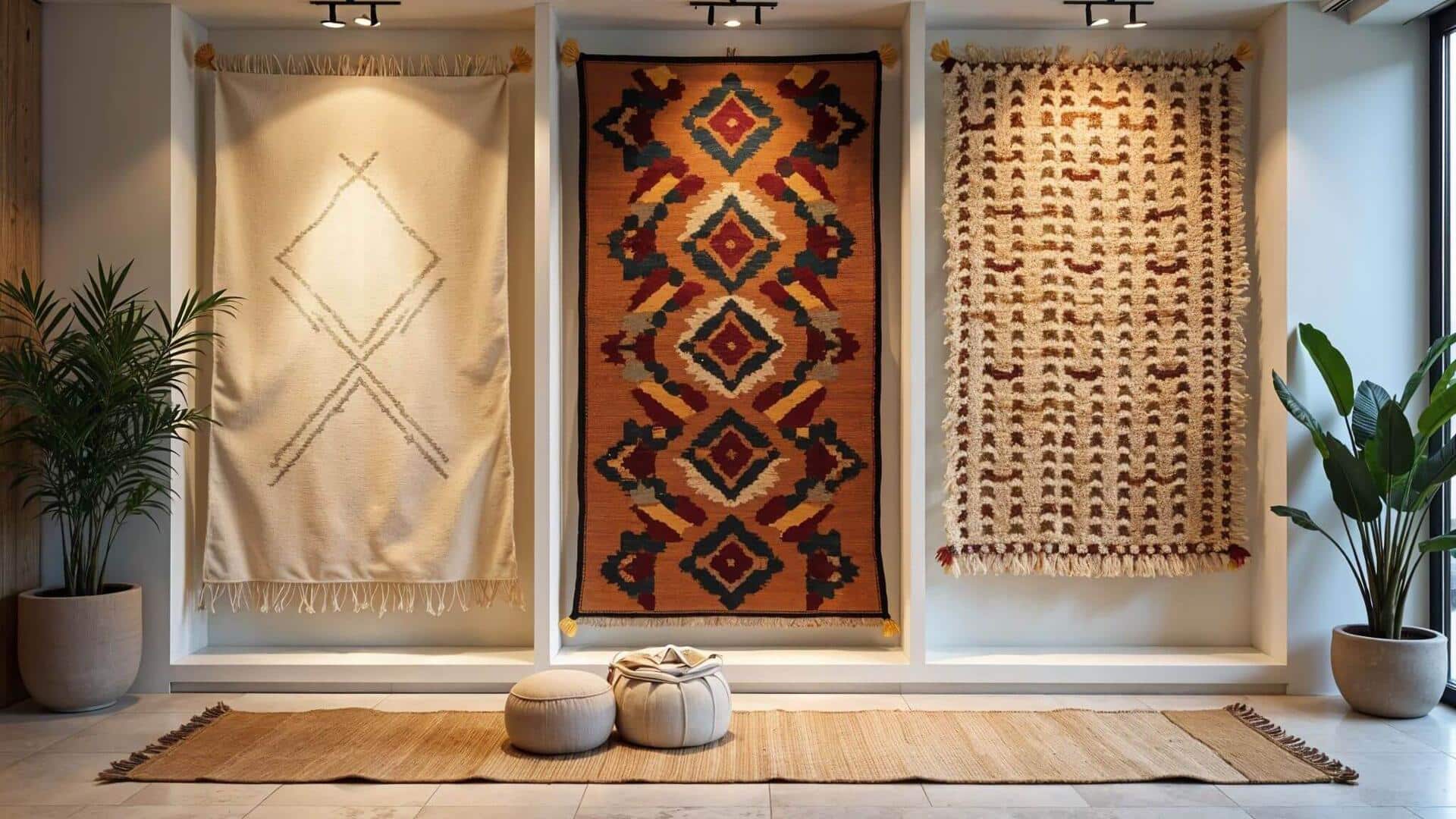
Why Berber rugs are gaining global attention
What's the story
African mosaic art is a beautiful blend of cultures, especially the Berber rug patterns from North Africa. These patterns have been reimagined in modern mosaic art, giving a new life to traditional designs. The combination of ancient motifs with contemporary techniques has resulted in an exciting art form that pays homage to its roots while embracing innovation. Here's how Berber rug patterns have influenced modern mosaic art.
#1
Berber patterns: A cultural legacy
Berber rug patterns are steeped in history and cultural significance. Originating from the indigenous Berber people of North Africa, these geometric designs are often symbolic, representing various aspects of life and nature. The patterns typically feature bold lines and shapes that create intricate visual narratives. This cultural legacy continues to inspire artists worldwide, who seek to incorporate these timeless motifs into their work.
#2
Modern interpretations in mosaics
Modern mosaic artists are increasingly drawn to Berber rug patterns for their striking visuals and rich symbolism. By adapting these designs into mosaics, artists create pieces that resonate with both traditional and contemporary audiences. The use of vibrant colors and varied materials allows for innovative interpretations that maintain the essence of the original patterns while offering fresh perspectives.
#3
Techniques for incorporating Berber designs
Incorporating Berber rug patterns into mosaic art requires a blend of traditional techniques and modern tools. Artists often start by selecting key motifs that resonate with their vision before translating them into mosaic form using tiles or glass pieces. Precision is key, as the geometric nature of these designs demands careful planning and execution to preserve the integrity of each pattern.
#4
Impact on global art scene
The influence of Berber rug patterns on modern mosaic art has made waves across the global art scene. Exhibitions featuring these works draw attention to North Africa's rich cultural heritage, while also highlighting how traditional art forms can be adapted for modern aesthetics. This cross-cultural exchange enriches the global art community by fostering appreciation for diverse artistic traditions.