Nordic walking or squash: Which improves your balance?
What's the story
Nordic walking and squash are two popular activities that promise to improve your balance. Both the exercises employ different muscle groups and techniques, offering you a unique way to enhance your stability and coordination. While Nordic walking is a low-impact exercise that uses poles to enhance balance, squash is a fast-paced racquet sport that requires quick movements and agility. Here's how both activities improve your balance.
#1
Nordic walking: A low-impact approach
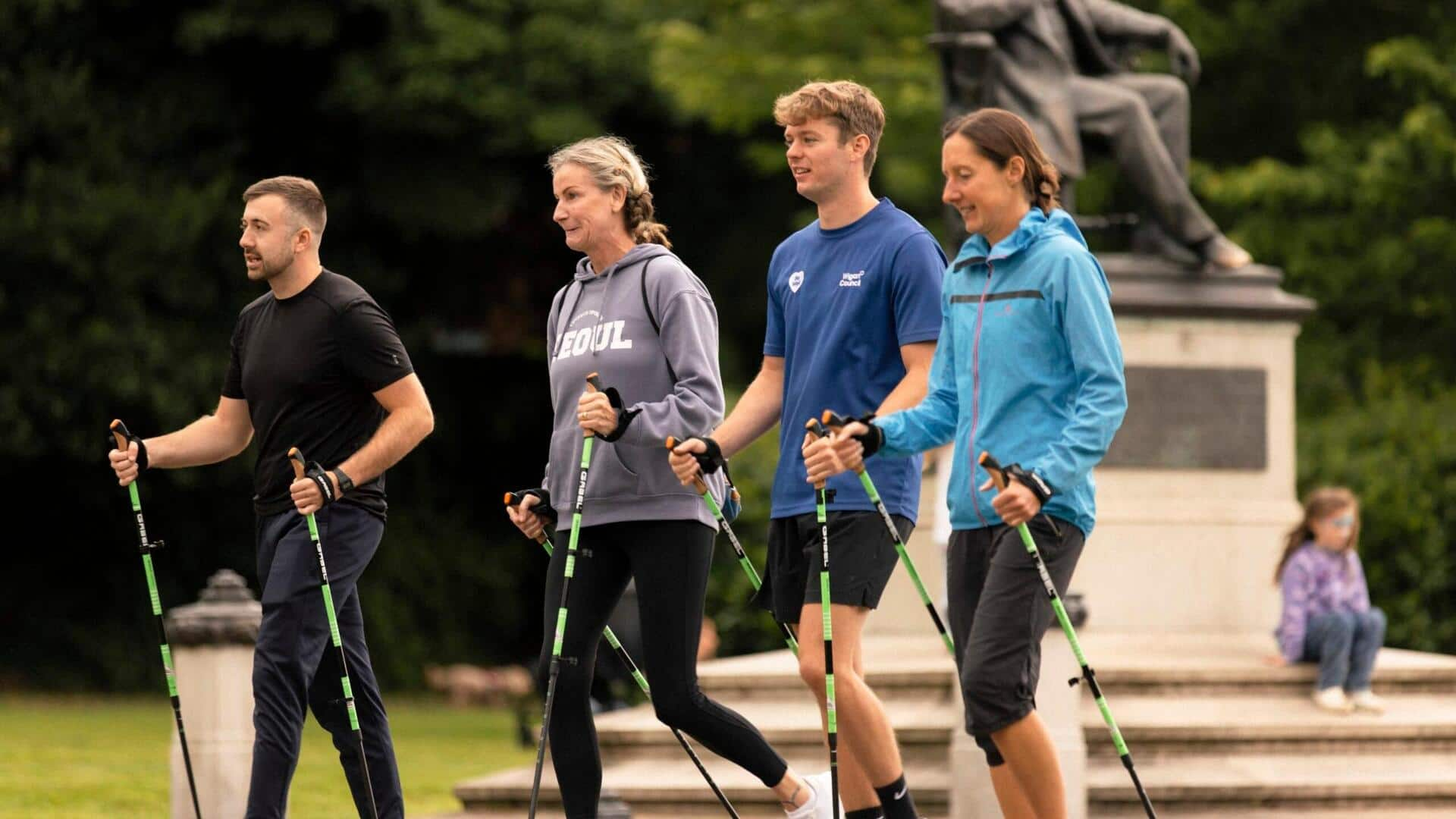
Nordic walking employs specially designed poles to give you a full-body workout. The poles give you extra support, making it easier to maintain your balance while walking. The activity works on core muscles, which are essential for stability. As you walk with the poles, you engage multiple muscle groups at the same time, improving coordination and posture. This makes Nordic walking an excellent choice for those looking for a low-impact way to enhance their balance.
#2
Squash: Agility on the court
Squash is played on a court where players hit a ball against walls with racquets. The game requires quick reflexes and sharp movements, which challenge your ability to stay balanced under pressure. Players have to change directions quickly, which improves their agility and coordination skills. The fast-paced nature of squash keeps players engaged mentally and physically, making it a great way to improve your overall balance.
#3
Muscle engagement in Nordic walking
In Nordic walking, the use of poles engages upper body muscles along with lower body ones. This full-body engagement helps in building strength in various muscle groups such as arms, shoulders, legs, and back muscles. The rhythmic motion of swinging the poles while walking helps in improving coordination between different parts of the body. This holistic approach not only improves your balance but also improves your endurance over time.
#4
Quick reflexes in squash gameplay
Squash demands quick reflexes as players have to react fast to incoming shots from opponents. The need for rapid changes in direction puts a lot of demand on stabilizing muscles in the ankles, knees, hips, and core area. Practicing regularly enhances these reflexes, leading to better overall body control during unexpected situations outside the court too.