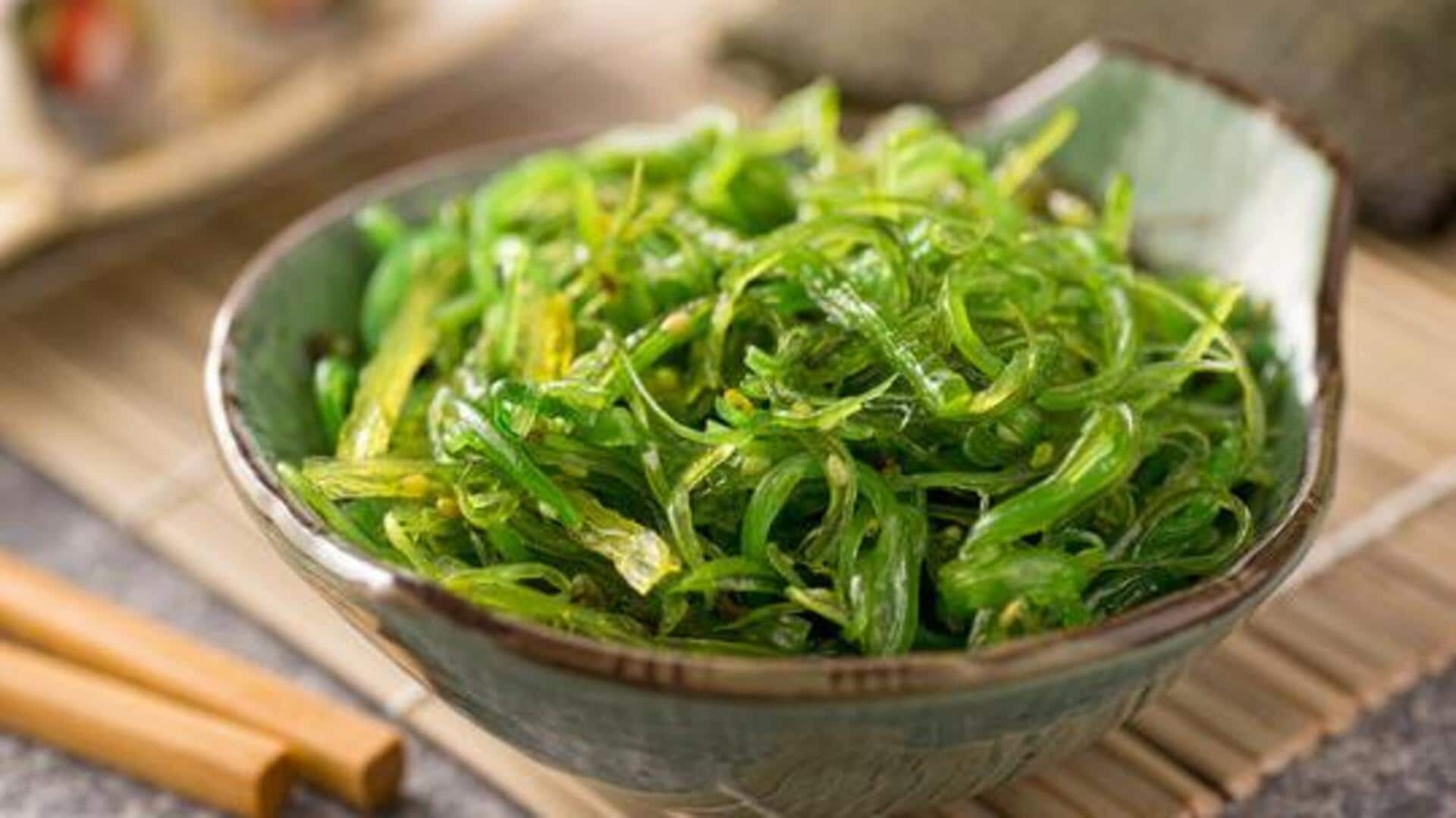
5 protein-rich seaweeds for vegetarians
What's the story
Seaweeds are nutrient-dense marine plants that make an excellent protein source for vegetarians. Along with protein, they also provide essential amino acids, vitamins, minerals, and omega-3s. With protein levels between 5% and 50% on a dry weight basis (depending on the species), seaweeds offer a sustainable alternative to land-based proteins such as beans or peas. Here are the top five seaweeds based on reported protein content/nutritional profiles.
#1
Nori: A protein powerhouse
Nori is a popular red seaweed that is incredibly rich in protein—up to 50 grams/100 grams dry weight.
Its amino acid profile resembles that of peas, and it is also rich in vitamin B12 and omega-3s.
Its digestibility and complete protein make it the perfect vegetarian meal, be it as a snack or in the form of a soup.
#2
Spirulina: The most protein-dense option
Spirulina is usually categorized with seaweeds owing to its blue-green microalgae properties.
It has up to 70% protein by dry weight and is a complete protein with all essential amino acids.
It also has DHA/EPA omega-3s and vitamin B12, making it ideal for incorporating into smoothies for a nutrient boost.
#3
Wakame: Rich in calcium and omega-3s
Wakame is a brown seaweed with protein content between 11% and 24%.
It is especially known for its high calcium content, providing eight times more calcium than milk.
It also offers omega-3s like DHA and EPA, which promote bone and heart health in vegetarian diets.
You can add wakame to different dishes, such as salads or miso soup, to make them more nutritious.
#4
Fucus vesiculosus: Mineral-rich brown seaweed
Fucus vesiculosus is a leading brown seaweed in terms of protein content, which varies seasonally, reaching peak levels during winter.
This species is notably rich in glutamic acid, aspartic acid, calcium, and iron.
Its robust mineral profile makes it an excellent addition to vegetarian dishes, significantly enhancing their nutritional value and offering a variety of essential nutrients that support overall health and well-being.
Tip 5
Palmaria palmata: High digestibility score
Palmaria palmata (or dulse/red seaweed) has around 10%-30% protein, which is normal for red seaweeds.
But it has the highest in vitro digestibility score (k-PDCAAS of 0.69) among its peers.
It also offers essential amino acids as well as taurine.
You can sprinkle dried flakes on vegetarian grains and legumes to boost their nutritional value and add a protein kick to your meals.