
Invited to a Vietnamese wedding? These traditions are stunning
What's the story
Vietnamese weddings are a beautiful blend of cultural traditions and rituals, which have been passed down generations. These ceremonies are not just a union of two people, but also of two families and communities. Each tradition has its own significance, symbolizing respect, unity, and prosperity. From the engagement ceremony to the wedding day rituals, every aspect is steeped in cultural meaning that reflects Vietnam's rich heritage.
#1
The engagement ceremony
The engagement ceremony, or le an hoi, is an important pre-wedding ritual. During this event, the groom's family presents gifts to the bride's family as a sign of respect and intention to marry. The gifts usually include betel leaves, areca nuts, tea, and fruits. This ceremony establishes the formal relationship between both families and sets the tone for future celebrations.
#2
Traditional wedding attire
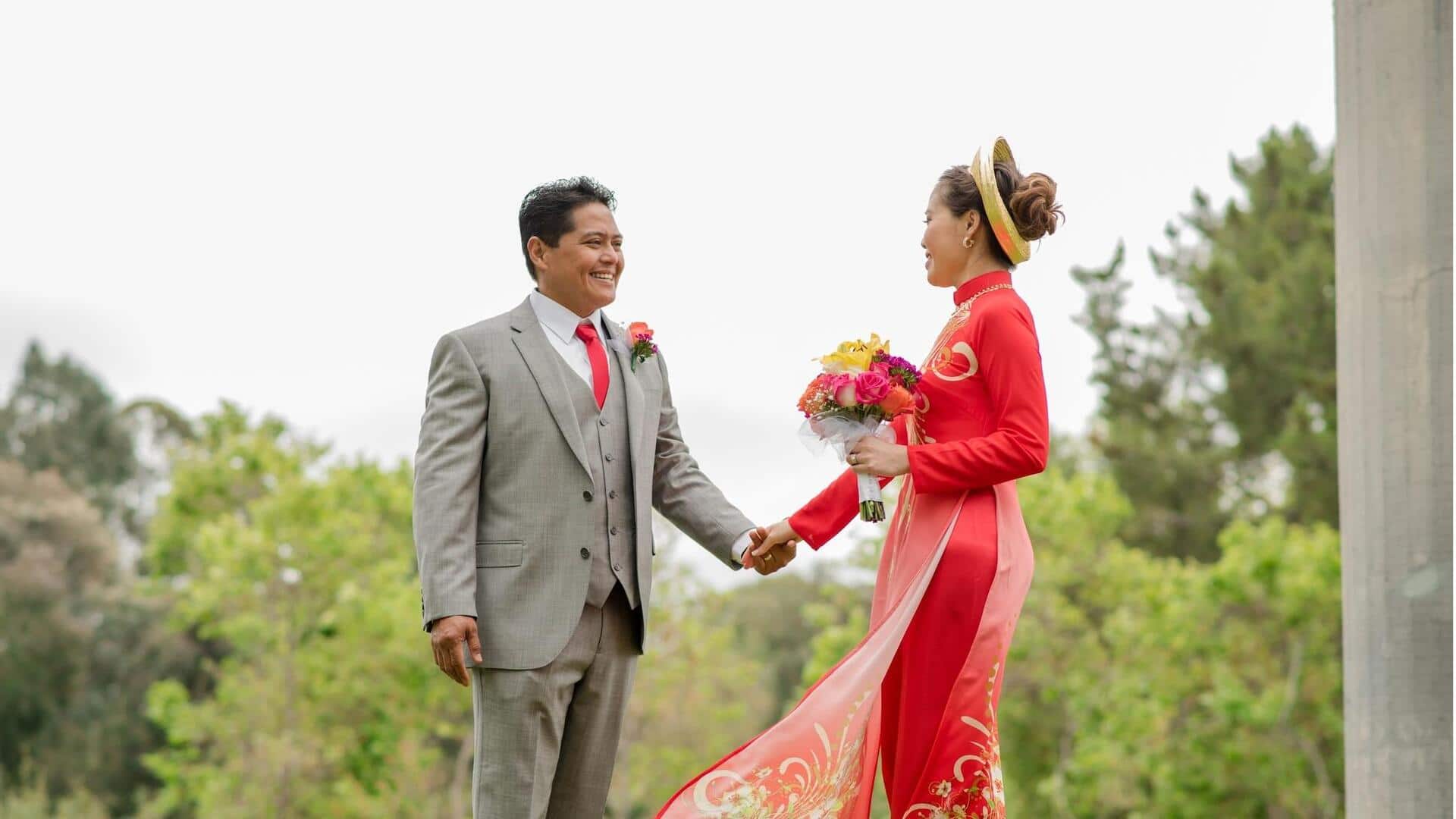
On their wedding day, Vietnamese brides and grooms usually wear traditional attire. The bride usually wears a red ao dai, which symbolizes happiness and good luck, while the groom may wear a matching outfit or a suit. These outfits are often embroidered with intricate designs that signify prosperity and harmony. The choice of colors is important; red is favored as it is believed to ward off evil spirits.
#3
Rituals of ancestor worship
Honoring ancestors is an integral part of Vietnamese culture, especially during weddings. Families set up altars at home or venues to pay respects to their ancestors by offering fruits, flowers, incense sticks, and other items. This ritual signifies gratitude towards forebears for their blessings on this special occasion.
#4
The tea ceremony
The tea ceremony is one of the most important rituals in Vietnamese weddings. It is performed at both engagement and wedding ceremonies where couples serve tea to their parents or elder relatives first before serving it to other guests present at the event venue itself. This act symbolizes respect towards elders, who are considered guardians within family structures across generations passed down through time immemorial.
#5
Post-wedding celebrations
After tying the knot officially, newlyweds partake in post-wedding celebrations, which vary regionally across Vietnam, but usually include communal feasts with family members, friends, neighbors, and acquaintances alike. Everyone comes together to celebrate the joyous occasion with music, dance, laughter, and merriment, creating lasting memories cherished forevermore.