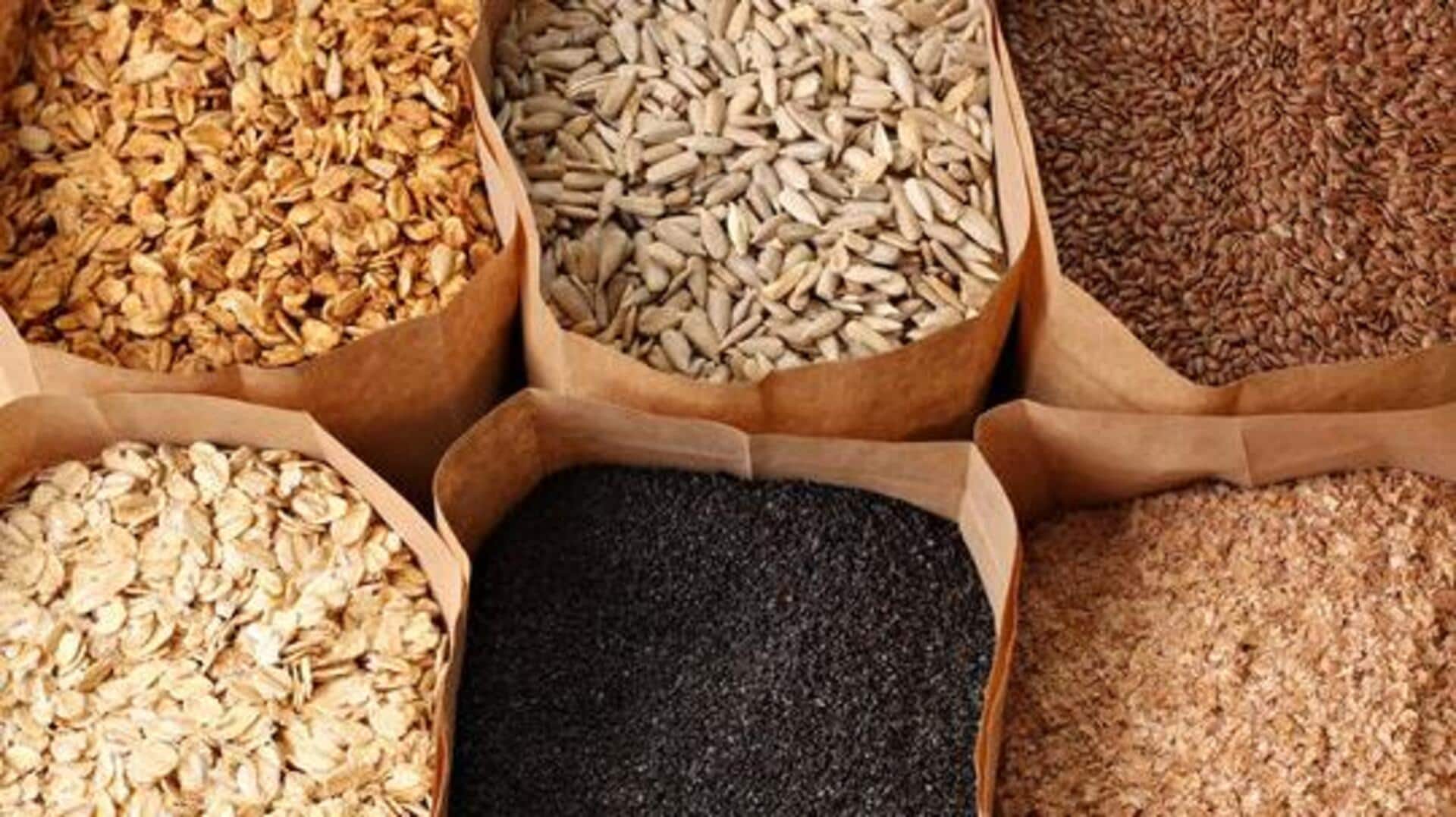
Debunking all myths about whole grains
What's the story
Whole grains have long been a subject of discussion, with many myths surrounding their health benefits. Most of these myths mislead people into thinking whole grains are unhealthy or not beneficial. In this article, we will debunk five common myths about whole grains, and give you a clearer picture of their role in a healthy diet.
Myth 1
Whole grains cause weight gain
One common myth is that whole grains lead to weight gain. The truth is, whole grains are high in fiber, which helps you feel full and satisfied. This can actually help with weight control by curbing overeating. Studies indicate that including whole grains in your diet can help you maintain a healthy weight when paired with a balanced diet, and regular exercise.
Myth 2
Whole grains are hard to digest
Another myth is that whole grains are difficult to digest for everyone. While some people with certain digestive conditions may have trouble, for most people, whole grains are easily digestible and provide essential nutrients like B vitamins and iron. If you are new to eating whole grains, start with smaller portions and increase gradually to give your digestive system time to adjust.
Myth 3
All whole grains are the same
Not all whole grains are created equal. Each type of whole grain has its own nutritional profile and health benefits. For instance, brown rice, quinoa, and oats all offer different vitamins and minerals. Diversifying the whole grains in your diet can ensure you get a wider range of nutrients while enjoying different flavors and textures.
Myth 4
Whole grains increase blood sugar levels
Some believe that eating whole grains spikes blood sugar levels as much as refined grains do. However, whole grains have a lower glycemic index than refined ones, which means they affect blood sugar levels more gradually. This makes them a better option for those wanting to keep their blood sugar levels stable throughout the day.
Myth 5
Whole grains are only for certain diets
There's a misconception that only specific diets can incorporate whole grains, like vegetarian or vegan diets. In reality, anyone can include whole grains in their diet as part of a balanced meal plan. They complement various dietary preferences by providing versatile options that pair well with fruits, vegetables, legumes, nuts, seeds, and dairy products, if desired.