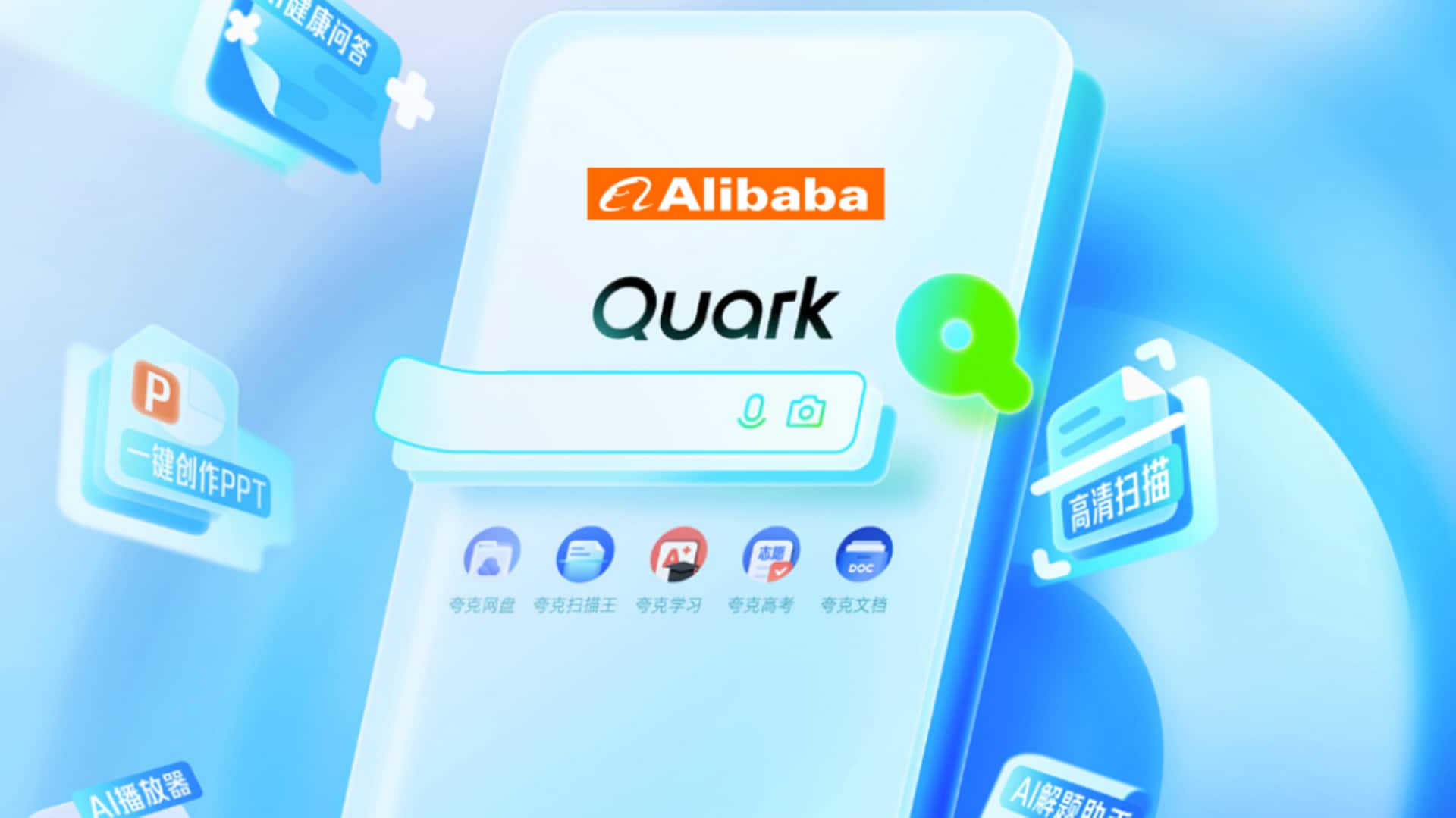
Alibaba upgrades AI browser to rival OpenAI Atlas, Perplexity Comet
What's the story
Alibaba has revamped its Quark browser, positioning it as a competitor to Google Chrome, OpenAI Atlas, and Perplexity Comet. The new version integrates Alibaba's Qwen large language model (LLM) at the system level, instead of just as a plug-in. This makes Quark an AI-first desktop experience, offering capabilities like summarizing webpages, rewriting text, generating content, or asking contextual questions without switching tabs.
Feature set
Qwen Smart Suite: A toolkit for digital tasks
Along with the AI integration, Alibaba has also launched the Qwen Smart Suite.
The suite comes with tools for reading content aloud, selecting and analyzing text, taking screenshots, and running conversational queries.
Each tool is designed to help with daily digital tasks like research, writing, and document handling.
Growth strategy
Quark's user base and future plans
Since its debut in 2016, Quark has steadily grown to over 100 million desktop users.
Now, with the deep integration of Qwen into the browser, Alibaba hopes to transform Quark into a productivity hub that combines browsing, search, and AI assistance into one platform.
The move comes after Alibaba launched the standalone Qwen App which got over 10 million downloads in its first week of beta testing.
Market positioning
Alibaba's strategy in the AI browser market
As the browser market evolves toward AI-native experiences, Alibaba is positioning Quark against emerging competition.
Google is integrating Gemini into Chrome, OpenAI is building conversational browsing through Atlas, and Perplexity is advancing its Comet research assistant.
The system-wide integration of Qwen gives Alibaba a chance to stand out with persistent, context-aware AI support.