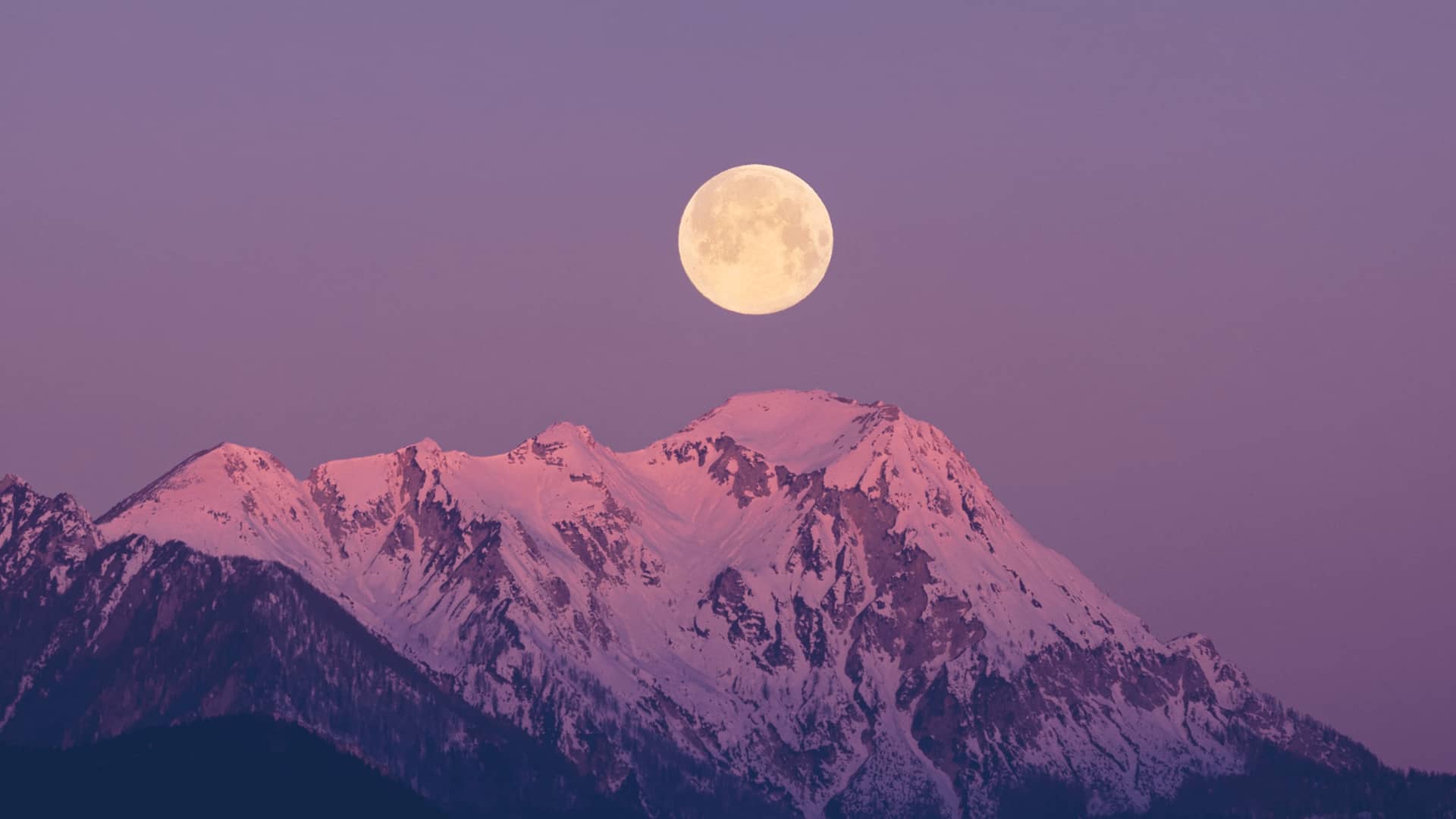
Cold Moon: Last supermoon of 2025 rises on December 4
What's the story
The final supermoon of the year, known as the "Cold Moon," will grace the skies on December 4. This celestial event marks the last full moon of 2025 and promises a stunning sight for skywatchers around the world. The term 'Cold Moon' is traditionally associated with winter's longest and darkest nights, but this year it also signifies our last chance to see a supermoon before we bid farewell to another year.
Supermoon explained
What makes a supermoon special?
Though not an official astronomical term, a 'supermoon' is generally defined as a full moon that comes within 90% of perigee, the closest point to Earth in its orbit.
This proximity makes the Moon appear brighter and up to 14% larger than at its most distant point.
The Cold Moon fits this definition perfectly, promising an enhanced lunar disk for observers without any specialized equipment.
Gravitational effects
Cold Moon's impact on tides and lunar surface
The Moon's proximity during a supermoon event also slightly increases its gravitational pull, leading to stronger-than-usual tides.
While this effect isn't extreme, it is a measurable aspect of supermoons that adds to their scientific interest.
For stargazers, even simple binoculars can reveal sharper contrasts along the lunar surface, though the spectacle remains impressive to the naked eye.
The Cold Moon, also known as the "Long Night Moon," comes after October's Harvest Moon and November's Beaver Moon.