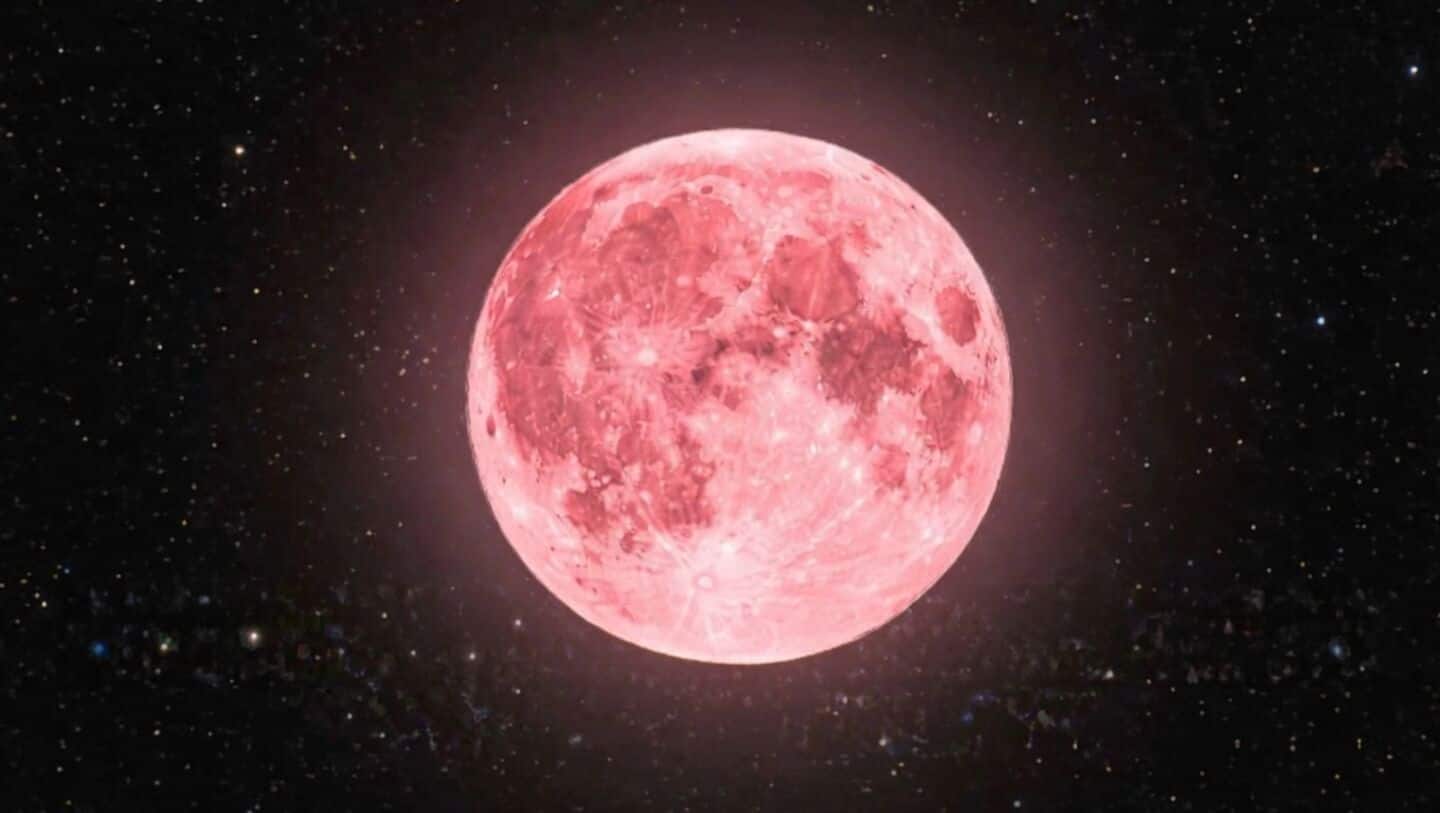
'Pink Moon' rises tonight: What makes it special
What's the story
Skywatchers, get ready for a celestial spectacle! The first full moon of spring, popularly known as the "Pink Moon," will be gracing our night skies soon. This month's major lunar event is set to reach its peak illumination on April 2 at 3:12am. However, the most stunning views can be expected on the evening of April 1 when the Moon starts rising above the horizon.
Historical significance
Why is it called 'Pink Moon?'
Despite its name, the Pink Moon won't actually appear pink in color. The term comes from early Native American tribes that observed seasonal changes through monthly full moons. They named this specific full moon after the pink wildflowers, particularly wild ground phlox, that bloom at the start of spring. So don't expect a vibrant magenta orb; instead look out for hues of orange, copper or deep golden yellow on Wednesday evening.
Atmospheric effect
Why does the Moon change color?
The Moon's color change is due to a simple physics phenomenon. When the Moon is low on the horizon, sunlight reflecting off its surface has to travel through Earth's atmosphere. This longer journey scatters shorter wavelengths of light like blues and violets in all directions. What remains are longer wavelengths, which give rise to reds, oranges, and yellows that create the beautiful warm coppery tint of a rising moon—similar to fiery sunsets.
Celestial companion
Spica star will also be visible during the lunar event
Along with the Pink Moon, skywatchers will also get a chance to see Spica, a bright binary star system in the Virgo constellation. The two celestial bodies will be positioned closely together, making for an interesting sight in the night sky. This week-long lunar display is sure to delight astronomy enthusiasts around the world.