Humans started using psychoactive drugs around 25,000 years ago
What's the story
An analysis of ancient human remains on the Indonesian island of Sulawesi suggests that humans may have used psychoactive drugs much earlier than previously thought. The study, led by Griffith University's Adam Brumm, found evidence of betel nut consumption as far back as 25,000 years ago. This discovery pushes back the timeline of human drug use by thousands of years and highlights an early form of addiction among prehistoric foragers.
Drug details
Betel nuts are world's 4th most widely used psychoactive substance
Betel nuts, the seeds of the areca palm fruit, are the world's fourth most widely used psychoactive substance after caffeine, alcohol, and nicotine.
Today, about one in 10 people, mostly in Asia and the Pacific, chew a quid or processed betel nut mixed with slaked lime.
This mixture triggers a chemical reaction that speeds up absorption of arecoline into the bloodstream.
Chewing it produces mild euphoria and heightened alertness.
Early usage
Traces of betel nuts were found in a prehistoric jawbone
Brumm's research team discovered that prehistoric foragers were using whole betel nuts between 25,000 and 16,000 years ago.
This practice could be the earliest known instance of drug use by humans, which later evolved into the modern-day practice of chewing betel nuts.
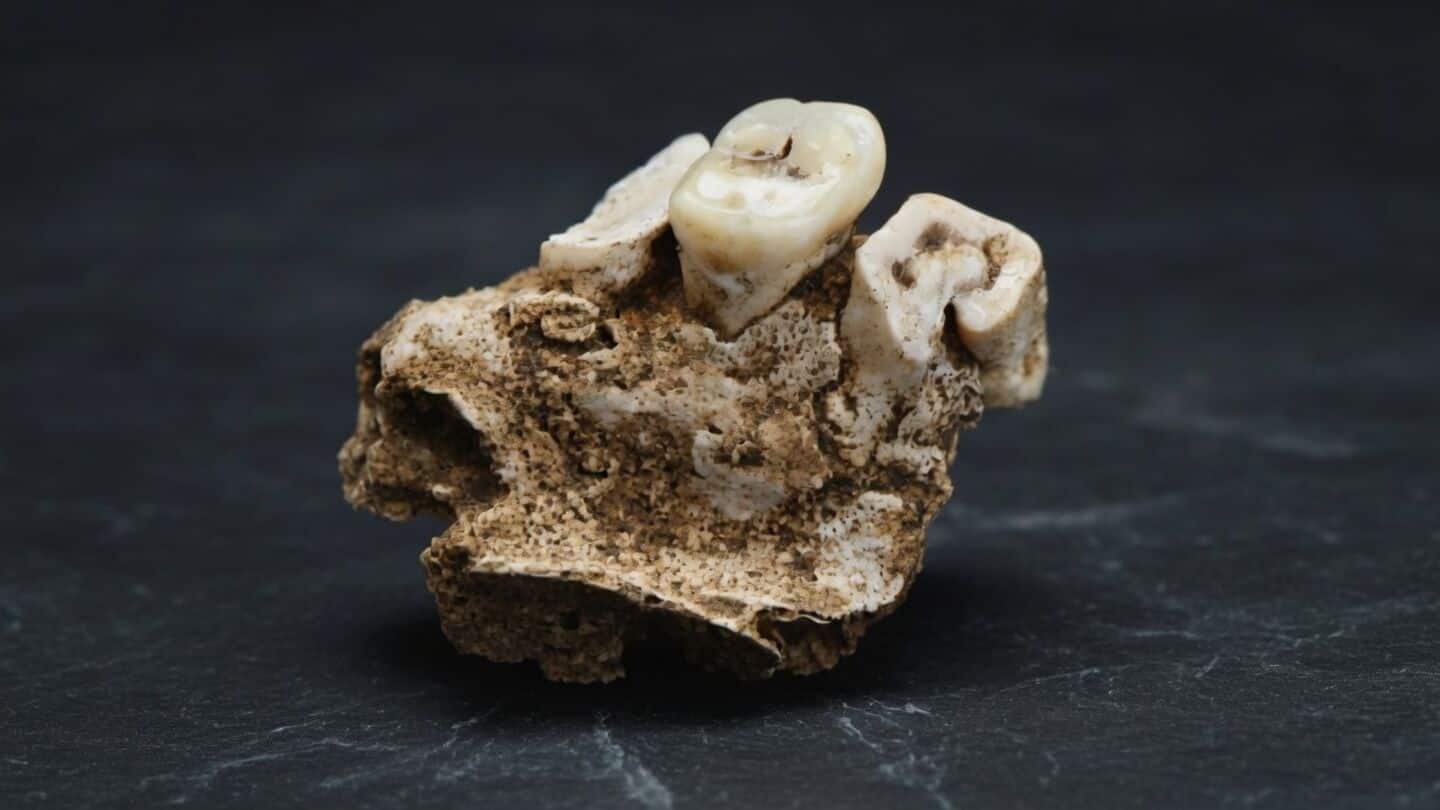
The researchers found a jawbone fragment from an adult preagricultural forager who lived between 25,000 and 16,000 years ago in Leang Bulu Bettue cave in South Sulawesi.
Findings
Nut-sucking may have been a traditional medicinal remedy for toothache
The jawbone fragment had three teeth, two of which had deep, rounded grooves.
These grooves were likely caused by habitual sucking on hard, round objects such as whole betel nuts.
The team also found traces of arecoline, the main pain-relieving chemical compound from betel nuts, in the dental tissue.
"The foragers had poor dental health, so it is likely that nut-sucking was a traditional medicinal remedy for toothache," Brumm said.
Consequences
Pathological addiction to betel nuts
The pain caused by exposed pulp chambers would have been intense, leading to difficulty eating and inviting infection.
Brumm speculated that these people may have become pathologically addicted to betel nut-sucking as a way of treating the oral pain caused by this cultural practice.
"In effect, they were trapped in a vicious cycle," he said.
Psychoactive impact
Consuming non-dietary substances has long been part of human experience
The research team soaked betel nuts in artificial saliva to conduct a biochemical analysis.
They tested the resulting "broths" against cloned human receptors embedded in frog egg cells.
"This showed that just sucking on intact betel nuts will release arecoline in sufficient amounts to have a physiological effect, altering brain function," Brumm said.
The study highlights how consuming non-dietary substances has long been part of human experience.