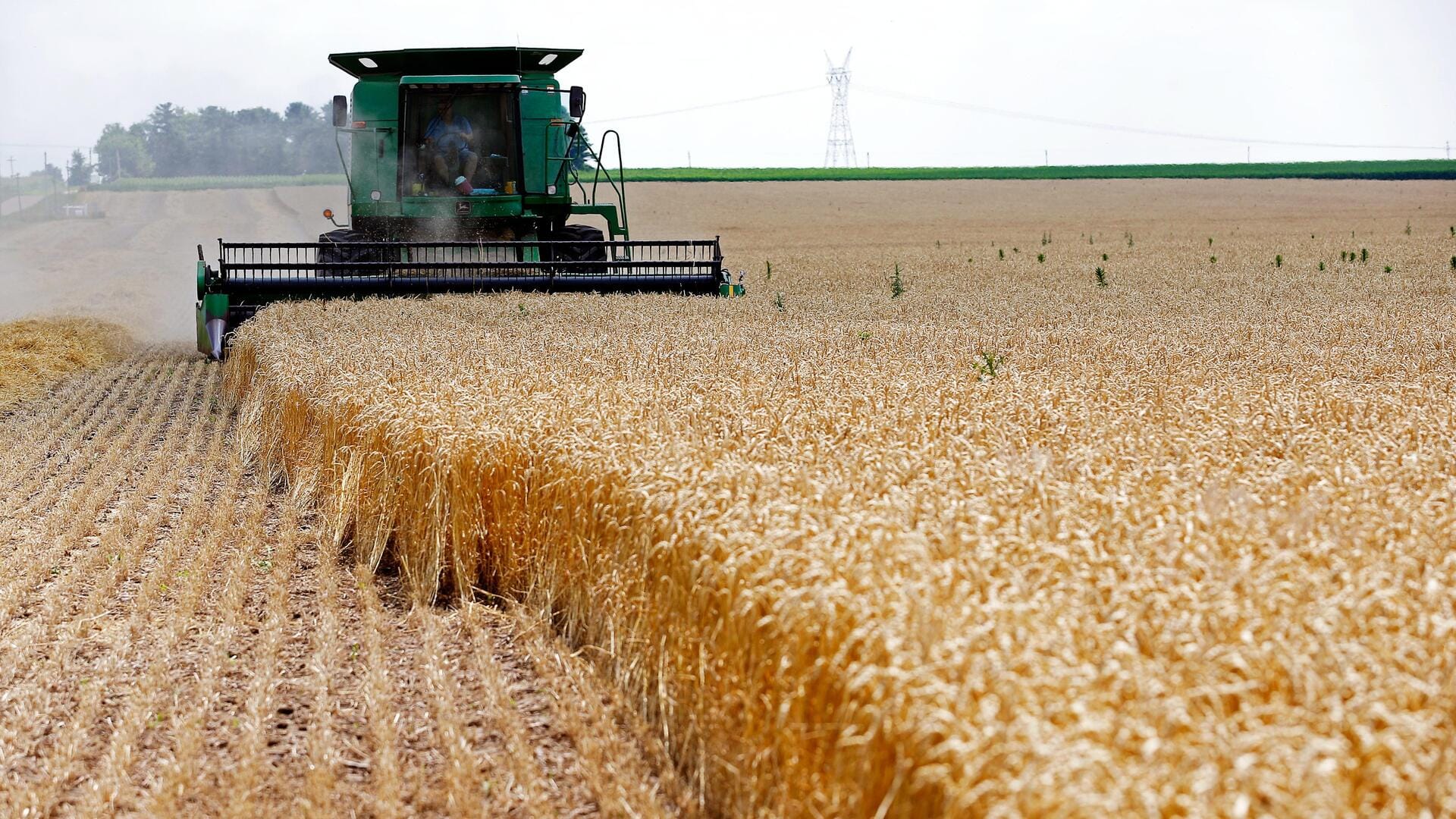
Rising CO2 levels may alter wheat proteins, affecting human health
What's the story
A recent study has found that rising atmospheric carbon dioxide (CO2) levels can significantly alter the protein composition of wheat. The changes could affect both baking quality and human health. The research, published in the journal Food Chemistry, emphasizes that crop adaptation to climate change should not only focus on high yields but also on quality characteristics such as protein composition.
Research details
Increase in global CO2 levels
The study was led by researchers from the Leibniz Institute for Food Systems Biology at the Technical University of Munich in Germany.
They found that global CO2 levels have increased from 340 parts per million (ppm) in 1980 to about 425ppm in 2024.
Wheat, a major staple food, will also grow under much higher CO2 concentrations in the future, which could reach up to 600ppm by 2050.
Experimental findings
How did researchers conduct the study?
The team grew 10 cultivated varieties of winter wheat under realistic growing and environmental conditions.
Some plants were exposed to an elevated CO2 concentration of 546ppm, while others grew under current CO2 conditions.
After harvest, the researchers analyzed the composition of wheat proteins in various grain samples using a high-resolution mass spectrometric method they had developed.
They focused on proteins such as amylase/trypsin inhibitors (ATIs), puroindolines and gluten proteins, as well as peptides associated with coeliac disease.
Protein analysis
Findings of the study
The study found that under elevated CO2 conditions, the content of amylase/trypsin inhibitors increased while that of puroindolines, gluten proteins, and certain coeliac disease-active peptides decreased.
The increase in ATIs could negatively affect human health.
However, principal investigator Sabrina Geisslitz said these changes depended largely on the specific wheat cultivar.
She also noted that the reduced concentration of gluten proteins was associated with poorer baking quality.
Health concerns
Need for further studies
Katharina Scherf, head of the food biopolymer chemistry research group at the Leibniz Institute, said that the observed changes in ATIs and certain coeliac disease-active peptides could be relevant in the long term for wheat-related diseases.
However, she stressed that further studies are needed to clarify their actual biological and immunological significance.
The study emphasizes the need to identify and breed cultivated varieties of wheat that maintain high baking quality even under increasing CO2 concentrations.