Brussels breaks record for longest period without government
What's the story
Brussels has officially gone 542 days without a functioning government, surpassing Belgium's previous record of 541 days in 2010-11. The political impasse started after the June 2024 elections in the Brussels Capital Region, home to 1.25 million people. The deadlock is due to divisions among the 14 parties elected to its 89-seat parliament.
Division deepens
Political divisions deepen amid Brussels's governance crisis
The political deadlock in Brussels has intensified, with the Mouvement Reformateur party emerging as the largest francophone force and Flemish Groen leading among Dutch speakers.
The Francophone Socialists have ruled out a coalition with Flemish nationalists due to their anti-Brussels stance.
Meanwhile, the Open VLD party refuses to join without NVA's involvement, calling Socialists "an alcoholic addicted to public spending."
Crisis deepens
Brussels faces budget crisis, social unrest
The political deadlock has led to a budget crisis in Brussels. The local newspaper Bruzz predicts a deficit of €1.6 billion by year's end, and a major bank has pulled a €500 million credit line.
A caretaker administration is in place, but can't make new spending decisions, leading social support organizations to warn of potential salary cuts due to lost subsidies.
Public unrest
Protests erupt over political inaction in Brussels
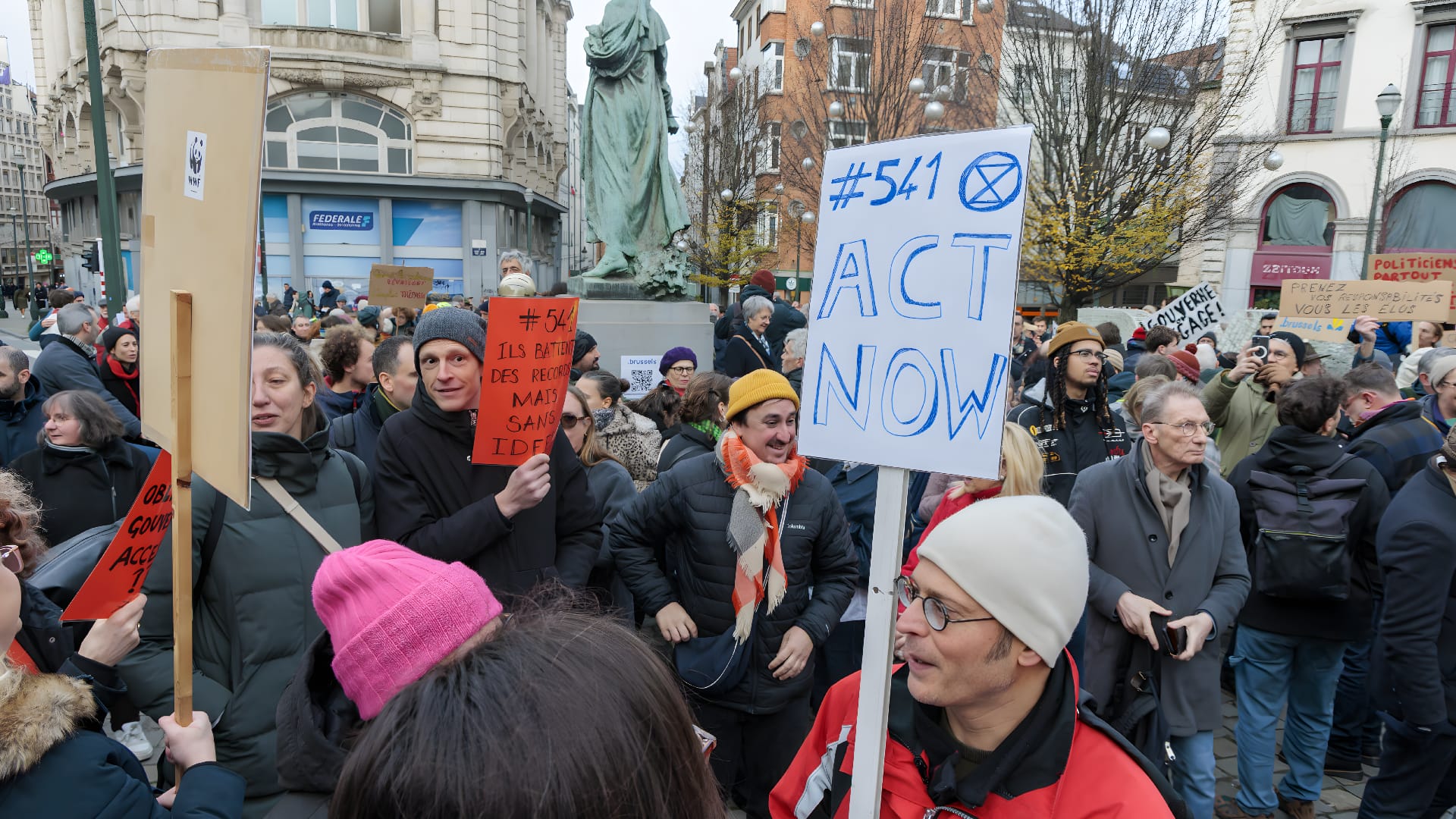
The political inaction has also led to protests from residents.
Around 500 people protested against the deadlock, with some carrying signs saying, "Shame on you Brussels."
An open letter signed by nearly 200 business, academic, and cultural figures lamented "541 days of seeing Brussels slide into an unprecedented institutional void and funding crisis."
Project halt
Brussels's governance crisis impacts major projects
The ongoing political deadlock has put major projects on hold. The director of Kanal, a contemporary art museum set to open in 2026, said budget indecision could halt construction.
Despite the severity of the situation, few expect a quick resolution to the deadlock.
Jan-Frederik Abbeloos from De Standaard wrote last week that "in the Brussels region so much is happening and yet nothing at all."