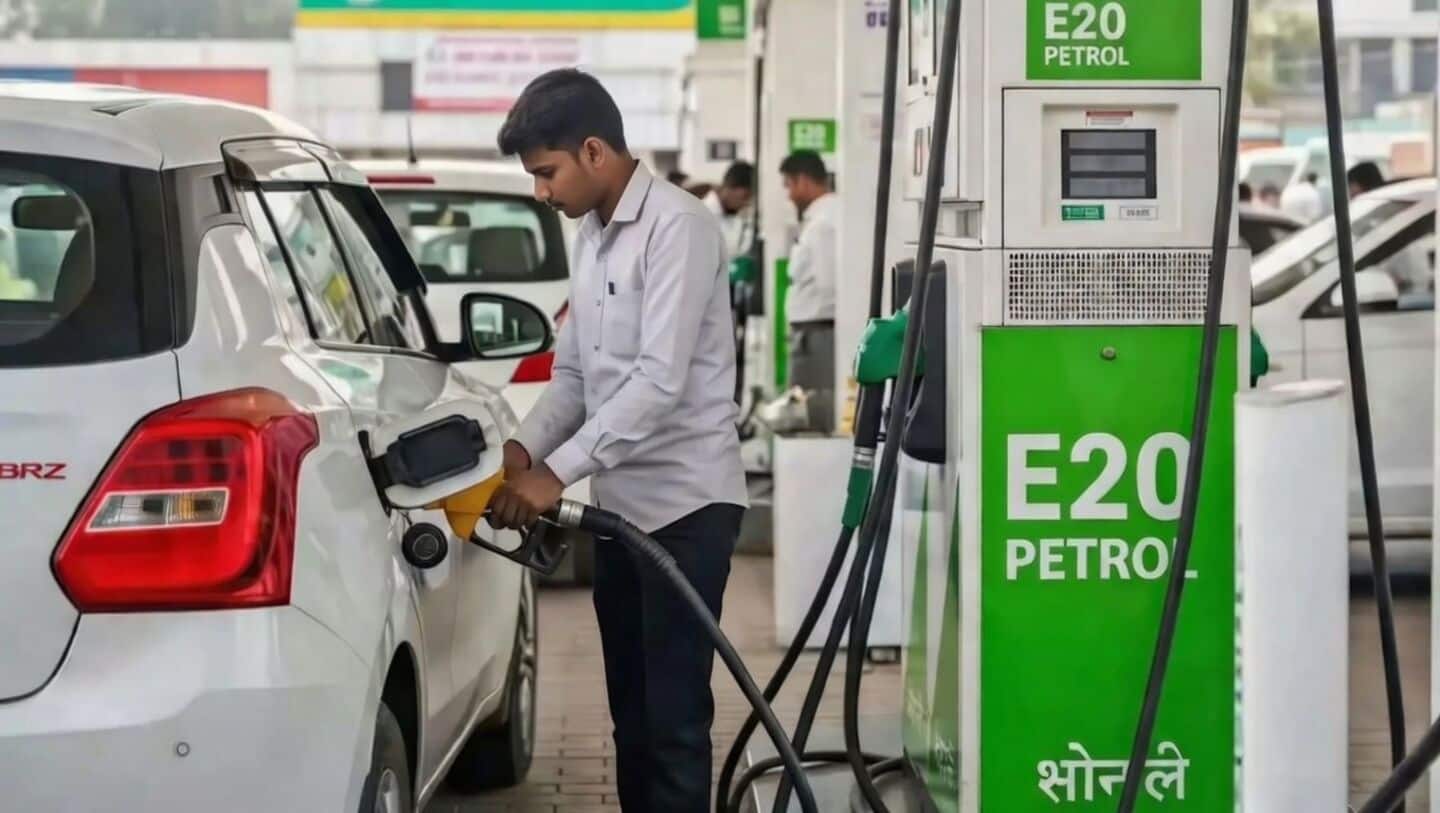
India switches to E20 petrol: What changes for your vehicle
What's the story
India has officially switched to E20 petrol, a cleaner and more efficient fuel option. The new mandate, which came into effect on April 1, 2026, requires all petrol pumps across the country to supply fuel blended with up to 20% ethanol. The directive was issued by the Ministry of Petroleum and Natural Gas and covers all states and Union Territories in India.
Fuel composition
What is E20 fuel?
E20 petrol is basically a blend of 20% ethanol and regular petrol.
Ethanol, a biofuel derived from crops like sugarcane, maize, and other grains, burns cleaner than pure petrol.
It also has a higher octane value compared to regular Indian petrol which has an octane rating of around 91-92 RON.
The minimum rating for E20 fuel is 95 RON, ensuring smoother combustion in vehicles.
Vehicle impact
Impact on vehicles
The impact of the new fuel on cars depends on their age and model.
Most newer cars sold in India, especially those manufactured in the last couple of years, are already compatible with E20 fuel.
Automakers have been updating engines and fuel systems to handle higher ethanol blends without compromising performance or reliability.
For older vehicles, while slight drops in fuel efficiency may occur, the higher octane rating could also make engines run smoother under certain conditions.
Strategic shift
Why the switch?
The transition to E20 petrol is not just about cleaner vehicles but also a strategic move to reduce India's dependence on imported crude oil.
By promoting the use of domestically produced ethanol, the government hopes to save foreign exchange and boost energy security over time.