India's next road safety upgrade: Cars that warn each other
What's the story
The Ministry of Road Transport and Highways (MoRTH) has proposed a phased rollout of vehicle-to-vehicle (V2V) communication systems in India. The move is aimed at improving road safety through connected vehicle technologies that enable real-time exchange of safety information. The ministry has issued a draft notification proposing amendments to the Central Motor Vehicles Rules (CMVR), 1989, detailing the roadmap for adopting AIS-230, India's technical standard for V2V communication systems.
Technology explained
V2V communication can warn drivers about potential hazards
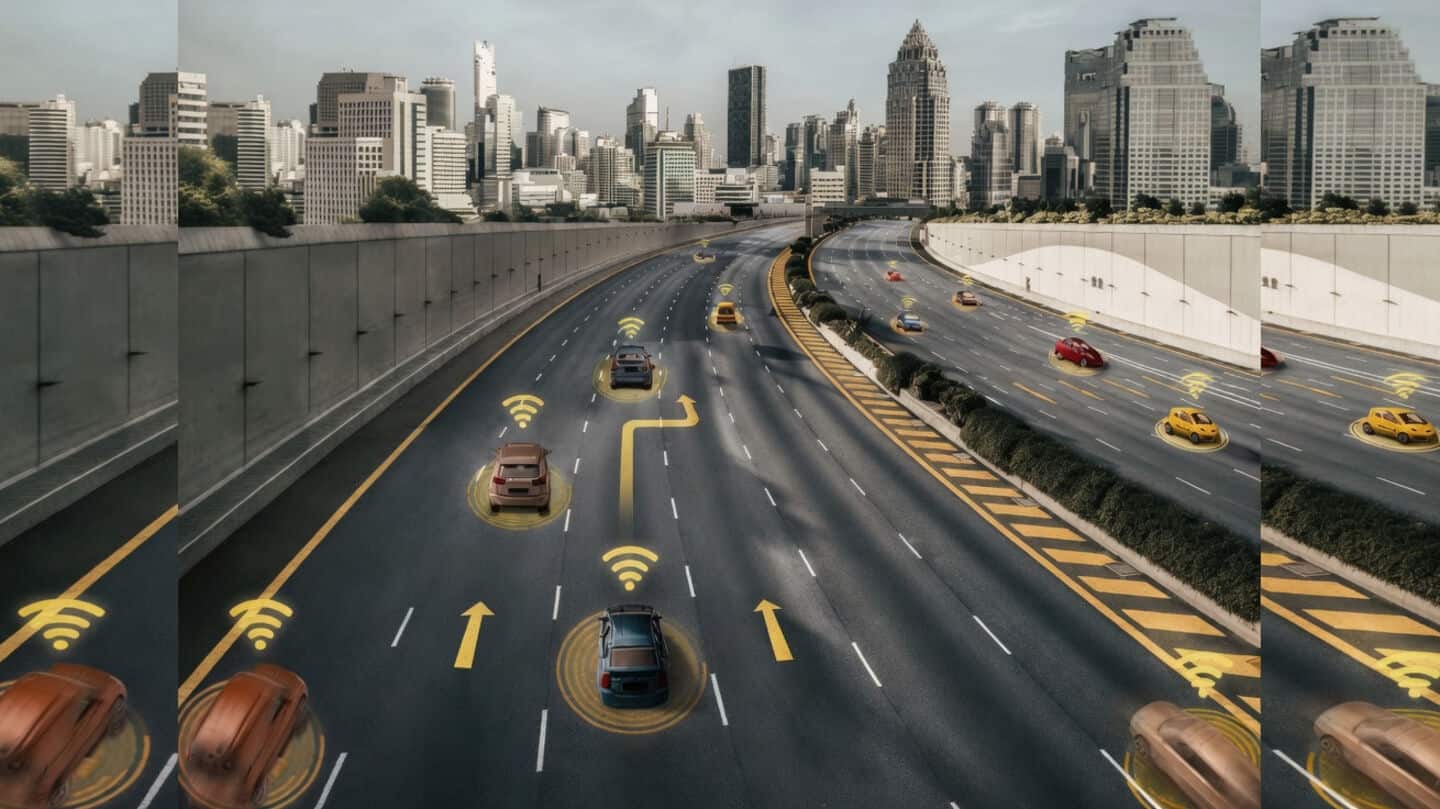
V2V communication allows nearby vehicles to share real-time data such as speed, position, direction, and acceleration.
This technology can warn drivers or onboard vehicle systems about safety-critical situations like sudden braking, forward-collision risks, unsafe lane changes, and the approach of emergency vehicles.
The ministry said that this phased implementation timeline has been proposed to give vehicle manufacturers and other stakeholders enough time to prepare for compliance with these new requirements.
Implementation plan
Timeline for AIS-230 compliance
The draft notification states that vehicles in categories L, M, and N manufactured on or after October 1, 2027, will have to comply with AIS-230 if they are fitted with V2V communication systems.
From October 1, 2028, all new vehicles in these categories will have to be fitted with AIS-230-compliant V2V communication systems.
The proposal comes after the Department of Telecommunications exempted the use of the 5.875GHz-5.925GHz frequency band from licensing requirements for wider adoption of connected vehicle technologies.
Safety enhancement
V2V communication expected to enhance road safety
Unlike traditional vehicle safety systems that depend on onboard sensors and driver response, V2V communication allows vehicles to share information beyond the driver's direct line of sight.
The ministry said this technology is expected to complement Advanced Driver Assistance Systems (ADAS), enabling proactive accident prevention while supporting connected mobility and future intelligent transport applications.
Technical specifications
AIS-230 lays down requirements for V2V communication systems
AIS-230 lays down the minimum technical, functional, performance, environmental and cybersecurity requirements for V2V communication systems installed in vehicles plying on Indian roads.
The standard covers factory-fitted On-Board Units based on Cellular Vehicle-to-Everything (C-V2X) technology operating in the 5.875GHz-5.925GHz frequency band.
It also provides for the phased introduction of key safety applications like emergency brake alerts, forward collision warnings, wrong-way driving alerts, and emergency vehicle notifications.