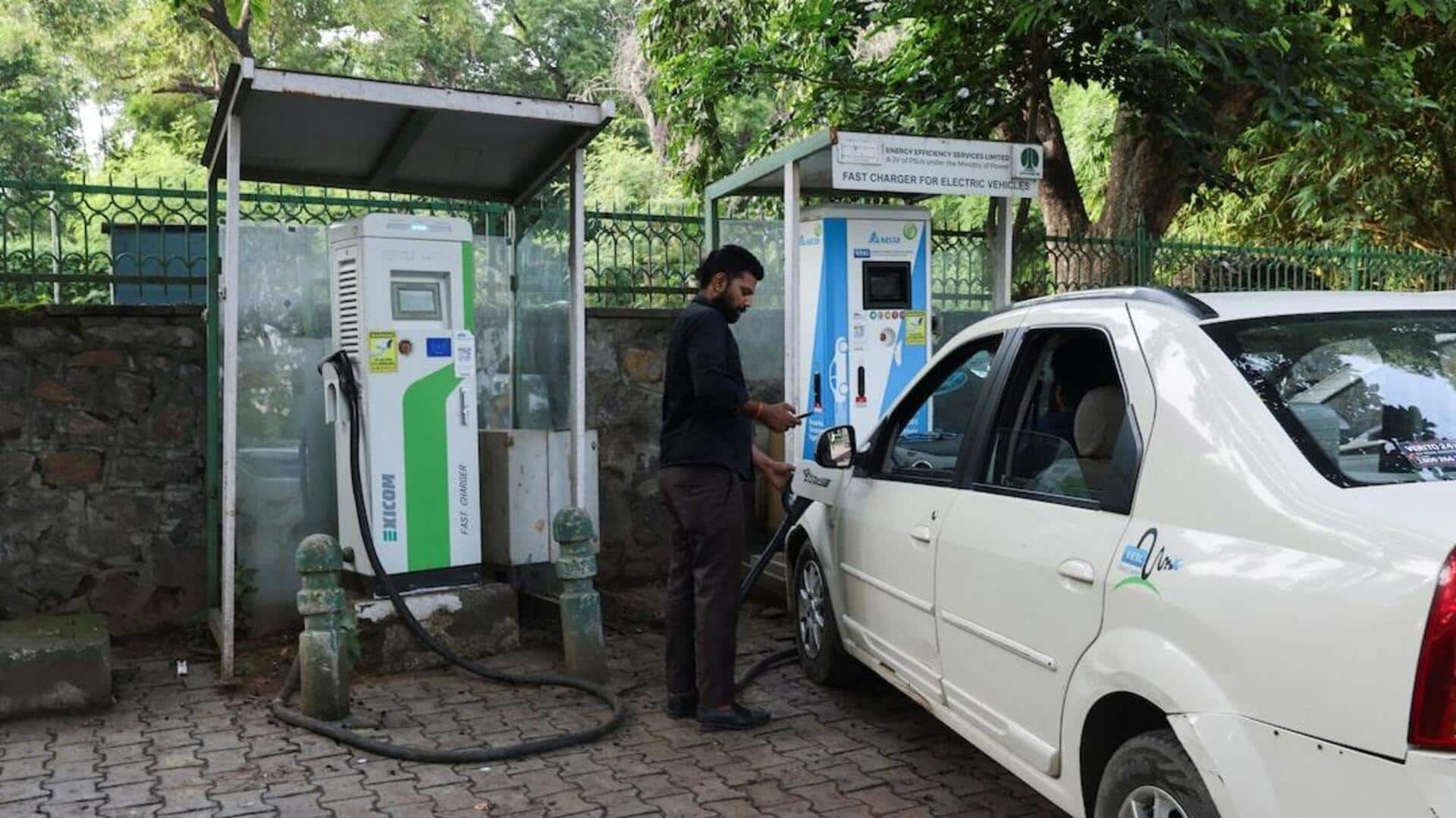
Stuck with dead EV? India plans rescue hubs on highways
What's the story
The Indian government is mulling the establishment of dedicated control and command centers for electric vehicles (EVs) on access-controlled expressways. The proposed facilities, dubbed EV Roadside Assistance (RSA) and On-Road Services (ORS) hubs, would offer real-time roadside assistance, charging points, and technical support to ease range anxiety. The initiative aims to facilitate long-distance travel for EV users, initially focusing on the Delhi-Mumbai Expressway, with plans to extend the model to other expressways.
Collaboration model
Public-private partnerships to drive EV support
The proposed centers are likely to function under a public-private partnership (PPP) model with vehicle makers, fleet operators, and private service providers.
These facilities could offer traveler-centric services for individual EV users as well as technical and maintenance support for commercial fleets.
The Ministry of Road Transport and Highways (MoRTH) is also considering amendments to its guidelines for way-side amenities on expressways to include EV-focused infrastructure.
Pilot project
Delhi-Mumbai expressway to pioneer EV-supportive route
The under-construction 1,300km-long Delhi-Mumbai Expressway is likely to be the first long-distance corridor where this model could be implemented.
This would make an end-to-end EV-supportive route between two major metropolitan regions.
The idea is to go beyond just charging points and create a full ecosystem that supports EV users on highways, much like how air traffic control and ground handling work together in aviation.
Business viability
PPP model to make RSA and ORS services viable
Under the proposed PPP model, private companies would be allowed to operate RSA and ORS services as a viable business.
This might include subscription-based assistance, data-driven predictive maintenance, and also integration with vehicle telematics systems.
The government is also exploring the use of datasets to define "ease of living" indicators for EV users on highways such as response times, service availability, and corridor-readiness.
Future growth
Expansion plans for EV-ready corridors
Beyond the Delhi-Mumbai corridor, MoRTH intends to replicate this model on other expressways and national highways connecting major metropolitan clusters.
This would create a network of EV-ready corridors, a crucial step in making electric mobility accessible beyond daily urban commutes.
Industry executives think that combining charging infrastructure with assured technical support might be a game changer for long-distance EV travel in India.