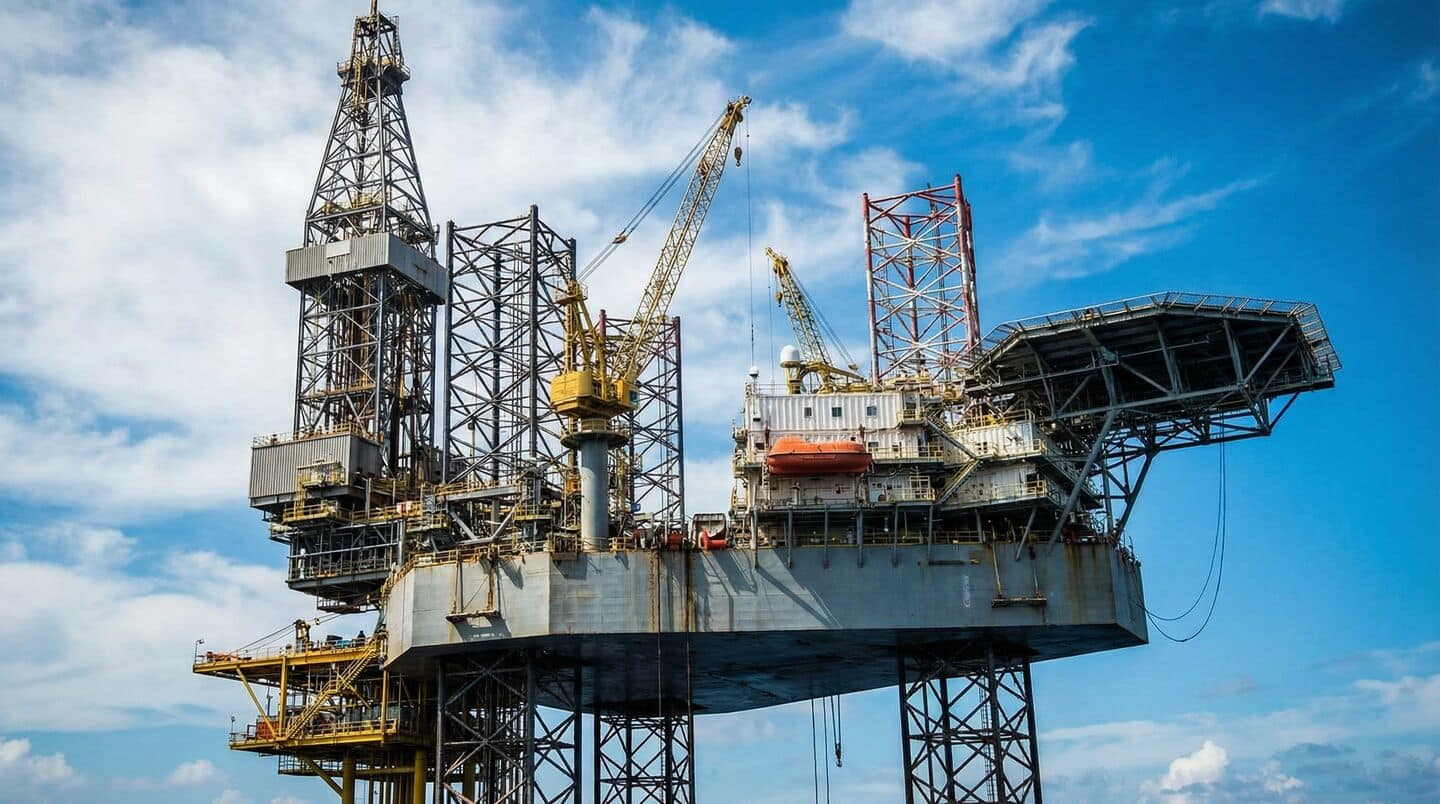
India holds 250M+ barrels of oil, enough for 7-8 weeks
What's the story
India has a strategic energy buffer of over 250 million barrels of crude oil and refined petroleum products, a government report has revealed. The stockpile, which is around 4,000 crore liters in total, provides seven to eight weeks of coverage across the entire supply chain. This directly contradicts claims that the country only has reserves for 25 days.
Strategic locations
Energy reserves strategically located in underground caverns, above-ground tanks
The report highlights that India's energy reserves are strategically located in underground caverns and above-ground tanks.
These include strategic caverns in Mangalore, Padur, and Visakhapatnam, as well as tanks, pipelines, and vessels offshore.
It also notes that India's energy procurement is "anchored in national interest," with sourcing diversified across 40 countries today compared to just 27 a decade ago.
Import strategy
Diversified crude oil import strategy
The report also sheds light on India's crude oil import strategy.
It notes that while the Strait of Hormuz is a key global chokepoint, only some 40% of India's crude imports pass through it.
The remaining 60% come through unaffected alternative routes from Russia, West Africa, the Americas, and Central Asia.
This diversification has reduced dependence on a single maritime chokepoint for energy security.
Supplier dynamics
Russia remains India's largest crude supplier
As of February 2026, Russia continues to be India's largest crude oil supplier.
Despite international geopolitical pressure over the last three years, India has never depended on permission from any country to buy Russian oil.
The report also highlights that a recent 30-day waiver from the US Treasury permitting continued purchases "removes a friction that was never in anyone's interest to sustain" and recognizes India's role in stabilizing global markets.
National efforts
Increase in domestic ethanol blending and refining capacity
On the domestic front, India's 20% ethanol blending program now displaces some 44 million barrels of crude oil annually.
The country's refining capacity has also increased to 258 million metric tons per annum (mmtpa), exceeding the national consumption demand of 210-230 mmtpa.
This infrastructure has allowed Indian refiners to fill fuel gaps in Europe after sanctions on Russian crude.
Price stability
Retail fuel prices have remained stable for 4 consecutive years
The report also highlights that retail fuel prices in India have remained stable for four consecutive years.
Between February 2022 and February 2026, petrol prices in Delhi fell by 0.67%, while they rose by a whopping 55% in Pakistan and 22% in Germany.
Public sector oil companies absorbed losses of ₹24,500 crore for petrol and diesel, and about ₹40,000 crore for LPG to maintain these rates.