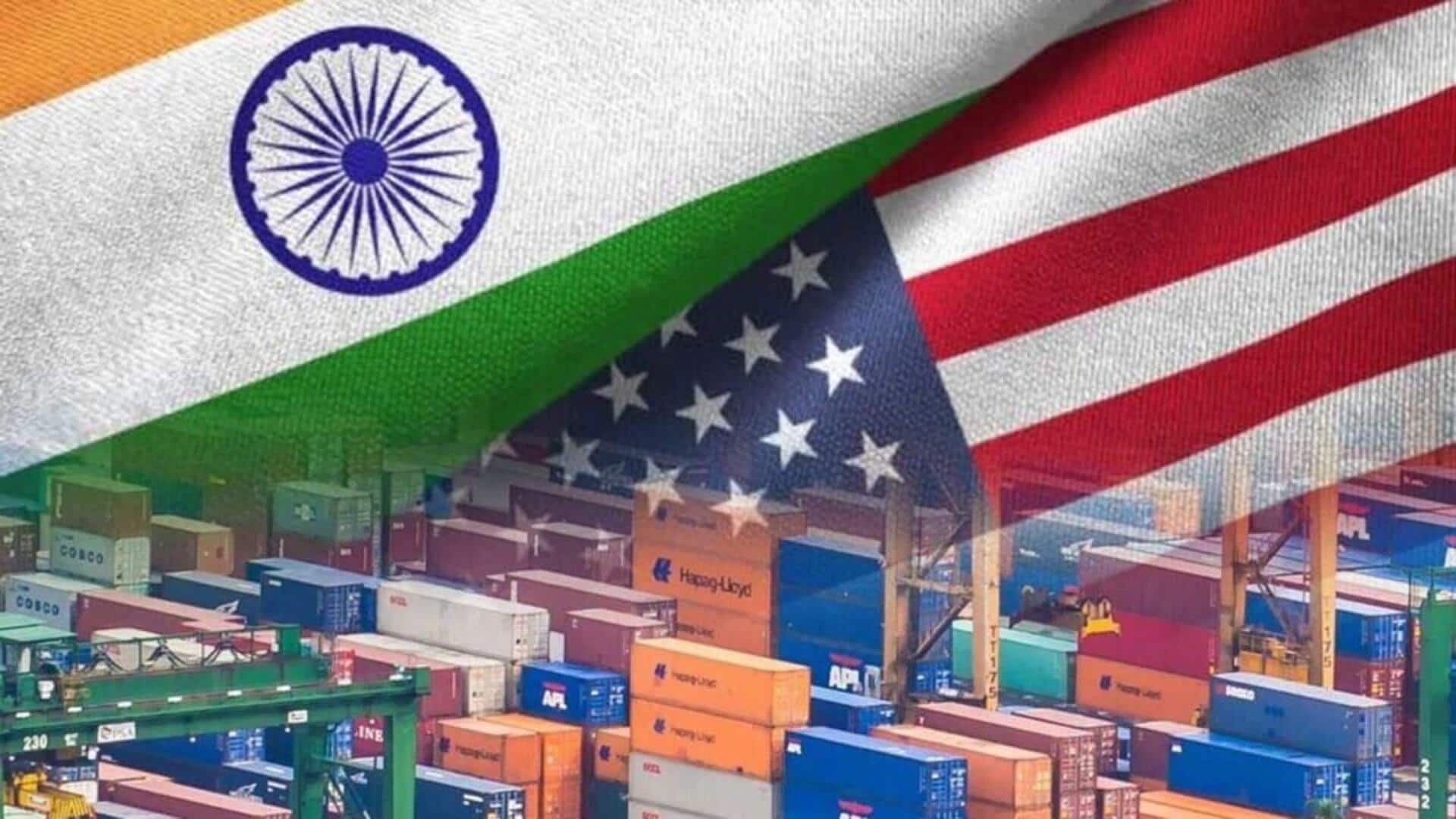
India-US trade deal: Which sectors will benefit
What's the story
India and the United States have signed a new trade deal, reducing US tariffs on Indian goods to 18%. The move is likely to boost India's export competitiveness in the US market, especially for sectors affected by previous tariff hikes. Prime Minister Narendra Modi welcomed the announcement as a "wonderful announcement," thanking US President Donald Trump for the decision.
Tariff reduction
Deal brings down US tariffs on Indian goods
The new trade deal comes as a major relief for Indian exporters.
Earlier, US imposed high duties on Indian goods, with an effective tariff rate as high as 50%. This was due to India's imports of Russian crude oil.
Now, under the new agreement, these tariffs have been slashed to 18%, significantly reducing costs for exporters.
Beneficiary sectors
Sectors that will benefit from the trade deal
Several sectors are expected to benefit from the India-US trade deal. These include gems and jewelry, textiles, auto OEMs, engineering goods, machinery, and fisheries.
The textile sector is especially sensitive to tariffs as nearly 32% of India's textile exports go to the US.
With reduced tariffs, Indian exporters can regain a pricing edge over their competitors in this market.
Sector gains
Fisheries and chemicals sectors to gain
The fisheries and shrimp sector, which accounts for nearly 48% of India's shrimp exports to the US, will also benefit from the reduced tariffs.
Companies like Avanti Feeds, Coastal Corporation, and Apex Frozen Foods stand to gain from this move.
The chemical sector too will benefit as lower tariffs improve net realizations and strengthen India's position in US supply chains.
Sector impact
Gems and jewelry sector to benefit
The gems and jewelry sector, which contributes nearly 25% of diamond polishing revenues from the US, will also benefit from the reduced tariffs.
Companies like Titan stand to gain as the tariff cut lowers landed costs and eases margin pressure.
However, auto ancillaries and engineering goods sectors could face challenges due to fears that European brands may now price more aggressively in the premium segment.