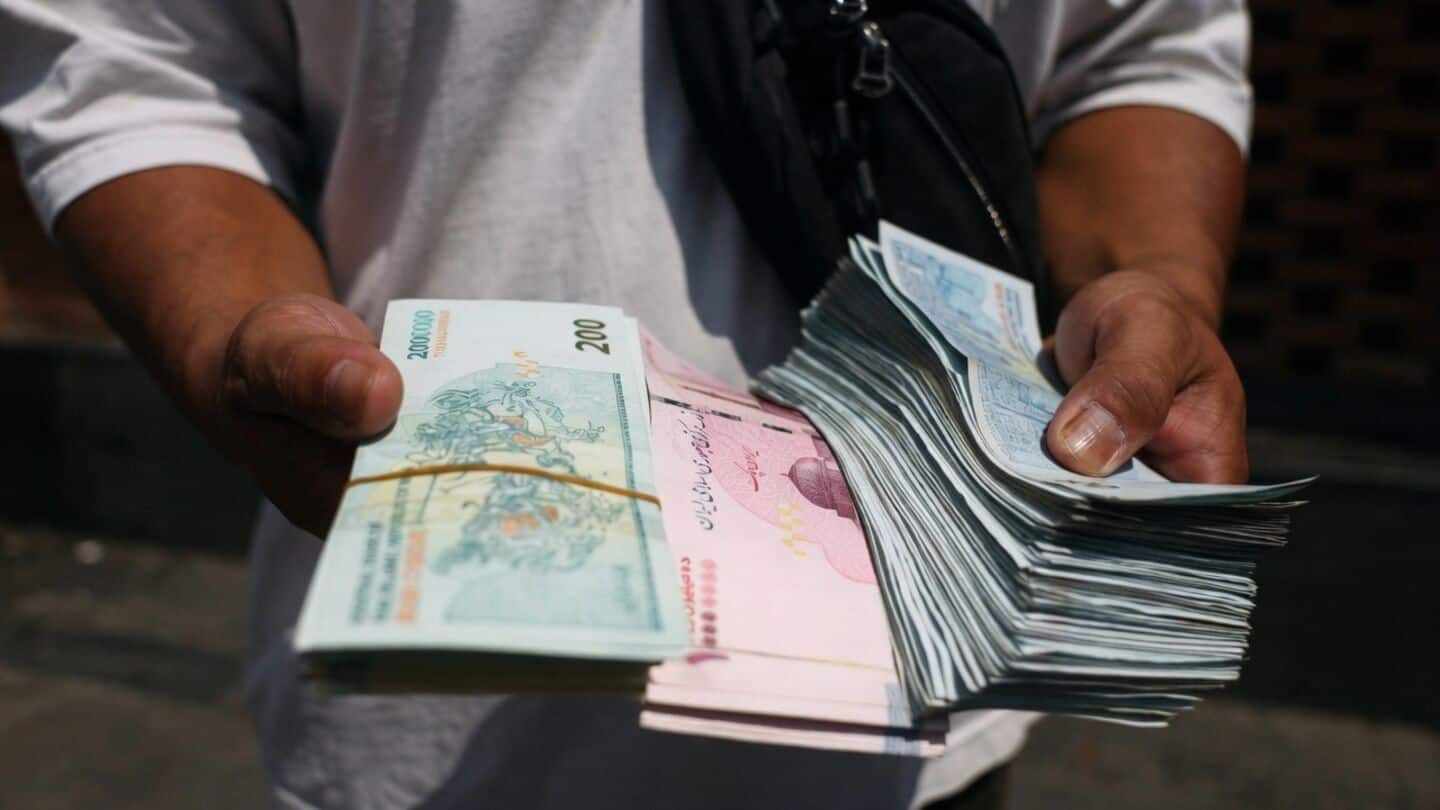
Iran's currency nears 2M to a dollar as pressure mounts
What's the story
Iran's currency, the rial, is on a downward spiral, nearing the unofficial market rate of two million to a US dollar. The depreciation comes as Washington intensifies its efforts to cut off Tehran's financial lifelines. The rial was trading at around 1.992 million per dollar today according to Bonbast, which tracks Iran's unofficial exchange market rates.
Financial offensive
US Treasury Secretary announces shift in strategy against Iran
US Treasury Secretary Scott Bessent has announced a shift from military action to an intensified financial campaign against Iran.
He called it "the single greatest financial offensive ever marshaled against an adversary."
The move is part of a broader strategy by the Donald Trump administration to impose economic pressure on Tehran after months of conflict.
Strategic goal
Objective is to sever every economic lifeline: Bessent
Bessent said the US is prepared to use all its powers against Iran and those who help keep its economy connected to international markets.
"Our objective is to sever every economic lifeline that sustains the tyrannical regime until Tehran stands alone," he added.
However, it remains unclear what specific measures Washington will take next in this new phase of economic pressure.
Economic strain
Tehran's access to foreign currency under increasing strain
The decline of the rial highlights a more immediate problem for Tehran: its access to foreign currency is coming under increasing strain.
Iran heavily relies on export earnings, especially from crude oil, to bring dollars and other hard currencies into the country.
However, these inflows are now facing severe pressure, with Central Bank Governor Abdolnaser Hemmati saying last week that Iran's crude exports had "virtually stopped."
Trade disruption
UAE suspends financial transactions with Iran
The United Arab Emirates, a key trade partner for Iran, has also suspended financial transactions with the country until further notice.
This move further complicates Tehran's ability to settle trade and move money.
Iranian financial daily Donya-e Eqtesad has attributed the currency's weakness to foreign-exchange transfer issues and lower exports, while rising import demand and price expectations have added pressure on the rial.
Economic impact
Conflict disrupts shipping through the Strait of Hormuz
Iran entered the current conflict with an economy already weakened by years of sanctions and limited access to international finance.
Nearly six months of war have added another layer of pressure, damaging infrastructure, disrupting trade, and making it harder for the government to protect its remaining sources of revenue.
The conflict has also disrupted shipping through the Strait of Hormuz, a major route for oil and energy trade.
Shift
Iran seeks support from partners outside Western financial system
In response to the mounting pressure, Iran is looking for support from economic partners outside the Western financial system.
Foreign Minister Abbas Araghchi has said that Iran will look more closely at organizations such as BRICS and the Shanghai Cooperation Organisation.
"We believe that structures such as the Shanghai Cooperation Organisation and the BRICS group are effective instruments for breaking the monopoly of power and moving toward a fairer international order," he said in a state-run newspaper.