Yayoi Kusama (97), artist known for polka dots, dies
What's the story
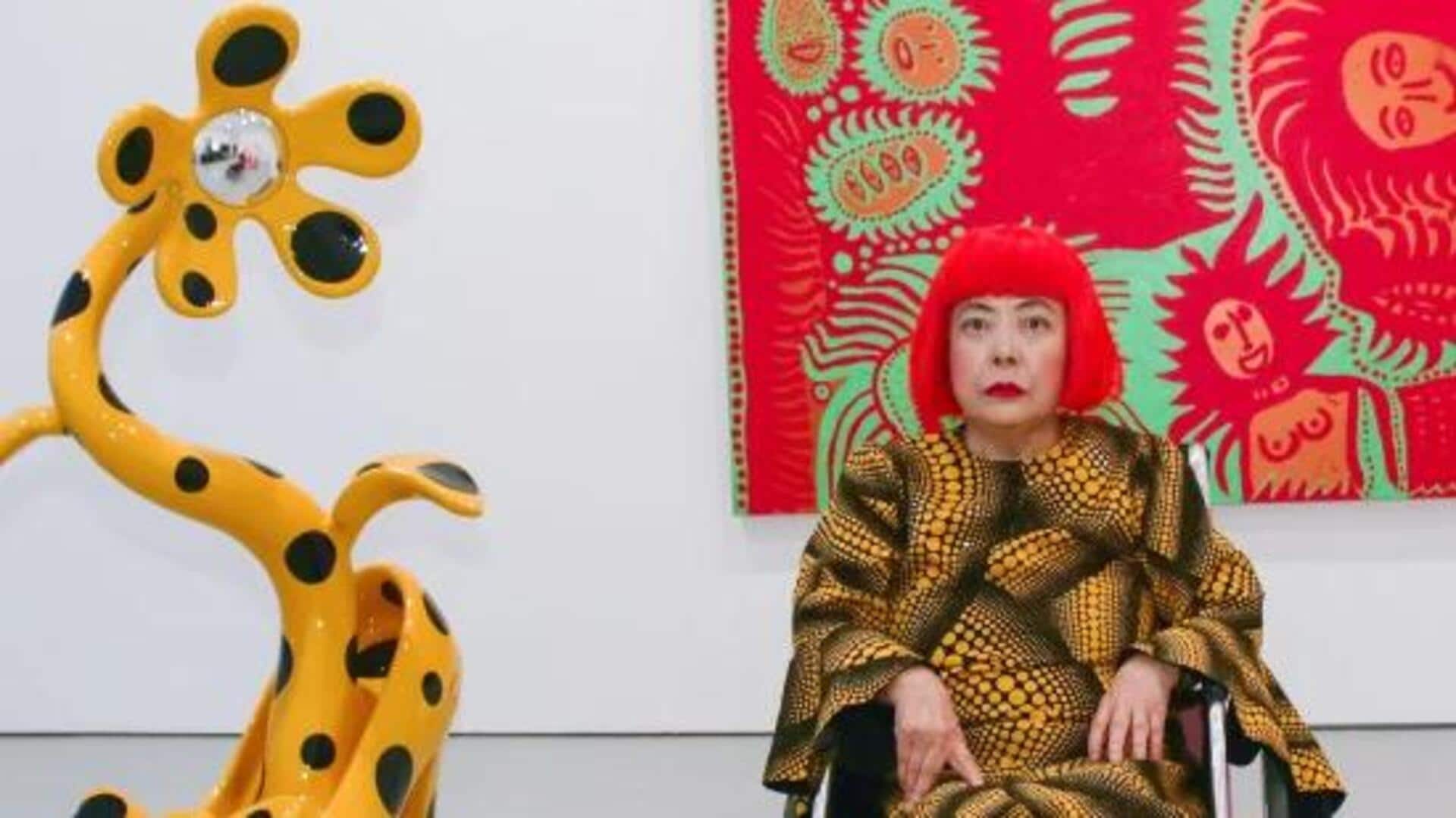
Yayoi Kusama, the renowned Japanese avant-garde artist, has passed away at 97. The news was confirmed by her company, which stated that she died on August 14 at a hospital in Tokyo. Known for her distinctive polka dot-covered sculptures and installations, Kusama's work attracted global attention and fetched some of the highest ever prices for a female artist. She had been living voluntarily in a psychiatric hospital for many years.
Artistic career
Her work gained recognition in the 1960s
Kusama's company said in a statement, "Throughout an extraordinary lifetime devoted entirely to artistic creation, Kusama pursued an internationally acclaimed career as a pioneering avant-garde artist whose creative practice encompassed visual art, performance, fiction, and poetry."
Despite facing initial rejection from the male-dominated New York art scene in the 1960s, Kusama's work eventually gained recognition.
Her Infinity Mirror Rooms exhibit in 1965 drew millions of visitors, and her polka dot and pumpkin works became highly sought after.
Later years
She returned to Japan and entered a psychiatric facility
After years of seeing male artists either copy or get "inspired" by her work and achieve more recognition than she did, Kusama returned to Japan feeling disheartened.
She entered a psychiatric facility where she would live and work for the rest of her life.
The statement from her company added, "She continued to paint until her final days, never setting aside her brush."
Global recognition
A late-career resurgence in the global art scene
Kusama became a global cultural icon in her 80s and 90s after being largely ignored for decades.
Her work was exhibited in major museums, and she collaborated with luxury brands like Louis Vuitton.
In 1993, she made history as Japan's first solo artist to represent the country at the Venice Biennale.
Early life
More about her life and work
Born in 1929 in Matsumoto, Japan, Kusama experienced hallucinations as a child.
She later used her art to communicate her unique perspective of the world.
One of her most famous motifs is the pumpkin, which she viewed as a symbol of comfort and nostalgia.
In an interview, she said: "Pumpkins speak to me."
"They embody a sense of stability and gives me peace of mind."