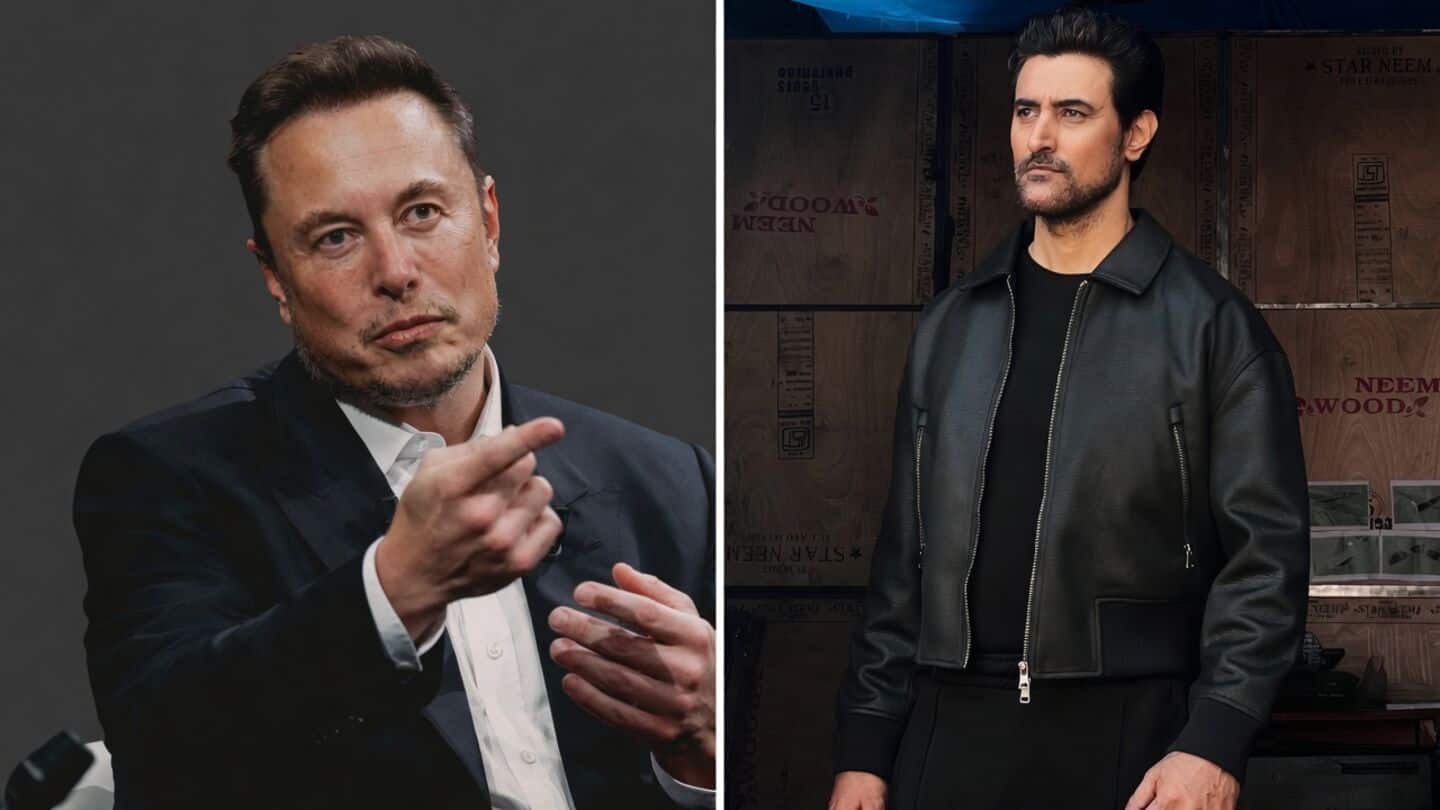
'Savior complex': Kunal Kapoor slams Elon Musk amid Starlink row
What's the story
Bollywood actor Kunal Kapoor has joined the chorus of voices criticizing SpaceX CEO and founder Elon Musk's recent remarks about India's regulatory framework for satellite communication services. In a series of tweets, Musk said that his satellite internet service, Starlink, is being "blocked by certain oligarchs" in India to maintain a market monopoly. He also questioned why Starlink hasn't received a license in India despite complying with all laws and requirements for five years.
Actor's response
'They arrive in your country selling you the future'
Kapoor responded, "Watching Elon Musk this week has been a fascinating character study in the savior complex of Western tech billionaires."
"They arrive in your country selling you the future. Welcome them, and you're a country that wants progress."
"Make them wait, and suddenly your people are victims who need rescuing from their own institutions by the chosen one."
Twitter Post
See the post here
Watching Elon Musk this week has been a fascinating character study in the saviour complex of Western tech billionaires.
— Kunal Kapoor (@kapoorkkunal) October 10, 2026
They arrive in your country selling you the future. Welcome them, and you’re a country that wants progress. Make them wait, and suddenly your people are…
Actor's perspective
'The colonial mindset isn't always about wanting...'
Kapoor further wrote, "It's a pattern. When Thai rescuers didn't use the mini-submarine Musk sent for the trapped boys, and diver Vernon Unsworth called the idea impractical, Musk attacked him as the 'pedo guy.'"
"When Brazil's Supreme Court ordered X to comply with its rulings, Musk called the judge a 'dictator.'"
"The script rarely changes. Only the country does. The colonial mindset isn't always about wanting to rule a country."
Regulatory dispute
Meanwhile, Musk continues to tweet about Starlink's future in India
Musk has continued to tweet about Starlink's future in India.
He even brought up the Ambani family in his tweets, asking why Starlink hasn't received a license in India yet when it's licensed in over 165 countries.
Meanwhile, India's Ministry of Communications has denied claims that its regulatory framework is discriminatory, stating it has a fair and non-discriminatory authorization framework for all telecommunication services.