
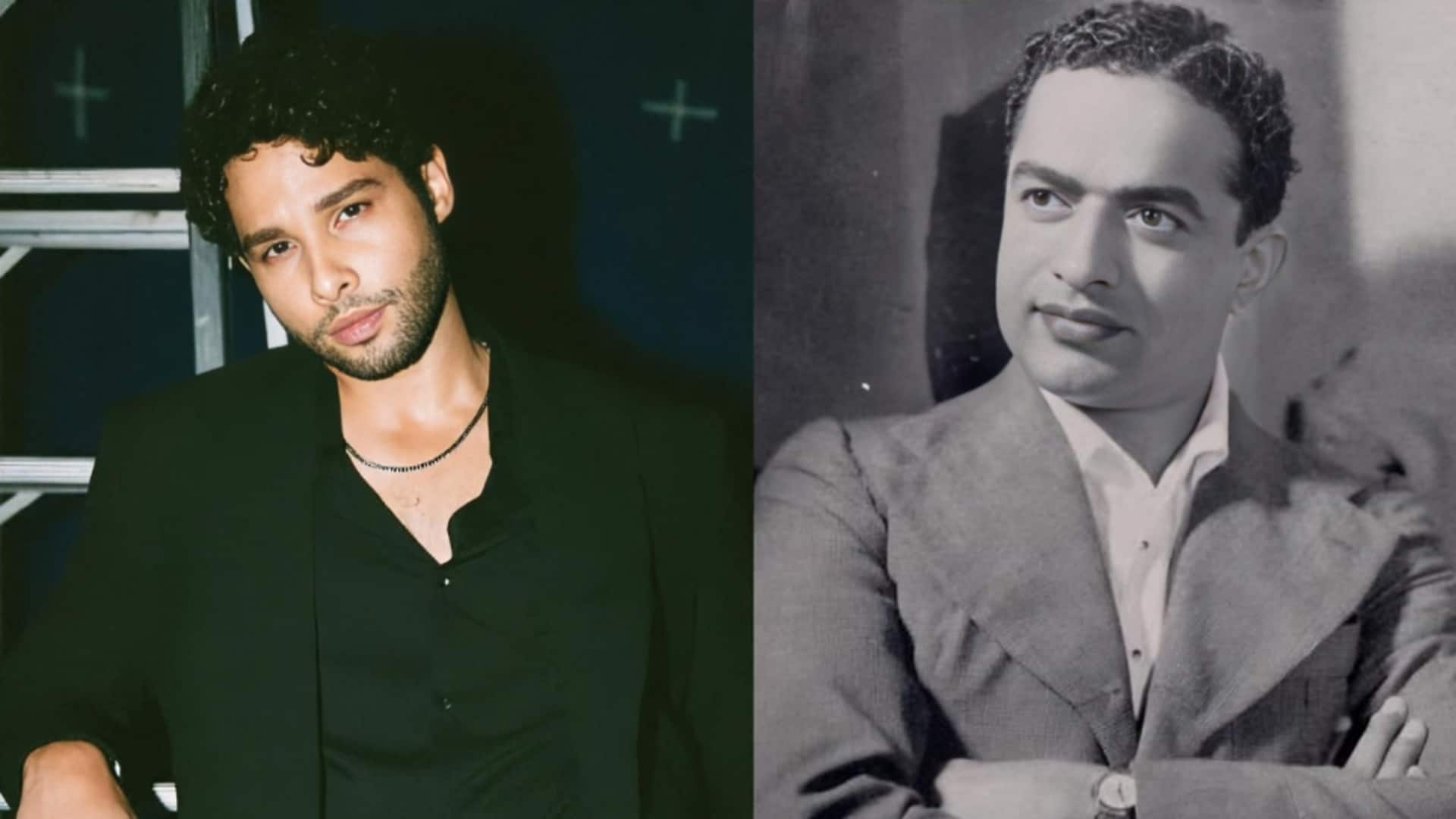
First-look: Siddhant Chaturvedi transforms into V Shantaram for upcoming biopic
What's the story
Siddhant Chaturvedi's first look as legendary filmmaker V Shantaram has been unveiled. The biopic, titled V. Shantaram, will chronicle the life and career of the pioneering force in Indian cinema who directed the first Marathi-language talkie, Ayodhyecha Raja, in 1932. The film is being written and directed by Abhijeet Shirish Deshpande and produced by Rajkamal Entertainment, Camera Take Films, and Roaring Rivers Productions.
Twitter Post
Take a look at the poster here
BIOPIC ON ICONIC FILMMAKER V SHANTARAM ANNOUNCED: SIDDHANT CHATURVEDI TO PORTRAY TITLE ROLE... #SiddhantChaturvedi is all set to bring the pioneering actor-filmmaker V Shantaram's extraordinary life to the big screen in the biographical drama titled #VShantaram.
— taran adarsh (@taran_adarsh) December 1, 2025
Written and… pic.twitter.com/cReDJ9JlAn
Actor's statement
Chaturvedi expressed honor in portraying Shantaram
Chaturvedi told Variety, "Portraying V Shantaram ji is one of the greatest honors of my life. The more I read about his journey, the more humbled I felt." "Stepping into his world has been my most transformative experience as an actor. His life moved me deeply and reminded me of the power of perseverance."
Production insights
Director Deshpande and producer Kale shared their thoughts
Deshpande said, "V Shantaram has been a huge source of inspiration for me as a filmmaker. His courage to experiment and his vision shaped so much of the cinema we know today." Producer Subhash Kale added, "V Shantaram ji's legacy is one of the strongest pillars of Indian cinema. His vision, his struggles and his innovations continue to inspire all of us who work in this industry."
Filmmaker's legacy
Shantaram's contributions to Indian cinema
Shantaram, who was born in 1901, founded two major film studios: Prabhat Film Company in 1929 and Rajkamal Kalamandir in 1942. His classics like Duniya Na Mane (1937), Do Aankhen Barah Haath (1957), Jhanak Jhanak Payal Baaje (1955), and Navrang (1959) were celebrated for their technical innovations.They also addressed issues like communal harmony and dowry.He received India's highest film honor, the Dadasaheb Phalke Award, in 1985. He passed away in 1990 at the age of 88.