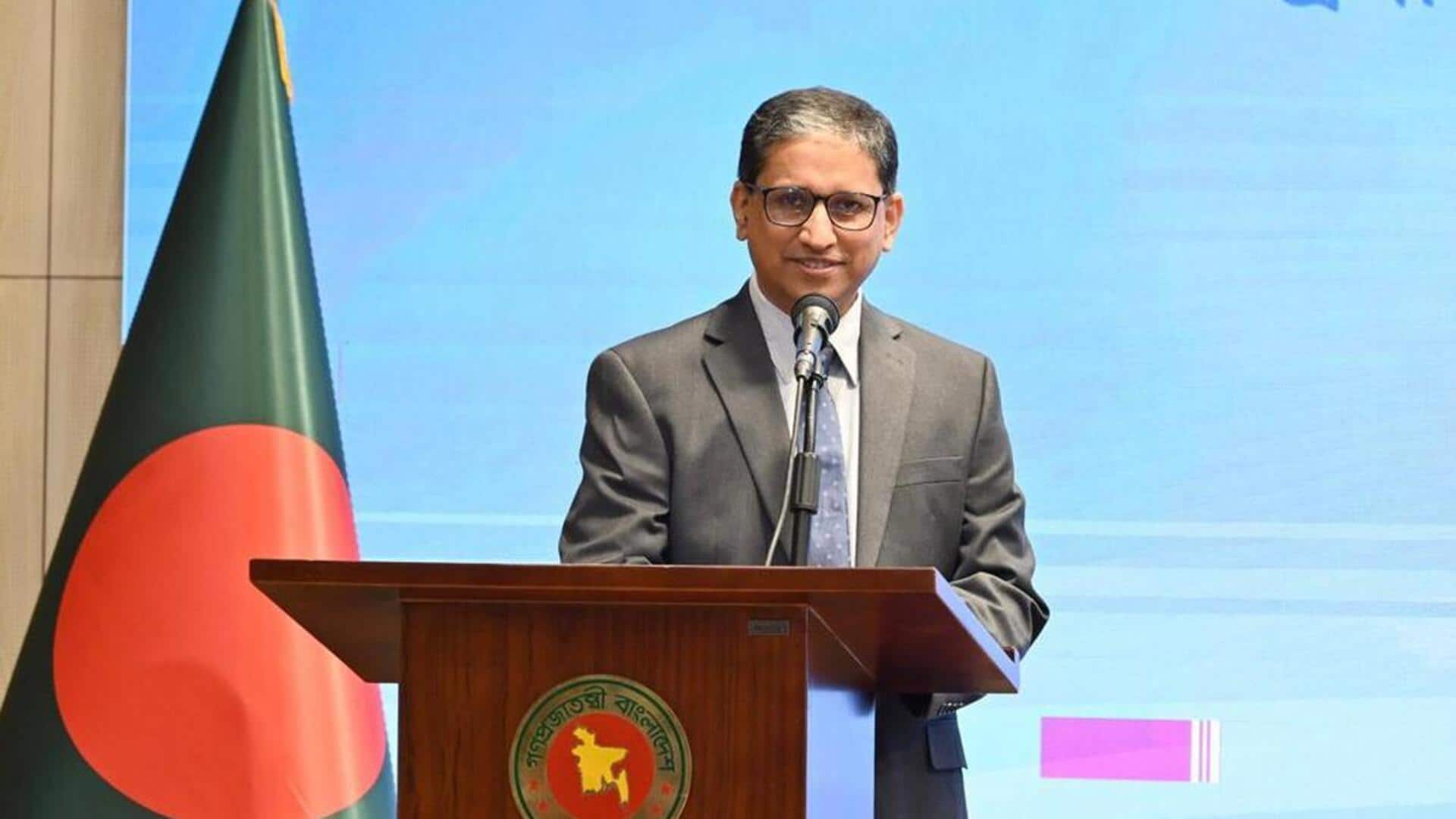
India summons Bangladesh High Commissioner after threats to Dhaka mission
What's the story
The Ministry of External Affairs (MEA) has summoned the Bangladesh High Commissioner in New Delhi, Muhammad Riaz Hamidullah. While the government did not clarify the specific nature of the threat received, the summons came a day after a politician threatened to isolate the north-eastern states. Addressing a gathering at Dhaka's Central Shaheed Minar, National Citizen Party (NCP) leader Hasnat Abdullah said, "We will shelter separatist and anti-India forces and then we will sever the seven sisters from India."
Rising tensions
Anti-India remarks by Bangladeshi leaders spark diplomatic tensions
Abdullah also claimed that his party would shelter Northeast separatists if Bangladesh were destabilized.
"I want to make it clear to India that if you provide shelter to forces that do not respect Bangladesh's sovereignty, potential, voting rights, and human rights, Bangladesh will respond," he said on Monday.
These remarks have contributed to the overall concerns about diplomatic relations and the safety of Indian diplomats in Bangladesh.
Diplomatic efforts
'How can Bangladesh even think about it?'
Hasnat further stated that, despite 54 years of independence, Bangladesh continues to suffer attempts by 'vultures' aiming to exert influence over the country, without mentioning New Delhi specifically.
Responding, Assam Chief Minister Himanta Biswa Sarma called the remarks "irresponsible and dangerous," noting that "India is a very big country, a nuclear nation and the fourth largest economy of the world. How can Bangladesh even think about it?"
India
Indian government's reaction
The Indian government also reacted to the comments, with the Foreign Ministry asserting, "We expect that the interim government of Bangladesh will take all necessary measures for ensuring internal law and order, including for the purpose of holding peaceful elections."
India has long accused separatist groups of using Bangladesh as a safe haven, transit route, and logistics hub, particularly in the late 1990s and early 2000s.
Several Northeast rebel groups maintained camps, safe houses, or support networks across the border.