
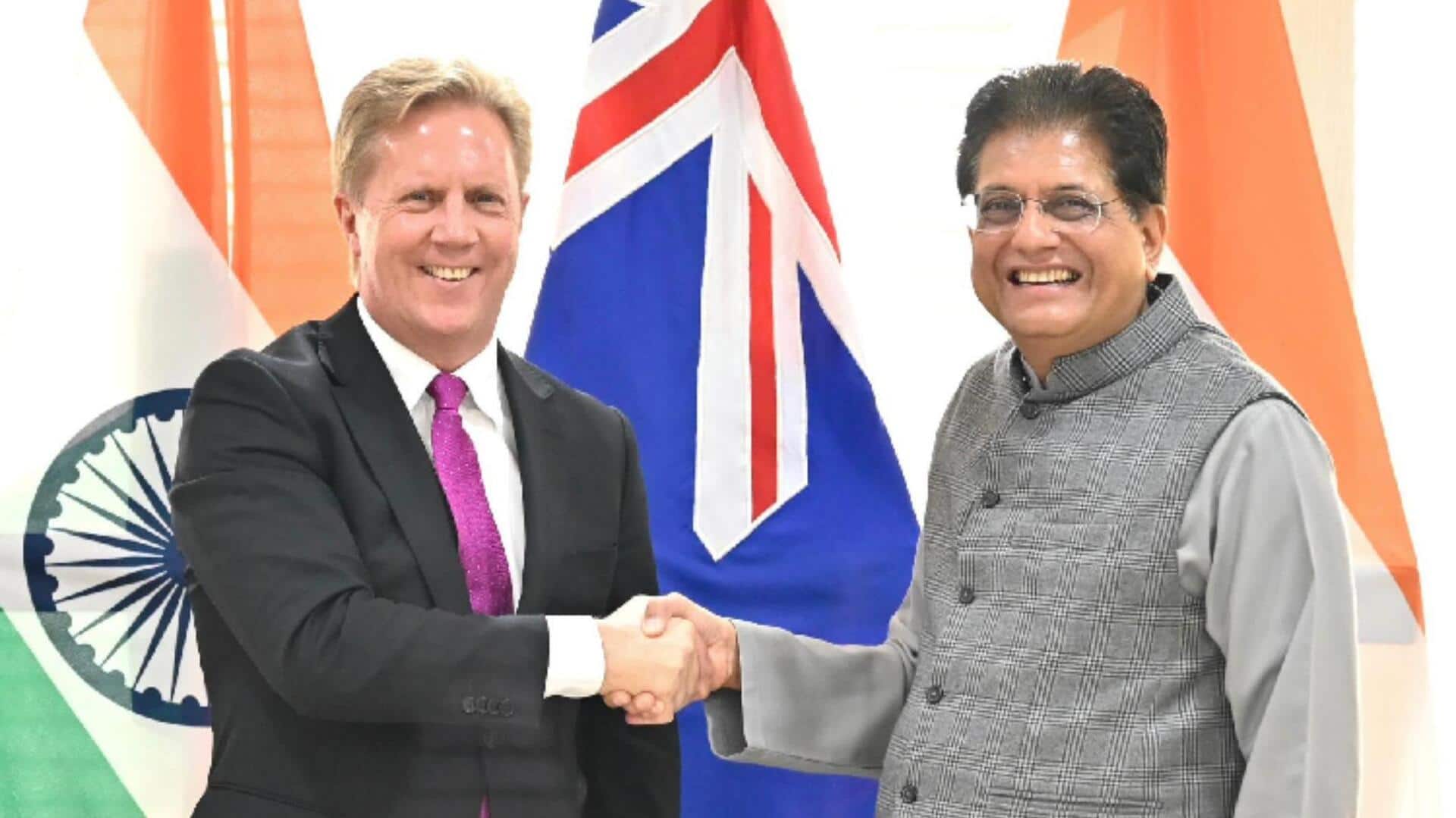
'India will never open dairy sector to free trade': Goyal
What's the story
India has categorically refused to open its dairy sector under any Free Trade Agreement (FTA), including the recently concluded pact with New Zealand. Commerce and Industry Minister Piyush Goyal emphasized this during a media briefing on Monday, December 22, where the announcement on the finalization of the FTA. "We have been very sensitive to protect all the sectors, like farmers' interest in rice, wheat, dairy...various other farmer products," he said.
Trade agreement
India-New Zealand FTA: Key details
The India-New Zealand free trade agreement gives India duty-free access to New Zealand's market. In return, New Zealand will get tariff reductions on 95% of its exports to India. However, both countries have agreed not to include the dairy sector and some farm products in this pact. Goyal also said India's micro, small, and medium enterprises (MSMEs) and startups will benefit significantly from this deal.
Ongoing negotiations
India-US trade deal discussions at advanced stage
Goyal also revealed that talks for the long-pending India-US trade deal are in an "advanced stage." However, agriculture continues to be a sticking point in these negotiations. The dairy sector's exclusion from FTAs has been a long-standing policy for India as it seeks to protect its domestic farmers from large-scale imports. New Zealand, one of the world's largest dairy exporters, has sought more access to India's market but has faced resistance due to political sensitivities.
Domestic response
New Zealand's mixed reaction to the trade deal
Meanwhile, New Zealand's Prime Minister Christopher Luxon praised the agreement for boosting local employment. However, Foreign Affairs Minister Winston Peters called it a "low-quality" deal and announced his party's opposition in Parliament. Peters clarified that their opposition wasn't aimed at India or its negotiators but stemmed from internal differences within the ruling coalition government. The deal now awaits parliamentary approval in New Zealand.