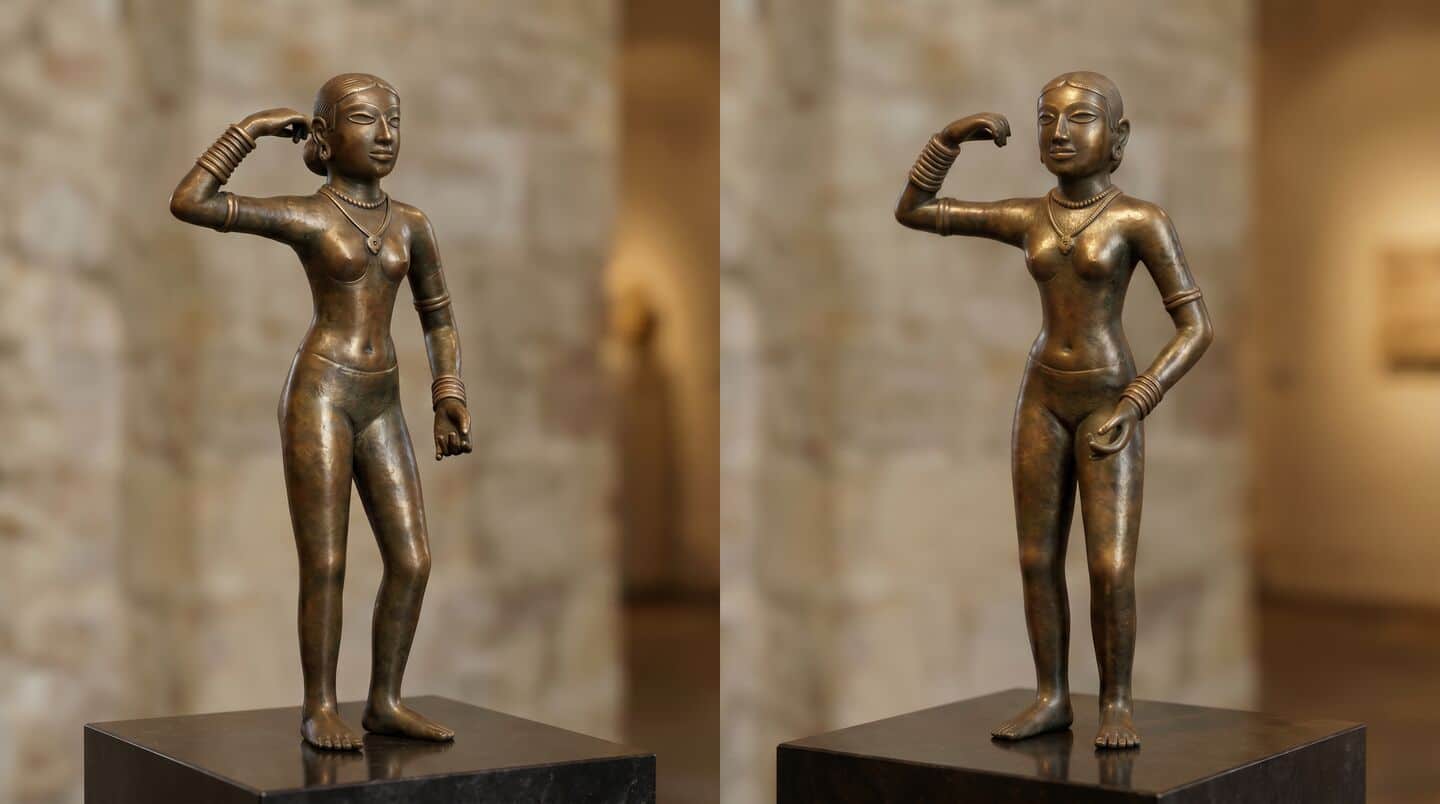
NCERT to restore original 'Dancing Girl' image in textbook
What's the story
The National Council of Educational Research and Training (NCERT) has decided to restore the original image of the "Dancing Girl" from Mohenjo-daro in its Class 9 Arts Education textbook. The decision comes after The Indian Express reported that the iconic Harappan-era bronze figurine had been retouched in the new textbook, Madhurima. The digital version on NCERT's website will be updated immediately, and unprinted copies will have the revised image.
Government response
Education Ministry seeks explanation from NCERT
The Education Ministry has sought an explanation from NCERT after The Indian Express report.
A source familiar with the discussions was quoted as saying, "If the photo is already there in a Class 6 Social Science textbook, it doesn't make any sense why the image was retouched for the Class 9 textbook."
Historian Michel Danino had earlier revealed that NCERT had objected to placing the nude figurine on a chapter opener due to its controversial nature.
Justification
Controversy over 'Dancing Girl' image
NCERT had defended the shading of the figurine's torso in the Class 9 textbook, arguing it wanted students to use their "imagination."
However, Danino, who headed the textbook development committee for NCERT's new Class 6 Social Science books, had successfully argued for keeping the original image in Class 6 textbooks.
The retouched image appeared in Madhurima's opening chapter, "History of Arts," where anatomical details were obscured.
The "Dancing Girl" has been featured in NCERT textbooks for at least 25 years.
Cultural artifact
Significance of the original 'Dancing Girl' figurine
The "Dancing Girl" figurine, discovered at Mohenjo-daro, is a four-inch-high bronze sculpture of a young girl with her hair tied in a bun and wearing bangles.
Its confident posture and sophisticated craftsmanship make it an important symbol of the Harappan civilization.
The original artifact is housed in the National Museum in New Delhi. Archeologists consider it evidence of the civilization's advanced metallurgical knowledge.